
EBOOT 30 Pieces Photoresistor Photo Light Sensitive Resistor Light Dependent Resistor 5 mm (5539)
4.6Editor score
30 pieces in value pack
GM5539 resistor type
Spectral peak at 540nm
This guide compares the top light sensors for Arduino including LDR modules BH1750 photodiodes and TEMT6000 to help you choose the best sensor for your project
Choosing the right light sensor for your Arduino project can significantly impact the functionality and reliability of your final build. Whether you need simple ambient light detection or precise illuminance measurement, understanding the differences between module types is essential for success.
We have carefully selected and reviewed ten highly rated products available on the market today. Our comparison considers ease of use, compatibility with popular microcontrollers like ESP32 and Raspberry Pi, and the versatility of analog versus digital outputs for your specific application.
Each pick below highlights key features, pros, and cons to help you make an informed decision. Please note that product availability and pricing can change frequently, so verify current details before purchasing to ensure you get the best value for your project.
4.6Editor score

4.4Editor score
5.0Editor score
The following table provides a side-by-side comparison of all ten selected light sensor modules. Use this overview to quickly identify which product offers the specific features, outputs, and compatibility you need for your Arduino-based automation or monitoring project.


This WWZMDiB package includes six 5MM LDR light sensor modules that are designed for easy integration with Arduino and Raspberry Pi. With a high user rating, these modules stand out for their built-in LM393 comparator which provides clean digital signals alongside analog readings.
We may earn a commission when you buy through this link, at no additional cost to you.
The core strength of this module lies in its versatility. It offers both a digital output (DO) and an analog output (AO), allowing you to choose between a simple threshold switch or precise light level monitoring. The included potentiometer lets you adjust the brightness detection threshold easily without needing complex code changes.
While the module offers great functionality, it is slightly larger than a bare photoresistor, which might be a consideration for very tight spaces. Additionally, you need to spend a few minutes tuning the potentiometer to match your specific environment, but this ensures accurate triggering for automation tasks.
For hobbyists and engineers needing a reliable balance between simplicity and control, this module is a top recommendation. It is ideal for projects like automatic night lights, ambient light monitoring, or trigger mechanisms where both digital logic and analog data are valuable.
Having both digital and analog outputs means you can use the same module for simple on/off triggering and detailed light level logging.
The onboard potentiometer allows you to fine-tune the sensitivity threshold to match different environments without changing code.
We may earn a commission when you buy through this link, at no additional cost to you.
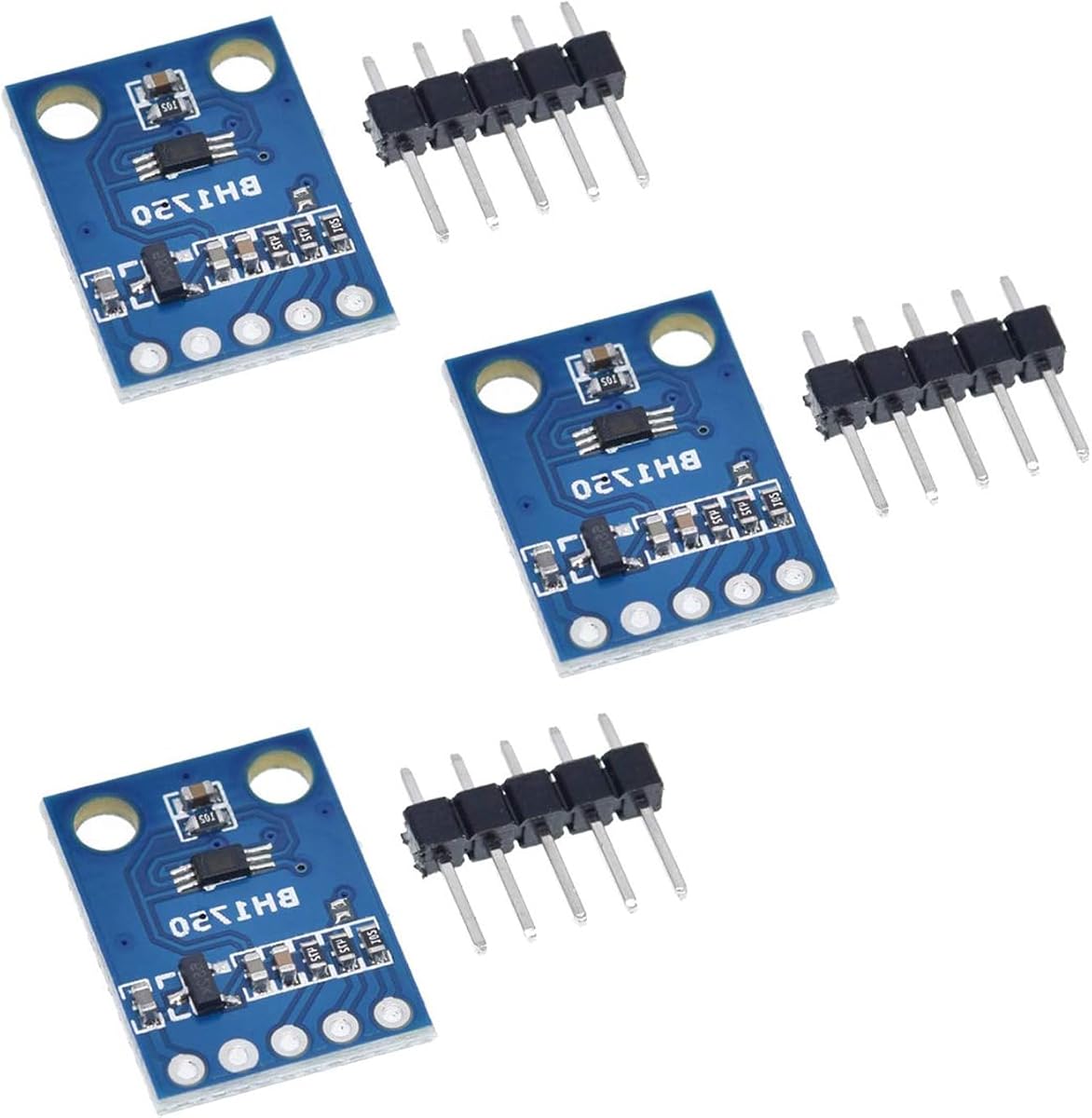
The GY-302 module uses the BH1750FVI chip from ROHM to provide highly accurate light intensity measurements. With a strong 4.7 rating, this 3-pack is excellent for projects that require precise digital data rather than simple threshold detection.
We may earn a commission when you buy through this link, at no additional cost to you.
The BH1750 chip supports an I2C interface, which simplifies wiring by using only two data lines. Its compact size makes it ideal for fitting into small enclosures or onto crowded prototyping boards. It operates reliably from 3 to 5 volts, matching most microcontrollers.
Since this module provides digital data, it requires understanding I2C protocols and library support which can be a hurdle for beginners. Also, it does not offer an analog output, so you cannot use it directly with analog input pins on microcontrollers lacking I2C.
If your project needs accurate lux values for display or logging, this sensor is superior to basic LDRs. It is perfect for weather stations, plant monitoring, or any application requiring consistent and precise light level data.
The BH1750FVI chip converts light intensity directly into digital lux values, providing precise data for monitoring applications.
At only 13.9 by 18.5mm, this module fits easily into tight spaces on your PCB or breadboard setup.
We may earn a commission when you buy through this link, at no additional cost to you.
HiLetgo offers a high-quality alternative with its GY-302 module utilizing the original BH1750FVI chip. This module is well-regarded for its consistency and performance, making it a trusted choice for those who prioritize component authenticity.
We may earn a commission when you buy through this link, at no additional cost to you.
Just like the other BH1750 modules, it provides precise light intensity readings through an I2C interface. The board dimensions remain compact at 13.9 by 18.5mm, allowing for easy integration into various project designs. It supports a standard 3 to 5V power supply range.
The reliance on I2C communication means you will need to include specific libraries in your code. For users accustomed to analog sensors, the learning curve might be slightly steeper. However, the precision gain is well worth the extra setup effort.
This sensor is best suited for projects where accuracy is paramount. Whether you are building a light meter or automating lighting systems based on exact lux levels, this module delivers reliable and consistent performance.
Using the original BH1750FVI chip ensures that the sensor readings are consistent and match the datasheet specifications.
Support for 3 to 5V allows this module to be used with both 3.3V logic boards and 5V Arduinos.
We may earn a commission when you buy through this link, at no additional cost to you.
This photodiode module is distinct because of its directional sensing capability. It senses light primarily from the front, which is perfect for applications where you need to detect a specific light source rather than general ambient light.
We may earn a commission when you buy through this link, at no additional cost to you.
The module includes both digital and analog outputs, giving you flexibility in how you integrate it into your system. A small blue potentiometer allows you to adjust the sensitivity threshold easily. It operates on a standard 3.3 to 5V supply.
Because it is directional, you must orient the module correctly to detect the intended light source. If you need omnidirectional detection, an LDR might be better. Also, the sensitivity needs manual tuning which adds a step to the setup process.
This sensor is ideal for smart car projects or light-seeking robots that need to follow a beam. The pack of ten provides enough units for multiple prototypes or larger builds where directional sensitivity is a key requirement.
The photodiode is designed to sense light from a fixed direction, making it perfect for tracking specific sources.
Fixing bolt holes on the small PCB make it simple to mount the module securely in your final device.
We may earn a commission when you buy through this link, at no additional cost to you.
For those who want to build their own sensor circuits or need a large supply of components, this EBOOT pack offers exceptional value. It provides 30 individual photoresistors which are perfect for learning and prototyping.
We may earn a commission when you buy through this link, at no additional cost to you.
Each resistor is the GM5539 type with a spectral peak at 540nm, ensuring good sensitivity to visible light. They are rated for a maximum voltage of 150V DC and have a light resistance of 50-100 Kohm at 10 Lux.
Unlike modules, these are bare components meaning you must build a voltage divider circuit to use them. This adds complexity for beginners but offers freedom for custom designs. They lack the digital outputs found on pre-made modules.
This pack is best for students or hobbyists who plan to build many small projects or want to customize their sensor circuits. It provides a large inventory of reliable parts at a very accessible price point for DIY working.
Getting 30 pieces allows you to stock up for multiple experiments without worrying about running out of parts.
Without a fixed module board you can design the exact circuit layout that fits your specific project needs.
We may earn a commission when you buy through this link, at no additional cost to you.
The Teyleten Robot module focuses on digital light detection which is perfect for triggering events based on light thresholds. It uses a sensitive photosensitive resistance module that outputs high or low levels depending on ambient light intensity.
We may earn a commission when you buy through this link, at no additional cost to you.
The DO output connects directly to a microcontroller pin to read digital signals. It can also drive relay modules directly to control higher power devices like lights or fans. The sensitivity is adjustable through a built-in potentiometer.
One consideration is that it emphasizes digital output though analog exists on similar boards users might prefer analog for data logging. It requires a separate wire connection to trigger external relays safely depending on your power setup.
If you need a straightforward light switch for your automation project this module is excellent. It is robust enough to control relays directly and comes with ten units making it suitable for multi-point lighting automation.
The strong driving capability allows the module to directly control relay coils without needing additional drivers.
Outputs clean high and low signals that are easy to read with any standard microcontroller input pin.
We may earn a commission when you buy through this link, at no additional cost to you.
This package offers four digital light sensors designed for compatibility with a wide range of boards including Arduino, ESP32, and Raspberry Pi. It is marketed specifically for its ease of use across these different platforms.
We may earn a commission when you buy through this link, at no additional cost to you.
The module uses a digital LDR photosensitive sensor with an adjustable threshold via potentiometer. It provides two output pins for digital signals and operates on 3.3 to 5V DC. Tutorials for Arduino and ESP32 are provided to help with setup.
While versatile, the module focuses on digital output so you won't get granular analog light data. If you need to track exact brightness changes, you might prefer a module with analog output or an I2C sensor.
For projects where a simple trigger is all you need this sensor is very convenient. It simplifies integration for users switching between ESP32 and Arduino and includes helpful resources to get started quickly.
Works seamlessly with Arduino, ESP32, and Raspberry Pi ensuring broad utility across your existing inventory.
Step-by-step guides for popular microcontrollers help new users get started without searching for external resources.
We may earn a commission when you buy through this link, at no additional cost to you.
This pack offers an impressive 50 GL5516 light dependent resistors making it a fantastic choice for bulk buyers or classrooms. It has a near perfect rating of 4.9 indicating high satisfaction among users.
We may earn a commission when you buy through this link, at no additional cost to you.
The resistance specifications show 5-10Kohm in bright light and 0.2MOhm in dark which provides a good range for detection. These are suitable for solar tracking and light automation projects. They work with both 3.3V and 5V microcontrollers.
Like the other bare resistor packs, you will need to build a voltage divider circuit to use these. There is no module or PCB included which means some soldering or prototyping skills are required for implementation.
If you are building a large scale project or teaching a class on electronics this bulk pack is ideal. It offers a vast supply of reliable photoresistors at a cost-effective price for various DIY and hand working projects.
With 50 pieces available you have enough components for large projects or multiple simultaneous classroom experiments.
The 0.2MOhm resistance in dark ensures clear distinction between light and dark states for better detection.
We may earn a commission when you buy through this link, at no additional cost to you.
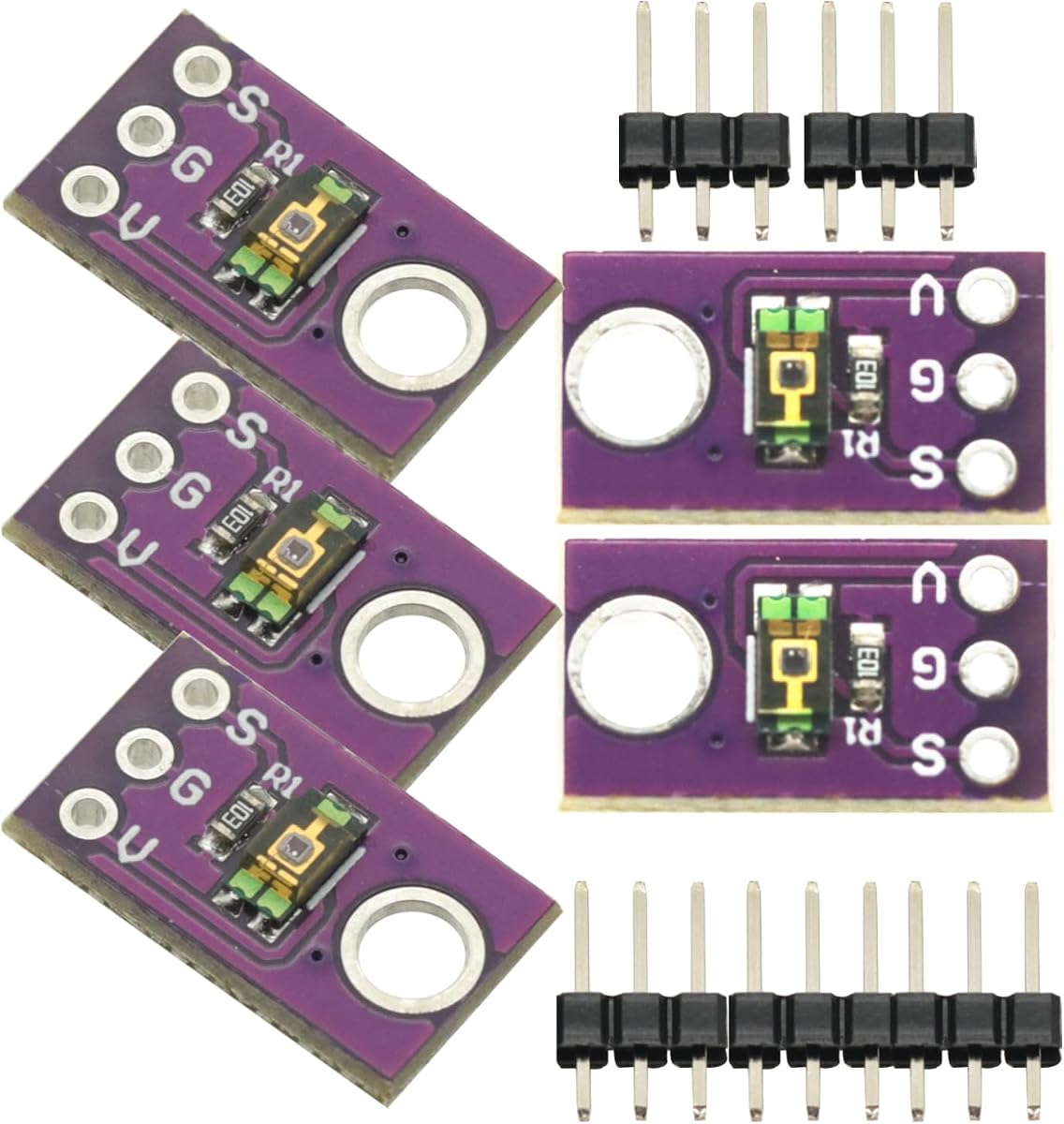
The TEMT6000 module is a professional grade sensor designed for applications requiring high accuracy. It has a perfect 5.0 rating reflecting its reliability and performance quality. This makes it the top choice for professional or critical tasks.
We may earn a commission when you buy through this link, at no additional cost to you.
It is specifically designed for ambient light control in display backlight dimming and keypad backlighting. The sensor offers precision detection suitable for industrial on/off lighting operations. Five modules are included in the pack to support multiple points.
While it is more expensive than basic LDR modules, the precision and reliability justify the cost for serious projects. If your application involves user interface lighting or industrial automation where consistency matters, this module is superior.
We recommend this for professionals or serious hobbyists who need accurate ambient data for screen adjustments. It ensures that your display brightness matches the environment precisely for optimal user experience and power efficiency.
Designed specifically for backlight dimming this sensor ensures your display is always at the correct brightness.
Its professional grade construction makes it suitable for industrial environments where consistent performance is required.
We may earn a commission when you buy through this link, at no additional cost to you.
This uxcell module utilizes a wide voltage LM393 comparator to ensure good stability during operation. It provides both digital and analog outputs offering flexibility for different project needs with three units included in the pack.
We may earn a commission when you buy through this link, at no additional cost to you.
The module works on 3.3 to 5V making it compatible with various microcontrollers. Its application is widespread in light intensity detection tasks particularly smart car projects. The stability of the comparator ensures consistent readings over time.
The pack size is smaller than some competitors which might be a consideration if you need many units. However for a specific project requiring stable performance this module offers great value and reliability for everyday detection tasks.
Choose this module if you value stable voltage detection and need both output types. It is well suited for robotics and vehicle lighting systems where reliable light sensing is crucial for safety and functionality.
The LM393 chip ensures that output signals remain stable even with slight power fluctuations in your system.
Having both analog and digital options gives you the flexibility to use the same module for multiple tasks.
We may earn a commission when you buy through this link, at no additional cost to you.
Selecting the right light sensor depends on your specific project needs and technical constraints. This guide outlines key factors to help you decide which sensor type fits your application best.
The first factor to consider is the type of sensor technology. LDRs (Light Dependent Resistors) are cost-effective and simple but lack precision. BH1750 modules offer digital precision via I2C, while photodiodes provide directional sensitivity for specific tracking tasks. TEMT6000 sensors are professional grade and designed for display backlighting applications.
Choose an LDR module for basic threshold detection, a BH1750 for precise digital data, or a photodiode for directional control.
Modules with analog outputs allow you to read continuous light levels, which is useful for monitoring trends or adjusting brightness. Digital outputs provide a simple on/off signal based on a threshold, which simplifies code for trigger-based automation.
If you need to log light data over time choose an analog output. If you only need to turn a light on at night choose a digital output.
Most modern microcontrollers operate at 3.3V or 5V. Ensure your selected sensor module supports both voltage ranges to avoid damage or unstable readings. Many modules include a voltage regulator to handle both safely.
Always check the input voltage range before connecting to boards like ESP32 or 3.3V Arduinos to ensure safe operation.
If your project requires accurate lux measurements for scientific or calibration purposes, an I2C sensor like the BH1750 is necessary. LDR modules can be inconsistent due to component variance and environmental temperature changes.
Use BH1750 modules for accuracy and LDR modules for simple on/off detection needs.
The physical size of the module matters for small projects. BH1750 modules are very compact while LDR modules with comparators take up more space. Ensure the module fits your enclosure or breadboard layout.
Prioritize compact modules for wearable devices and larger ones for breadboard prototyping.
Some modules include fixing bolt holes for easy mounting in enclosures. Others are bare components or small boards requiring you to solder wires for installation. Consider how you plan to mount the sensor in your final build.
Choose modules with mounting holes for permanent installations and wire-ready boards for prototyping.
Some packages come with multiple units which is beneficial for projects requiring multiple sensors or classroom use. Others sell single units or small packs. Consider how many sensors you need before purchasing.
Select bulk packs if you are building multiple projects to save on shipping and cost.
Look for sensors that come with tutorials or community support. Modules with libraries for Arduino and ESP32 simplify development. Check if the seller provides pinout diagrams or code examples.
Prioritize sensors with clear documentation to reduce development time and troubleshooting.
Connect the sensor module to your microcontroller by matching VCC to power, GND to ground, and signal pins to the appropriate input. For analog modules use an analog pin, and for digital modules use a digital input pin. Refer to the specific module pinout for accurate connections.
Calibrate your sensor by adjusting the potentiometer if available. This sets the threshold for digital triggering or ensures accurate analog readings. Place the sensor in a typical environment to test the sensitivity before finalizing your code settings.
Protect your sensor from physical damage and moisture by mounting it securely inside an enclosure. Avoid exposing the sensitive element to direct water or impact. Regularly check connections to ensure stable readings over long-term operation.
An LDR changes resistance based on light intensity while a photodiode generates current proportional to light. LDRs are slower and less precise but easier to use. Photodiodes offer faster response and better directional sensitivity.
Yes many of these modules support 3.3V to 5V input. Always check the voltage range on the module before connecting to ensure you do not damage the sensor or the microcontroller.
Analog and digital modules usually do not require libraries. You can read them directly with Arduino code. However I2C sensors like BH1750 require specific libraries to communicate properly.
A digital LDR module with adjustable threshold is best for automatic night lights. It provides a simple on/off signal that can trigger a relay or transistor to control a light bulb.
Most modules have a potentiometer (a small screw) that you turn to adjust sensitivity. Turn it clockwise or counter-clockwise while monitoring your readings until the desired threshold is reached.
These modules are not inherently waterproof. For outdoor use you should enclose the sensor in a sealed housing or apply conformal coating to protect it from moisture and dust.
This guide has presented ten excellent options for light sensing ranging from simple LDR modules to professional grade TEMT6000 sensors. The best choice depends on whether you need analog or digital output and how precise your light measurement must be.
Prioritize sensors that match your power supply and communication needs. If you want precise lux data choose an I2C module. If you need simple triggering a digital LDR module is often the most practical and cost-effective solution.
Prices and availability may change so always check current listings before purchasing. Verify compatibility with your specific Arduino or ESP32 board to ensure a smooth setup process for your next lighting project.