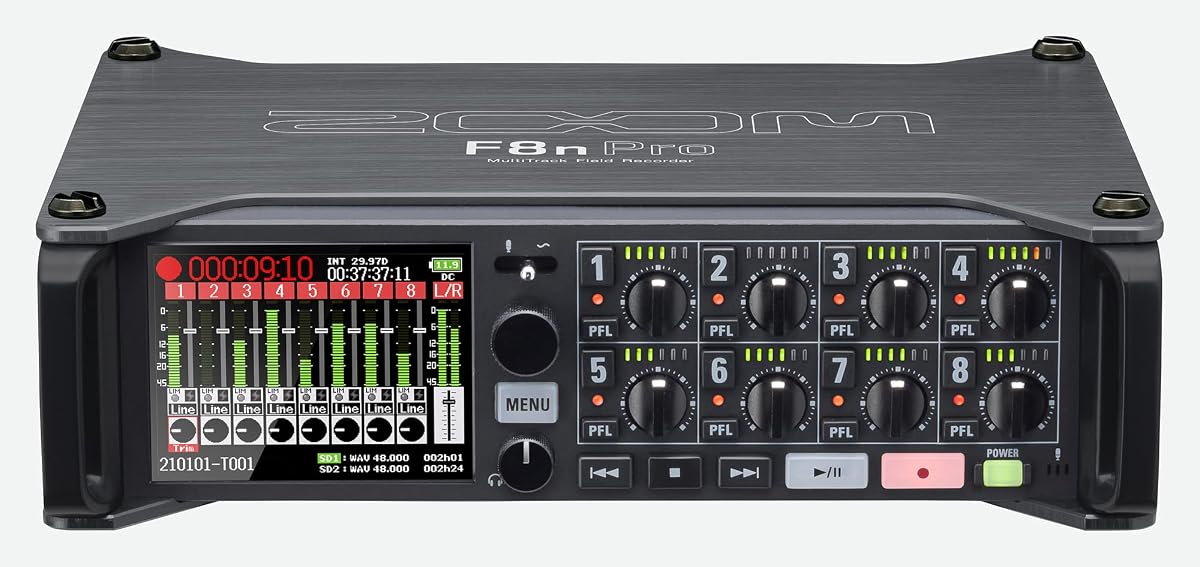
Zoom F8n Pro Field Recorder for Filmmakers with 8 Inputs & 10 Tracks
4.6Editor score
8-channel 10-track recorder
Dual SD slots
Industry-leading timecode
This guide compares the top audio field recorders for film to help filmmakers capture clear dialogue and sound effects on any budget with professional results.
Audio field recorders are essential tools for capturing high-quality sound on set or in the wild. They ensure dialogue is clear and ambient noise is managed properly for professional results.
We compared ten top models based on input count, recording quality, timecode support, and portability. Each option offers unique strengths for different filmmaking workflows and budgets.
Each pick shows key specs and real-world use cases to help you choose the right device. Please note that product prices and availability may change over time.
4.6Editor score

4.7Editor score

4.5Editor score
Below is a detailed side-by-side comparison of all ten recorders to help you evaluate specs and features quickly for your specific film production needs.



The Zoom F6 Professional Field Recorder stands out as a top choice for filmmakers needing reliable audio capture. It holds a 4.7 rating and offers 32-bit float recording that handles extreme volume swings without clipping.
We may earn a commission when you buy through this link, at no additional cost to you.
Its six XLR inputs allow recording multiple microphones simultaneously with up to 14 tracks. Timecode I/O keeps audio perfectly synced with video for professional workflows in broadcast and filmmaking settings.
While it is rugged and portable, it weighs more than basic handhelds. The price is higher but justified by the dual AD converters and flexible power options for long location days.
Filmmakers who need flexible setups with precise sync should prioritize this recorder. It balances power and portability better than most competitors in the market today.
The 32-bit float recording captures whisper-quiet dialogue and explosive sounds without distortion for clearer post-production.
Built-in timecode I/O ensures frame-accurate alignment between audio and video to streamline editing workflows significantly.
We may earn a commission when you buy through this link, at no additional cost to you.
The Zoom F8n Pro is a powerhouse for professional film audio with an 8-channel 10-track capability. It has a 4.6 rating and features 32-bit float recording to prevent clipping on set.
We may earn a commission when you buy through this link, at no additional cost to you.
With up to 75dB gain and dual SD slots for redundant recording, this unit ensures no critical take is lost. Timecode accuracy down to 0.2ppm keeps tracks perfectly aligned with picture.
It is larger and pricier than handheld models but offers unmatched flexibility for complex rigs. The interface can be complex for beginners but provides full control once mastered.
Professional crews needing extensive inputs and backup recording should choose this model. Its reliability and precision make it a top tool for high-end productions.
Dual SD card slots allow simultaneous backup recordings so you never lose audio if one card fails or fills up.
Industry-leading 0.2ppm timecode accuracy via TCXO keeps audio and video perfectly synced without drift over time.
We may earn a commission when you buy through this link, at no additional cost to you.
The Zoom H1 XLR offers professional-quality recording at a budget-friendly price. It has a 4.5 rating and supports 32-bit recording at 96kHz for clear detailed sound.
We may earn a commission when you buy through this link, at no additional cost to you.
With two XLR/TRS combo inputs, you can connect external mics easily. The OLED waveform display lets you monitor levels easily at a glance during interviews.
It lacks timecode and extra inputs but works great for simple setups. The SDXC support up to 1TB provides ample space for long sessions without worry.
Independent filmmakers and podcasters on a tight budget should consider this unit. It delivers pro-quality results without the high cost of larger recorders.
Recording at 32-bit 96kHz ensures high fidelity sound that rivals more expensive recorders for everyday filming needs.
The OLED waveform display makes it easy to check levels instantly without guessing and prevent accidental clipping.
We may earn a commission when you buy through this link, at no additional cost to you.
The Zoom F3 Professional Field Recorder is built for real-world recording where there are no second chances. It holds a 4.6 rating and features 32-bit float to capture everything without distortion.
We may earn a commission when you buy through this link, at no additional cost to you.
Dual locking XLR inputs keep connections secure when the recorder is mounted out of reach. Ultra-low-noise preamps ensure clean audio even in unpredictable environments on location.
It lacks timecode and has only two inputs but excels for run-and-gun work. Flexible power options and USB workflows keep you recording without interruption on long days.
Documentary filmmakers needing reliability in tight spaces should choose this model. It provides essential pro features in a compact form factor for mobility.
Dual locking XLR inputs prevent cables from coming loose during movement so your recording stays uninterrupted.
Ultra-low-noise preamps deliver consistent clean audio even when background noise levels are high on set.
We may earn a commission when you buy through this link, at no additional cost to you.
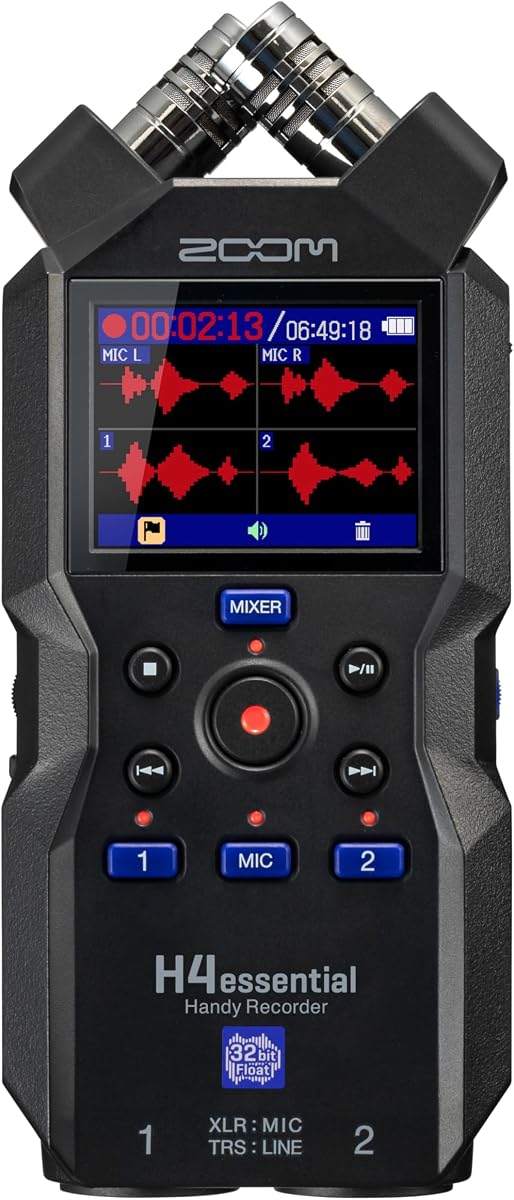
The Zoom H4 Essential is a 4-track recorder that helps capture more of the moment without worrying about distorted takes. It has a 4.4 rating and supports USB-C for recording to devices.
We may earn a commission when you buy through this link, at no additional cost to you.
Use the built-in stereo mics or connect external gear with two XLR/TRS inputs. Connect to your phone or computer with USB-C for recording or while saving a backup to SD card.
Spoken menu guidance helps visually impaired users but may slow some setups. It is a good middle ground for creators needing more tracks but less complexity than full units.
Content creators wanting both handheld ease and expandable inputs will appreciate this unit. It balances features and usability for mixed media projects.
Connect via USB-C to your phone or computer while also saving a backup directly to SD card for safety.
Spoken menu guidance makes navigation easier for users with visual impairments or those new to digital recorders.
We may earn a commission when you buy through this link, at no additional cost to you.
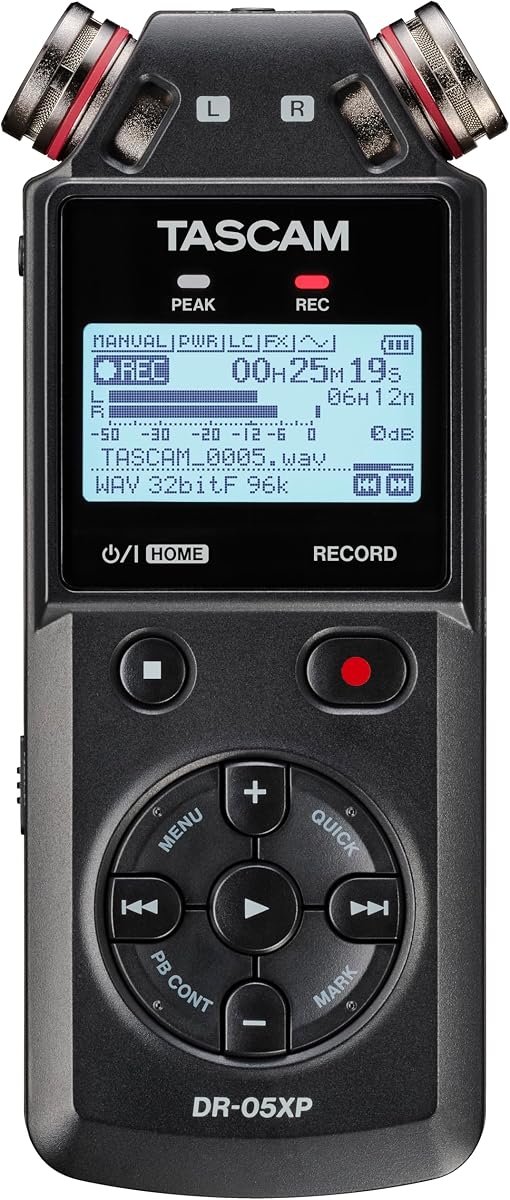
The TASCAM DR-05XP portable handheld recorder makes it easy to capture pro-quality recordings for video and meetings. It has a 4.2 rating and supports flexible recording modes including 32-bit float.
We may earn a commission when you buy through this link, at no additional cost to you.
Omnidirectional condenser microphones handle loud environments and sources up to 125dB SPL without distortion. Use it as a 2-in/2-out USB-C audio interface for recording directly to your computer.
It runs up to 17.5 hours on AA batteries which is ideal for long shoots. However it lacks XLR inputs so you cannot connect professional external mics easily.
Travelers and casual filmmakers needing a pocket recorder should consider this option. It offers solid audio quality in a very small and durable package.
Omnidirectional microphones handle loud sources up to 125dB SPL so you never clip on sudden noises.
Up to 17.5 hours of operation on standard AA batteries ensures you stay recording through long days.
We may earn a commission when you buy through this link, at no additional cost to you.
The Zoom H5 uses a system of interchangeable input capsules that can be swapped out as easily as a camera lens. It has a 4.7 rating and includes a detachable X/Y capsule for reduced handling noise.
We may earn a commission when you buy through this link, at no additional cost to you.
Four-track simultaneous recording allows capturing multiple sources at once. Two mic/line inputs with XLR/TRS combo connectors each have selectable phantom power and a -20dB pad for safety.
It is compatible with all Zoom input capsules for great versatility. While older it remains a favorite for flexibility and multichannel recording on a budget.
Sound designers and field recordists needing modularity should choose this unit. Its capsule system grows with your needs over time effectively.
Swap input capsules easily to change mic patterns or types without needing a new recorder.
Record four tracks simultaneously so you can capture multiple microphones and mix later in post.
We may earn a commission when you buy through this link, at no additional cost to you.
The TASCAM DR-10L Pro captures superior personal audio with a built-in lavalier microphone and 32-bit float recording. It has a 4.4 rating and now supports LTC Jam Sync for seamless timecode synchronization.
We may earn a commission when you buy through this link, at no additional cost to you.
This stealthy recording made effortless unit lets you worry-free recording from whisper to scream. Included clip-on microphone is matched to deliver clear lifelike audio in busy settings.
It supports up to 512GB microSDXC for limitless storage and connects via Bluetooth for Atomos sync. It focuses on personal interviews rather than multi-mic setups.
Vloggers and interviewers needing a compact body-worn recorder should choose this. It offers professional sound in a discreet and portable package.
LTC Jam Sync allows seamless timecode synchronization for multi-device setups and streamlined post-production.
Support for high-capacity microSDXC media cards gives you practically limitless storage for extended shoots.
We may earn a commission when you buy through this link, at no additional cost to you.
The Zoom H1 Essential helps create content with better sound for videos and reels. It has a 4.0 rating and captures clear stereo audio for tutorials and behind-the-scenes clips.
We may earn a commission when you buy through this link, at no additional cost to you.
It is ready when inspiration hits to record songwriting sessions or lessons easily. Connect via USB-C and use it as a microphone for livestreams remote meetings and video calls.
This device lacks external inputs but excels at ambient sound capture. It is ideal for solo creators needing quick and simple audio recording on the go.
Aspiring filmmakers and streamers wanting easy upgrades should start here. It simplifies the process of getting better sound without complex setups.
Capturing stereo audio is simple so you can focus on your content instead of technical audio details.
Use it as a microphone via USB-C for livestreams and calls without extra software.
We may earn a commission when you buy through this link, at no additional cost to you.
The Zoom F2 is the smallest 32-bit float recorder you can wear for clip-free audio at any volume. It has a 4.0 rating and comes with an omnidirectional lavalier microphone ready to go.
We may earn a commission when you buy through this link, at no additional cost to you.
It runs up to 15 hours on just 2 AAA batteries making it very efficient for on the go work. Supports microSDXC cards up to 512GB for ample storage on long shoots.
REC Hold switch prevents accidental stops while the precision clock ensures perfect sync for professional productions. It is focused on interviews and on-camera audio.
Solo journalists and wedding videographers needing a discreet recorder will love this. It balances size and reliability for essential audio capture.
At the smallest 32-bit float recorder you can wear it stays hidden on talent while capturing clean audio.
The +/-0.5ppm internal clock ensures perfect audio and video sync for professional film and video production.
We may earn a commission when you buy through this link, at no additional cost to you.
Selecting the right audio field recorder depends on your specific production needs. This guide outlines key factors to consider before buying.
Consider how many microphones you need to connect simultaneously. Devices range from 2 inputs for interviews to 8 inputs for complex multi-cam setups. Ensure the connectors support your current gear.
Look for recorders with enough inputs to handle your largest expected project without needing splitters or additional hardware.
32-bit float recording has become a standard for film recorders. It allows you to record without worrying about levels since the dynamic range is nearly unlimited. This prevents clipping in loud situations.
Choose a recorder with 32-bit float capability to ensure you never miss a critical audio take due to gain issues.
Timecode support is essential for syncing audio with video in post-production. Some units offer built-in timecode I/O while others require external generators. Frame accuracy matters for professional workflows.
Prioritize models with built-in timecode I/O to save time syncing footage manually during editing.
Field work often requires moving between locations quickly. A recorder that is too large can slow you down. Check battery life and power options like USB power bank support for long days on set.
Select a device that balances size and battery life to keep you recording without interruption.
High-resolution audio files take up significant space. Ensure the recorder supports SD cards with enough capacity for your longest sessions. Dual card slots allow backup recording to prevent data loss.
Look for SDXC support up to 1TB and dual slots to ensure you never run out of space during a shoot.
Clean audio starts with quality preamps. Units with ultra-low noise preamps deliver clear sound even at high gain levels. This is critical for quiet dialogue in noisy environments.
Check the EIN ratings of preamps to ensure the recorder handles quiet signals cleanly without added noise.
Your recorder should fit your existing workflow seamlessly. Consider USB interface capabilities to use the device with a computer for editing or streaming. Compatibility with other tools reduces friction.
Verify that the device works as a USB audio interface to streamline your post-production or live streaming setup.
Prices vary widely based on features. Higher cost often means more inputs and better durability. Assess which features are must-haves versus nice-to-haves to stay within budget.
Allocate funds to core needs like input count and timecode before adding luxury features.
Before filming, fully charge the batteries and check the SD card capacity. Set the recording format to 32-bit float or 24-bit WAV to ensure maximum quality for dialogue and ambient sound.
Use external microphones when possible for clearer audio. Position them close to the source and monitor levels on the screen to avoid clipping or too quiet tracks.
After each session, store the recorder in a padded case. Clean the XLR ports regularly and avoid exposing the unit to extreme heat or moisture.
32-bit float recording allows you to capture audio without worrying about gain levels. It provides a massive dynamic range so loud or quiet sounds do not clip. This reduces editing time and improves audio quality.
Timecode sync is vital for multi-camera or multi-audio setups. For single-camera projects it may not be necessary but still helps alignment. Most modern recorders include basic sync features to assist with this.
Two inputs are often enough for interviews and solo shots. Complex scenes may require four to eight inputs. Choose based on your typical scene layout and microphone count to avoid extra gear.
Many models support USB-C connectivity for streaming or computer recording. This allows you to use the recorder as an audio interface. Check specific compatibility with your operating system.
High-quality audio files take up space. 512GB or 1TB cards are recommended for long sessions. Dual card slots also allow for backup recording to prevent data loss.
Use a padded case and keep the device away from moisture. Dust can clog input ports so cover them when not in use. Handle the unit gently to avoid damaging preamps or connectors.
External microphones provide more direct and clear sound. Built-in mics often pick up more handling noise and distance. For professional film work external mics are strongly recommended.
Battery life varies by model and usage. Some record 15 to 20 hours on standard batteries. Others use USB power banks for continuous recording on long sets.
We reviewed ten top audio field recorders suitable for various film production needs. From the Zoom F6 for flexibility to the H1 XLR for budget, each offers distinct strengths.
Prioritize input count, timecode support, and recording format when making your choice. Ensure the device fits your workflow to maximize efficiency during shoots.
Remember to check current prices and availability as models update frequently. Select the recorder that aligns best with your specific production goals.