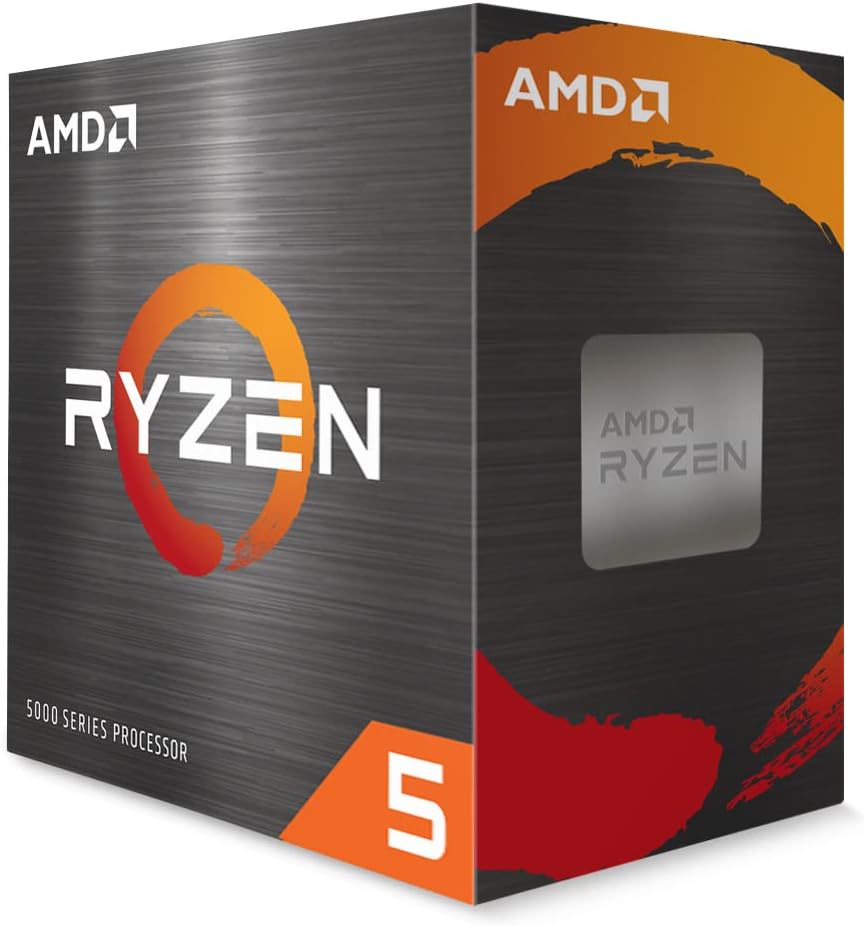
AMD Ryzen 5 5500
4.7Editor score
Six cores for multitasking
Includes Wraith Stealth cooler
Affordable entry-level price
Discover the top CPUs for Excel and Data Analysis in October 2026. We compare performance, cores, and efficiency to help you choose the right processor.
Choosing the right CPU for Excel and Data Analysis is crucial for handling large datasets efficiently. Modern spreadsheets require significant processing power to manage complex formulas and real-time calculations without lag.
We evaluated ten top processors based on core counts, clock speeds, and cache sizes. Our analysis focuses on how each chip handles multitasking, data crunching, and sustained workloads common in professional environments.
Each pick highlights specific strengths like price, efficiency, or raw speed. Please note that pricing fluctuates frequently, so check current listings before making a final decision on your new hardware.
4.7Editor score

4.8Editor score

4.8Editor score
This table compares all ten selected processors side-by-side. Review the specifications to understand how each model performs in data-intensive scenarios.


The Intel Core Ultra 9 285K stands out as a top performer for demanding data tasks. It features 24 cores and offers a high boost clock for rapid processing.
We may earn a commission when you buy through this link, at no additional cost to you.
Its hybrid architecture efficiently distributes workloads between performance and efficiency cores. This ensures smooth multitasking when running complex Excel macros alongside other applications.
While it offers excellent performance, note that it does not include a cooling solution. You will need to budget for a robust cooler to manage thermal output effectively.
This processor is ideal for professionals who need maximum speed for heavy data crunching. It delivers reliable performance for advanced analysis workloads.
The architecture balances performance and efficiency cores to optimize power usage during complex tasks.
Boost speeds up to 5.7 GHz ensure quick completion of calculation-heavy spreadsheet operations.
We may earn a commission when you buy through this link, at no additional cost to you.
The AMD Ryzen 7 9800X3D offers impressive cache capacity for quick data access. It is built on the latest Zen 5 technology for improved performance.
We may earn a commission when you buy through this link, at no additional cost to you.
Its massive 96MB L3 cache helps reduce latency when loading large datasets. This makes it highly effective for memory-intensive spreadsheet operations.
Though primarily marketed for gaming, its performance characteristics suit data tasks well. The thermal performance is optimized compared to previous generations.
This chip is a strong choice for users needing high single-thread speed and cache. It handles modern analysis software with ease.
3D V-Cache provides significantly more L3 cache for faster access to frequently used data.
The latest architecture delivers a notable IPC uplift for better efficiency per watt.
We may earn a commission when you buy through this link, at no additional cost to you.
The Intel Core i9-14900K is known for its leading maximum clock speed of 6.0 GHz. It features 24 cores and 32 threads for robust multitasking capabilities.
We may earn a commission when you buy through this link, at no additional cost to you.
This high frequency ensures rapid responsiveness during complex formula calculations. It also includes integrated graphics which can be useful for basic display needs.
Users should note potential BIOS updates may be required for 600-series boards. The power consumption is higher compared to more efficient modern chips.
It remains a top contender for raw speed in spreadsheet applications. Ideal for users prioritizing peak clock speeds over power efficiency.
Up to 6.0 GHz provides rapid responsiveness for single-threaded calculations.
Includes UHD Graphics 770 for basic display output without a dedicated GPU.
We may earn a commission when you buy through this link, at no additional cost to you.
The AMD Ryzen 5 9600X offers high performance with 6 cores and 12 threads. It is based on the efficient Zen 5 architecture.
We may earn a commission when you buy through this link, at no additional cost to you.
With a max boost of 5.4 GHz, it handles daily data tasks smoothly. The unlocked status allows enthusiasts to tweak performance if desired.
It supports DDR5-5600 memory which improves bandwidth for data transfer. This ensures fast loading times for large spreadsheets.
This processor is suitable for users needing a balance of speed and cost. It is a solid choice for mid-range workstations.
Supports DDR5-5600 memory for faster data throughput and system responsiveness.
Unlocked for overclocking to allow manual performance tuning by enthusiasts.
We may earn a commission when you buy through this link, at no additional cost to you.
The Intel Core Ultra 7 270K features 24 cores designed for demanding gaming and creator work. It uses the next-generation LGA1851 socket.
We may earn a commission when you buy through this link, at no additional cost to you.
Boost clocks reach up to 5.5 GHz ensuring top-tier responsiveness for calculations. It supports high-speed DDR5 memory up to 7200 MT/s.
This model is unlocked for performance tuning when paired with Z-series chipsets. This makes it a great choice for power users.
Ideal for those wanting next-gen features and solid multi-core performance. It handles heavy Excel workloads with efficiency.
Compatible with Intel 800 Series chipsets for advanced connectivity and memory speeds.
Unlocked for overclocking to allow performance tuning for power users.
We may earn a commission when you buy through this link, at no additional cost to you.
The AMD Ryzen 9 9950X offers 16 cores and 32 threads for extreme multitasking. It is based on the powerful Zen 5 architecture.
We may earn a commission when you buy through this link, at no additional cost to you.
Its 80 MB cache allows for faster access to large datasets. This is crucial for maintaining speed during complex analysis tasks.
With a max boost of 5.7 GHz it delivers high single-thread performance. A liquid cooler is recommended to manage its thermal output.
This processor is the best choice for heavy creators and data professionals. It ensures maximum speed for any workload.
80 MB of cache ensures rapid data retrieval for large spreadsheet datasets.
32 processing threads allow for seamless multitasking across multiple applications.
We may earn a commission when you buy through this link, at no additional cost to you.
The Intel Core i7-12700KF provides 12 cores and 20 threads for demanding applications. It utilizes hyper-threading for high performance.
We may earn a commission when you buy through this link, at no additional cost to you.
It features 25 MB L3 cache which offers supreme performance for computation apps. The architecture improves performance per watt for efficiency.
While it lacks integrated graphics, it is a solid choice for workstations. The 5.0 GHz boost ensures responsive computing.
This chip is a reliable option for users on older motherboard platforms. It balances power and cost effectively.
11 MB L2 and 25 MB L3 cache offer supreme performance for computation apps.
The Intel 7 Architecture enables improved performance per watt for efficiency.
We may earn a commission when you buy through this link, at no additional cost to you.
The Intel Core i5-14400F delivers 10 cores with a hybrid architecture. It prioritizes workloads to optimize performance and efficiency.
We may earn a commission when you buy through this link, at no additional cost to you.
With 20MB cache and support for both DDR4 and DDR5 it offers flexibility. The included thermal solution simplifies setup for new builds.
It supports PCIe 5.0 and 4.0 ensuring future connectivity options. The unlocked status allows for tuning if needed.
This is an ideal choice for budget-conscious users needing strong performance. It provides a reliable platform for data analysis.
Prioritizes and distributes workloads to optimize performance for demanding apps.
Compatible with DDR4 and DDR5 memory to offer build flexibility.
We may earn a commission when you buy through this link, at no additional cost to you.
The AMD Ryzen 9 9900X features 12 cores and 24 threads for powerful computing. It delivers ultra-fast performance for popular applications.
We may earn a commission when you buy through this link, at no additional cost to you.
Its 76 MB cache ensures quick access to data files. The max boost of 5.6 GHz handles complex calculations effectively.
Unlocked for overclocking it allows enthusiasts to push performance limits. The AM5 platform supports PCIe 5.0 on select boards.
This chip is excellent for creators needing high multi-core power. It ensures smooth operations for heavy data loads.
76 MB cache ensures fast access to data and reduces processing latency.
Unlocked for overclocking to allow performance customization for enthusiasts.
We may earn a commission when you buy through this link, at no additional cost to you.
The AMD Ryzen 5 5500 is an affordable entry point for desktop computing. It offers 6 cores and 12 threads for multitasking.
We may earn a commission when you buy through this link, at no additional cost to you.
With a 4.2 GHz max boost it handles basic to moderate Excel tasks well. The bundled Wraith Stealth cooler saves on extra hardware costs.
It supports DDR4-3200 memory which is cost-effective for builds. The AM4 platform is mature and widely available.
This processor is perfect for budget builds needing reliable performance. It ensures efficient computing for daily data work.
Bundled with the AMD Wraith Stealth cooler for immediate use without extra purchase.
Designed for the advanced Socket AM4 platform with broad motherboard support.
We may earn a commission when you buy through this link, at no additional cost to you.
Selecting the right processor requires understanding core counts and speeds. Consider the following factors to match your needs.
More cores allow for better multitasking and handling of complex calculations simultaneously. For heavy data analysis, aim for at least 8 cores.
Higher core counts ensure smooth operation when running multiple applications alongside Excel.
Clock speed determines how quickly individual tasks are processed. Higher GHz ratings mean faster calculation times for formulas.
Prioritize high boost clocks for single-thread performance in complex spreadsheets.
Larger cache memory stores frequently used data for quicker access. This reduces lag when opening large files.
Look for processors with ample cache to speed up data retrieval.
Ensure the CPU fits your motherboard socket. AM5 and LGA1851 are modern standards with long-term support.
Choose a platform that offers future upgrade paths for longevity.
DDR5 memory offers higher bandwidth than DDR4, improving overall system responsiveness. This is vital for large datasets.
Select a CPU that supports your preferred memory type for best performance.
Modern processors use power efficiently to reduce heat generation and operating costs. Efficient chips run cooler and quieter.
Consider the TDP to ensure your cooling solution can manage the thermal output.
Integrated graphics can display output without a dedicated GPU. This is useful for office setups.
Check if the model includes iGPU if you do not have a graphics card.
Prices vary widely based on performance tiers. Determine how much you need versus what you are willing to spend.
Balance features with cost to find the best value for your needs.
Ensure proper thermal paste application when installing the processor. This ensures efficient heat transfer to the cooler.
Keep your system cool by cleaning dust filters regularly. Dust buildup can restrict airflow and cause overheating.
Update your BIOS to the latest version for optimal compatibility. This improves system stability and performance tuning options.
For basic use, 4 cores are sufficient. For heavy data analysis, 8 or more cores provide better multitasking capabilities. Complex models benefit from high core counts.
DDR5 offers faster data transfer speeds which can improve performance with large datasets. However, DDR4 is more cost-effective for budget builds.
Both perform well depending on the model. AMD often offers better efficiency while Intel provides strong single-thread speeds. Check benchmarks for specific tasks.
Not always. Air coolers are sufficient for most CPUs. Liquid cooling is recommended for high-end models running at maximum load.
Check socket compatibility before buying. Newer CPUs require newer motherboards. Some older boards may support new CPUs with BIOS updates.
Modern CPUs range from 65W to 125W or more. Choose a power supply that can handle the CPU plus other system components.
We reviewed ten top processors ranging from budget-friendly to premium. The Ryzen 5 5500 offers great value while the Ryzen 9 9950X leads in performance.
Prioritize core count and clock speed for your specific workflow. Choose a platform that aligns with your long-term needs.
Always verify current prices before purchasing as they change frequently. Find the best balance of performance and cost for your office setup.