
VEVOR Greenhouse Heater with Thermostat
4.2Editor score
1500W PTC heating
3-speed settings
Overheat protection
Discover the top 10 Greenhouse Heater models for 2026. We compare features, safety, and efficiency to help you choose the right warming solution for your
Keeping your plants thriving during cold months requires reliable warmth. A quality Greenhouse Heater maintains optimal temperatures for seedlings and mature plants alike. Selecting the right unit ensures consistent growth and protects your investment from frost damage.
We evaluated leading models based on heating capacity, safety features, and ease of use. Our analysis focuses on units that provide steady warmth without excessive energy consumption. Each product offers unique benefits for different greenhouse sizes and growing needs.
Each pick highlights key strengths and potential trade-offs for informed decisions. We include detailed specs and real-world performance insights to guide your choice. Remember that availability and pricing may change, so verify details before purchasing.
4.2Editor score

4.0Editor score

4.9Editor score
This side-by-side comparison helps you evaluate each model quickly. We highlight key specifications and unique features to simplify your selection process. Use this table to find the perfect fit for your specific growing environment.



The BioGreen Electric Greenhouse Heater & Fan stands out as a top performer for serious gardeners. With a solid 4.0 rating, it offers robust heating and air movement. Its stainless steel construction ensures longevity even in humid conditions.
We may earn a commission when you buy through this link, at no additional cost to you.
This unit provides two adjustable heating elements for flexible warmth control. The digital thermostat maintains precise temperatures to protect delicate plants. Air circulation prevents heat buildup and promotes healthy growth cycles.
While effective, the unit is larger than compact alternatives. You need sufficient floor space to accommodate its footprint. The price reflects premium build quality but may strain tight budgets.
Buy this if you need reliable, long-term performance for a medium greenhouse. It suits growers prioritizing durability and precise climate control. The investment pays off through consistent plant health.
The fan mode moves up to 5800 cubic feet of air hourly. This reduces humidity pockets and prevents mold on leaves.
Stainless steel resists rust and corrosion from moisture. It withstands daily use in damp environments without degrading.
We may earn a commission when you buy through this link, at no additional cost to you.
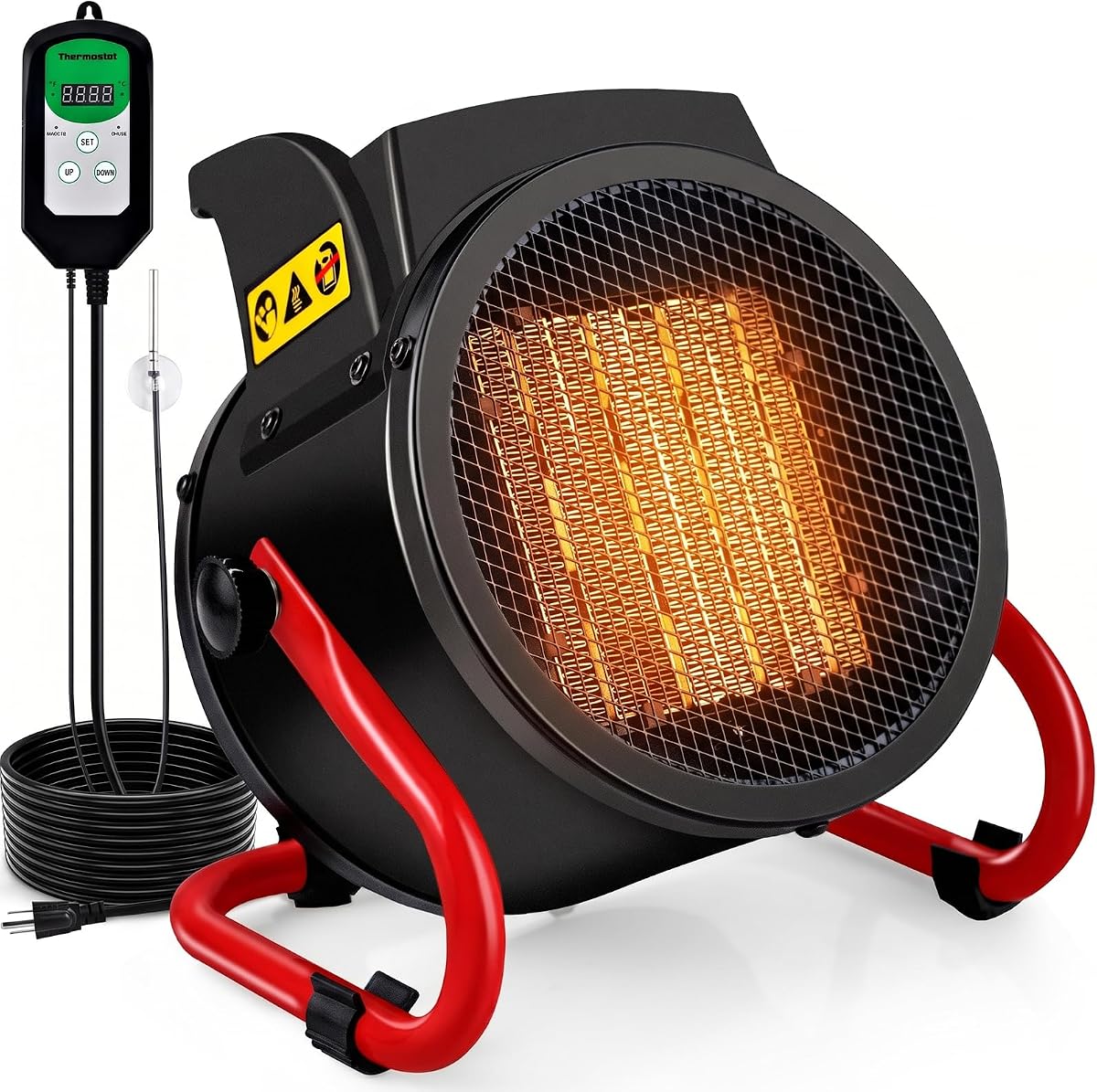
The VEVOR Greenhouse Heater with Thermostat delivers great value for money. It heats spaces quickly using efficient PTC technology. Users appreciate the independent thermostat for accurate temperature management.
We may earn a commission when you buy through this link, at no additional cost to you.
Three speed settings allow customization for different conditions. The unit runs quietly so it does not disturb work. Overheat protection adds safety for unattended operation periods.
Its IP20 rating limits use in very wet zones. The housing is less rugged than steel alternatives. Still, it handles typical greenhouse humidity well enough.
Ideal for beginners or small setups needing budget warmth. It balances cost and performance effectively. Choose this to save money without sacrificing core heating functions.
PTC elements heat faster than standard coils. They maintain consistent output without overheating easily.
The separate probe monitors soil temps directly. This ensures roots stay warm even if air fluctuates.
We may earn a commission when you buy through this link, at no additional cost to you.
The Pasapair model leads in modern convenience and precision. It connects to your phone for remote temperature adjustments. An external probe measures actual plant temps for accuracy.
We may earn a commission when you buy through this link, at no additional cost to you.
Seven-day scheduling automates heating cycles automatically. You can set eco modes to save energy costs. The app interface is intuitive for most users.
Setup requires Wi-Fi connectivity which may fail in remote sheds. The probe cable limits placement flexibility slightly. These are minor issues for advanced tech users.
Perfect for tech-savvy growers needing remote monitoring. It maximizes automation and control. Choose this for smart gardening workflows and peace of mind.
Check temps from anywhere via the Smart Life app. Adjust settings without entering the cold greenhouse.
The wired probe reads soil temps directly. Avoids relying on ambient air measurements that differ.
We may earn a commission when you buy through this link, at no additional cost to you.
This model offers a straightforward approach to greenhouse heating. Its 4.8 rating reflects user satisfaction with performance. The digital display makes temperature setting easy.
We may earn a commission when you buy through this link, at no additional cost to you.
It reduces excess dampness in covered areas. This helps prevent fungal issues during humid months. Overheat shutoff ensures safety during extended use.
Lack of advanced fan modes limits airflow control. There is no timer for scheduled on off cycles. Basic users will find these acceptable trade-offs.
Great for those wanting simplicity and reliability. It handles seedling needs well. Pick this for balanced warmth and moisture management.
Helps dry out damp spaces effectively. Reduces risk of rot for sensitive cuttings.
Flame resistant materials reduce fire hazards. Built in shutoff adds peace of mind.
We may earn a commission when you buy through this link, at no additional cost to you.
The VEVOR space heater brings versatility to the greenhouse. Its adjustable angle directs heat where needed. The portable handle makes it easy to move around.
We may earn a commission when you buy through this link, at no additional cost to you.
Two modes allow switching between warm and fan. This supports cooling in summer too. Flame-retardant housing adds a layer of safety.
Some users report inconsistent thermostat performance. The build feels less premium than steel options. Good for temporary setups or flexible use.
Choose if you need to move heat often. It fits tight spaces well. A practical choice for multi-space heating needs.
The 25 degree tilt aims heat precisely. Reduces wasted energy on empty walls.
Handles make it easy to transport. Ideal for moving between rooms or tents.
We may earn a commission when you buy through this link, at no additional cost to you.
This unit combines function with a pleasing green look. It blends well in garden environments visually. PTC ceramic technology ensures efficient warm output.
We may earn a commission when you buy through this link, at no additional cost to you.
Three power options let you match demand. Low power saves energy during mild nights. Water resistance handles outdoor exposure safely.
The green color may not suit all decors. Warranty terms are standard for the category. Aesthetics are secondary to performance.
Great for outdoor patios and greenhouses. Adds a nice visual touch. Choose this for balance of looks and utility.
Green finish matches garden themes well. Looks like garden decor rather than appliance.
Switch between 20 750 and 1500 watts. Tailor output to daily conditions easily.
We may earn a commission when you buy through this link, at no additional cost to you.
This heater excels in wet environments with IPX5 rating. It resists water spray and splashes well. Intelligent control maintains stable temps automatically.
We may earn a commission when you buy through this link, at no additional cost to you.
Fast heating warms rooms quickly. The cord is thickened for safe high-power use. Reliable for damp greenhouses or covered patios.
Coverage stops at 120 square feet. Larger spaces need multiple units. Design is functional but plain.
Best for humid areas needing waterproofing. It handles rain and irrigation mist. Choose this for safety in wet conditions.
IPX5 rating stops water from entry. Safe near water sprays and hoses.
PTC elements heat nearly instantly. No long wait for desired warmth.
We may earn a commission when you buy through this link, at no additional cost to you.
SEEYANG model delivers impressive efficiency and coverage. It handles up to 200 square feet of space. Stainless steel shell adds durability against elements.
We may earn a commission when you buy through this link, at no additional cost to you.
Digital thermostat ensures precise control. The 7.5 foot cord offers flexible placement. Perfect for larger outdoor or indoor spaces.
Fan only mode lacks cooling power. App connectivity is absent. Basic functionality suits straightforward needs.
Ideal for larger setups on a budget. Provides robust warmth reliably. Choose this for efficiency and coverage.
Heats up to 200 square feet easily. Great for large greenhouses or workshops.
Stainless steel withstands outdoor wear. Resists rust in humid conditions.
We may earn a commission when you buy through this link, at no additional cost to you.
Auto power control simplifies operation significantly. The digital display shows current temps clearly. Fast heat up warms plants quickly.
We may earn a commission when you buy through this link, at no additional cost to you.
15A controller supports high-power devices safely. Ventilation helps air circulation too. Suitable for grow tents and patios.
Setting up the kit takes time. Remote access is not available. Users want smart features may want more.
Good for auto-focused indoor growing. Reliable performance for seedlings. Choose this for convenience and safety.
Independent thermostat handles power on off. Maintains set temps with minimal effort.
Adjustable fan mode moves air. Helps prevent stuffy conditions inside.
We may earn a commission when you buy through this link, at no additional cost to you.
This heater is ultra-light at under 5 lbs. Easy to carry and place anywhere. PTC heat up is fast and effective.
We may earn a commission when you buy through this link, at no additional cost to you.
Three speed settings manage output levels. Low noise operation suits indoor work. Compact design fits tight shelves.
IP20 rating limits wet use significantly. Small size suits small tents only. Not ideal for large spaces.
Perfect for portable small tent needs. Easy to transport and store. Choose this for mobility and quick warmth.
Weighs less than five pounds. Easy to lift and carry around.
Reaches set temp in seconds. Ideal for quick warm up needs.
We may earn a commission when you buy through this link, at no additional cost to you.
Selecting the right Greenhouse Heater depends on several key factors. Understanding these will help you find a unit that meets your specific needs effectively.
Check the wattage and BTU output to match your space size. Units rated for 1500 watts usually cover between 120 and 200 square feet. Ensure the capacity exceeds your area slightly to maintain temps during cold snaps.
Always verify the manufacturer's square footage rating before buying.
Look for automatic overheat protection to prevent fires. Waterproof ratings like IPX4 or IPX5 are crucial for humid environments. Flame-retardant housing materials add an extra layer of security.
Safety certifications like ETL or UL ensure the unit meets industry standards.
Digital thermostats offer better accuracy than analog dials. Some units include external probes for soil temperature monitoring. Precise control prevents temperature spikes that can harm seedlings.
Invest in models with adjustable ranges that fit your plant needs.
Fans help distribute heat evenly throughout the greenhouse. Without circulation, cold spots can develop near the floor. Some units allow fan-only mode for summer cooling too.
Ensure the fan moves enough air to avoid heat buildup.
PTC ceramic heating elements are generally more energy efficient. Look for ECO modes that lower power during mild weather. Energy-saving features reduce monthly electricity costs significantly.
Higher efficiency units pay back costs over time.
Stainless steel or heavy-duty plastic resists humidity damage. Check for rust-proof materials if you use it outdoors. Quality construction ensures the unit lasts many seasons.
Solid build quality reduces maintenance needs over time.
Handle design and weight matter if you move units often. Compact models fit in tight spaces but may have lower output. Ensure the base is stable to prevent tipping accidents.
Choose a size that fits your available floor space.
WiFi connectivity allows remote monitoring via apps. Scheduling helps automate heating cycles for energy savings. Consider if smart home integration fits your workflow.
Advanced tech is useful for tech-savvy growers.
Place the heater on a stable, level surface away from flammable plants. Ensure there is enough clearance around the vents for air flow. Connect to a grounded outlet that supports the power draw without tripping breakers.
Set the thermostat to your target temperature to maintain consistent warmth. Use the circulation mode in summer to reduce humidity. Avoid placing the unit directly in water streams or heavy spray zones.
Regularly clean the air filters and vents to prevent dust buildup. Check cords and plugs for wear before each season. Store the unit indoors during off-months to extend its lifespan.
For every 100 square feet, aim for at least 1000 watts of heating power. A 1500 watt unit typically suits spaces up to 150 square feet. Adjust based on insulation quality and climate severity.
Yes, if they have automatic overheat protection and certified safety ratings. Ensure the thermostat is set correctly to avoid running continuously. Never leave them unattended without these safety features in place.
Models with PTC elements and ECO modes are relatively efficient. Energy usage depends on how often the heater cycles on and off. Use insulation to reduce the workload and save costs.
Look for units with IPX4 or higher waterproof ratings. Standard indoor heaters may fail or become hazardous in wet spots. Always verify the IP rating before using near water.
Unplug the unit and let it cool completely. Wipe the exterior with a dry cloth and vacuum dust from vents. Avoid spraying water directly on the electronics or control panel.
External probes measure soil temps directly for higher accuracy. Built-in sensors only read air temps which can fluctuate. For sensitive plants, external control is worth the extra cost.
Check if the outlet has power and the cord is undamaged. Reset the internal thermostat or circuit breaker if available. Contact support if the unit shows no signs of power.
Only units with specific weatherproof ratings are safe outdoors. Standard models should stay under cover to prevent water damage. Check the manual for outdoor usage instructions.
Our top picks include the BioGreen model for overall quality and VEVOR for budget value. The Pasapair unit leads in smart features for remote control. Each option balances performance with specific user needs effectively.
Prioritize safety ratings and heating capacity over fancy features first. Ensure the unit fits your space and climate conditions. A reliable heater protects your plants better than any app control.
Prices and availability change often so verify current details before buying. Check user reviews for latest real-world feedback. Choose the unit that aligns with your budget and growth goals.