
Rokinon Cine DS DS85M-C 85mm T1.5
4.5Editor score
Full frame coverage
T1.5 to T22 range
Unified gear positions
72mm filter thread
Discover the top rated cine lens options for 2026. This guide compares optical quality, aperture speed, and mount compatibility to help filmmakers choose.
Choosing the right cine lens is essential for professional filmmakers and content creators aiming for cinematic visuals. These lenses offer precise manual control and consistent optical performance across various shooting scenarios.
We evaluated ten top-rated cine lenses based on optical design, aperture range, build quality, and mount compatibility. Our analysis covers both full-frame and S35 options suitable for diverse production needs.
Each pick highlights key strengths and ideal use cases to guide your investment. Prices and availability may vary so verify details before purchasing to ensure you get the best value.
4.5Editor score
5.0Editor score

5.0Editor score
This side-by-side comparison highlights the key specifications and unique features of each cine lens. Use it to quickly identify the best match for your camera system and shooting style.




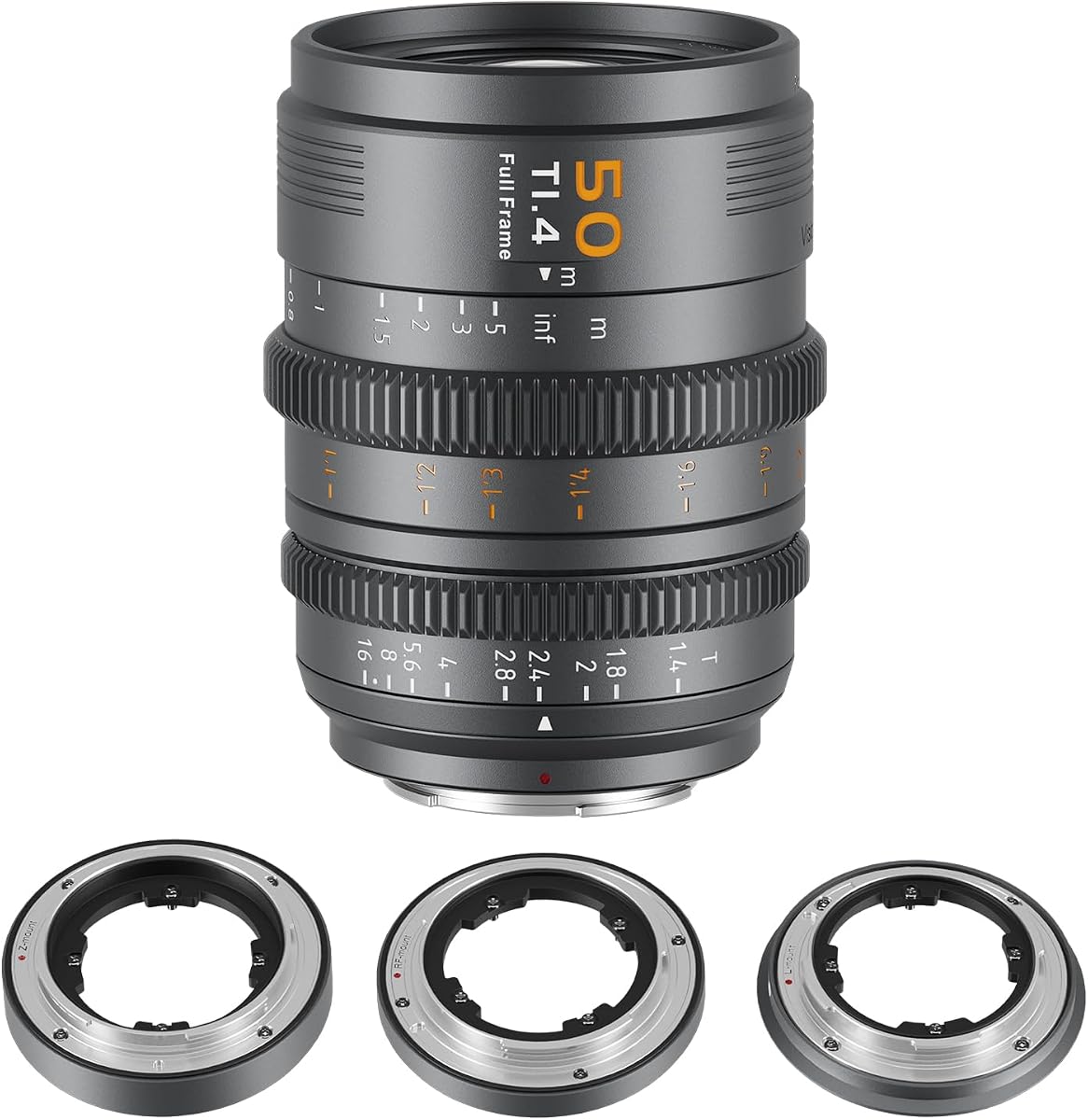
This SIRUI VP-1 Vision Prime 1 50mm T1.4 Full Frame Cine Lens stands out as the top choice for professional filmmakers. It earned a perfect rating for its exceptional optical performance and versatile design.
We may earn a commission when you buy through this link, at no additional cost to you.
The lens features aspherical elements and ED glass delivering sharp images with minimal distortion and chromatic aberration. The T1.4 aperture ensures excellent low-light capability while maintaining nuanced detail. The interchangeable mount system allows seamless switching between Sony E Canon RF Nikon Z and Panasonic L mounts.
While the mount swap is a minor inconvenience it ensures compatibility across various systems. The compact design at around 600 grams makes stabilization easy for travel and gimbal work. Color consistency across the series is ideal for multi-lens productions.
Ideal for documentary and narrative filmmaking this lens balances performance and portability. It suits users needing professional quality without excessive bulk. Consider this pick if you prioritize sharpness and flexibility.
The pre-installed E mount with user-interchangeable RF Z and L options provide unmatched versatility across camera systems.
Advanced glass elements minimize aberrations ensuring crisp detail even in high-resolution 8K storytelling workflows.
We may earn a commission when you buy through this link, at no additional cost to you.
The Rokinon Cine DS DS85M-C 85mm T1.5 AS IF UMC Full Frame Cine Lens for Canon EF is the best budget option. It offers professional features at an accessible price for emerging filmmakers.
We may earn a commission when you buy through this link, at no additional cost to you.
This lens provides full frame coverage with a T1.5 to T22 aperture range ideal for portraits and low light shooting. The 8 blade iris creates attractive bokeh. Gear positions are unified across Rokinon DS lenses for easy accessory compatibility.
Its fixed Canon EF mount limits use to EF system cameras. Manual focus requires precision but ensures creative control. The 72mm filter thread supports standard accessories.
Choose this lens for cost-effective production without sacrificing quality. It suits hobbyists and indie creators seeking cinematic depth. Verify mount compatibility before purchasing.
The T1.5 aperture allows stunning subject separation and excellent performance in dimly lit environments.
Consistent aperture and focus gear positions simplify rigging when using multiple Rokinon DS lenses.
We may earn a commission when you buy through this link, at no additional cost to you.
The DZOFILM Pictor 50-125mm T2.8 Super35 Parfocal Cine Lens for PL Mount and Canon EF is the premium choice. It delivers professional zoom performance with parfocal capabilities.
We may earn a commission when you buy through this link, at no additional cost to you.
This lens maintains focus across the zoom range ensuring smooth transitions. Minimal focus breathing keeps framing stable. The 16-slat iris provides creamy bokeh. Compatible with standard cine accessories and both PL and EF mounts.
The Super35 format limits full-frame use. The higher cost reflects professional-grade optical quality. Ideal for commercial and narrative production needing versatile zooms.
Invest in this lens for high-end video work. Its parfocal nature reduces focus issues during zooms. Prioritize this if budget allows and PL mount support is needed.
Zooming does not require refocusing saving time and ensuring consistent framing during complex shots.
The 16-slat iris design delivers smooth bokeh and precise exposure control in varied lighting conditions.
We may earn a commission when you buy through this link, at no additional cost to you.
The ROKINON CINE DS T1.5 Cinema Lens Kit offers a complete solution with 24mm 35mm 50mm and 85mm lenses. It achieved a high rating for consistent performance.
We may earn a commission when you buy through this link, at no additional cost to you.
All lenses cover full-frame sensors with T1.5 to T22 exposure range. Dual side focus and T-stop scales aid workflow. De-clicked aperture rings allow smooth iris changes during recording.
The Canon EF mount restricts use to EF camera bodies. Multi-layer coating reduces flare. This kit provides a comprehensive toolkit for varied shots.
Best for creators needing a full lens set in one purchase. Verify mount compatibility. Prioritize this if you require multiple focal lengths quickly.
Includes essential primes for wide interiors portraits and standard shots in a unified kit.
Dual-sided markings enable precise focus and exposure control during multi-camera setups.
We may earn a commission when you buy through this link, at no additional cost to you.
The Rokinon 35mm T1.5 Cine DS Lens for Canon EF delivers a natural field of view. It earned a strong rating for balanced performance in diverse scenarios.
We may earn a commission when you buy through this link, at no additional cost to you.
Full frame coverage pairs with T1.5 to T22 aperture range. The lens offers 63.1 degrees angle of view. Unified gear positions match other Rokinon DS lenses. Minimum focusing distance of 12 inches aids close-up work.
Fixed Canon EF mount limits camera compatibility. Manual focus requires skill but offers creative control. The 77mm filter thread supports standard filters.
Ideal for street and documentary work needing a versatile standard prime. Ensure mount compatibility before buying. A reliable choice for storytelling.
The 35mm focal length provides a comfortable perspective for interviews environmental scenes and handheld shots.
Standardized gear positions simplify accessory use when building a multi-lens cinema rig.
We may earn a commission when you buy through this link, at no additional cost to you.
The SIRUI Night Walker 35mm S35 Manual Focus Cine Lens excels in low light with a T1.2 aperture. It received solid ratings for its optical design and lightweight construction.
We may earn a commission when you buy through this link, at no additional cost to you.
Large T1.2 aperture enables shooting without excessive ISO. The strong aluminum housing keeps weight around 500g. 270° focus rotation ensures smooth manual control. 12 aperture blades deliver pleasing bokeh.
Coverage is limited to S35 format. No autofocus requires manual precision. The 67mm filter thread is standard.
Best for APS-C users needing fast prime lenses. Perfect for night scenes and documentaries. Ensure your camera uses E mount.
T1.2 aperture captures more light reducing ISO noise for cleaner footage in dark environments.
The 270° focus ring and lightweight build support steady handheld or gimbal work.
We may earn a commission when you buy through this link, at no additional cost to you.
The SIRUI Night Walker 24mm S35 Manual Focus Cine Lens offers a versatile wide angle. It earned ratings for its sharpness and RF mount support.
We may earn a commission when you buy through this link, at no additional cost to you.
The 24mm focal length balances broad field of view with natural composition. T1.2 aperture aids low-light shooting. 0.3m close focus enables immersive compositions. 270° focus rotation ensures precision.
Limited to S35 coverage. Manual focus is required. The RF mount suits Canon EOS R series.
Ideal for environmental storytelling with Canon users. Check camera compatibility. A solid choice for wide shots.
24mm provides broad landscapes and interiors while keeping natural-looking composition.
0.3m minimum focus distance allows tight environmental close-ups and detail shots.
We may earn a commission when you buy through this link, at no additional cost to you.
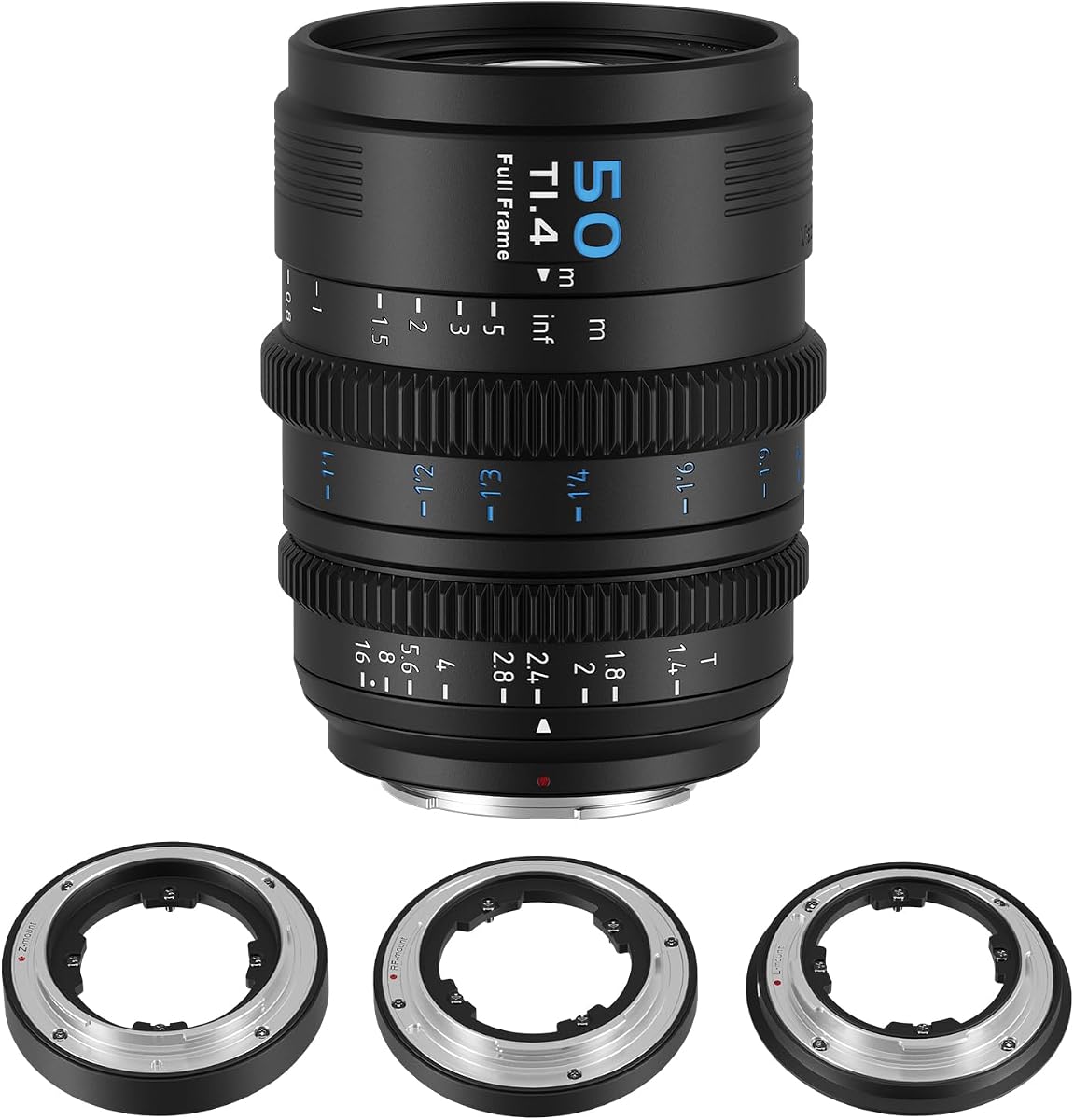
The SIRUI VP-1 Vision Prime 1 50mm T1.4 Full Frame Cine Lens provides great value. It maintains the series strengths with interchangeable mounts.
We may earn a commission when you buy through this link, at no additional cost to you.
Full frame coverage with T1.4 aperture ensures sharpness and low-light performance. Interchangeable RF Z and L mounts offer flexibility. The lens is consistent in design across the series.
Mount swapping can be slow. Rating slightly lower than the other VP-1 but still strong. Ideal for hybrid shooters.
Suits filmmakers needing full frame at a competitive price. Check mount options. A reliable choice.
Integrates aspherical elements and ED glass for edge-to-edge sharpness.
Switch between E RF Z and L mounts to match different camera systems.
We may earn a commission when you buy through this link, at no additional cost to you.
The SIRUI Night Walker 24mm S35 Manual Focus Cine Lens for M4/3 Mount delivers strong performance. It scored highly for optical quality and lightweight construction.
We may earn a commission when you buy through this link, at no additional cost to you.
T1.2 aperture supports low light. S35 coverage works with BMPCC4K and GH cameras. Strong aluminum housing keeps weight around 500g. 12 aperture blades enhance bokeh.
No autofocus limits speed. S35 format may not suit all. M4/3 mount fits target cameras.
Best for Micro Four Thirds users needing cinematic wide angles. Verify mount match. Solid for documentaries.
Designed specifically for BMPCC4K GH5II and similar M4/3 systems ensuring seamless integration.
The T1.2 opening maximizes light capture for clean images in challenging lighting.
We may earn a commission when you buy through this link, at no additional cost to you.
The Rokinon DSX85 DSX 85mm T1.5 Lens for Canon EF is ideal for portraits. It received strong ratings for optical quality.
We may earn a commission when you buy through this link, at no additional cost to you.
85mm focal length provides flattering compression. T1.5 to T34 aperture range offers flexibility. Full frame coverage and 9 aperture blades create attractive bokeh. Ultra multi-coated glass minimizes flare.
Fixed Canon EF mount limits use. Manual focus is required. The 72mm filter thread is standard.
Best for portrait and cinematic subject isolation. Ensure compatibility. A reliable choice for close-ups.
85mm delivers natural compression and subject separation for compelling portraits.
Ultra multi-coated glass reduces flare and ghosting during backlit scenarios.
We may earn a commission when you buy through this link, at no additional cost to you.
Selecting the right cine lens requires understanding key factors affecting image quality and workflow efficiency.
Ensure the lens mount matches your camera system. Options include Canon EF PL E RF Z and M4/3. Interchangeable mount systems provide flexibility but may require lens swaps.
Choose a mount that aligns with your existing gear or future plans to avoid adapter issues.
Verify the lens covers your sensor size. Full frame lenses work on full-frame cameras while S35 covers APS-C and micro four thirds. Using S35 on full-frame may cause vignetting.
Select a lens with coverage matching your camera sensor to ensure uniform framing.
T-stop values indicate light transmission. Wider T1.2 to T1.5 apertures excel in low light and create shallow depth of field. Consider your typical lighting conditions.
Prioritize T1.4 or wider if shooting in dim environments to maintain image quality.
Most cine lenses offer manual focus with 270° rotation for smooth operation. Autofocus may be limited or absent. Consider workflow needs and manual focus skill level.
Opt for manual focus if precise control is needed and your team is experienced.
Aluminum alloy housings provide durability. Lightweight lenses around 500g to 600g suit handheld and gimbal work. Heavier designs may need support rigs.
Choose a balance between robustness and portability based on shooting style.
Unified gear positions and filter threads simplify rigging. Standard sizes like 67mm or 72mm allow reuse of accessories. Consistent gear placement aids workflow.
Check that gear positions match your existing cine accessories to reduce costs.
Look for aspherical elements and low dispersion glass to minimize aberrations. Minimal focus breathing is critical for video. Ensure sharpness across the frame.
Prioritize lenses with advanced glass elements to maintain edge-to-edge clarity.
Consider cost versus features. Lens kits provide multiple focal lengths but may cost more. Individual lenses offer targeted solutions. Balance budget with production needs.
Choose kits if needing diverse focal lengths quickly or individual lenses for specific shots.
Always mount the lens securely to prevent damage. Use appropriate adapters for mount conversions and ensure tight connections to avoid slippage during shooting.
Clean the front and rear elements with a microfiber cloth and lens cleaner. Store lenses in a dry case to avoid dust or moisture affecting optical performance.
Regularly check gear positions and focus rings for smooth operation. If using a kit ensure consistent color matching across lenses for seamless post-production workflows.
A T-stop measures actual light transmission through the lens accounting for optical losses. This is crucial for video as exposure remains consistent. Unlike F-stop which is a theoretical value T-stop ensures predictable lighting.
Yes full-frame cine lenses work on APS-C cameras but provide a cropped field of view. Ensure the mount matches your camera. This setup maintains image quality but changes composition.
Most professional cine lenses focus manually. Autofocus may be limited or absent. This design ensures smooth manual control for video. Consider this if autofocus is essential.
Check the lens specs for filter thread diameter like 72mm or 67mm. This ensures your filters mount securely. Using the wrong size can damage the lens.
Focus breathing occurs when the image changes size during focusing. It can disrupt video composition. Cine lenses aim for minimal breathing to maintain consistent framing.
Interchangeable mount systems allow one lens to fit multiple cameras. Verify available adapters before purchase. This reduces the need for multiple identical lenses.
Use a padded case with foam inserts. Avoid extreme temperatures. Regular cleaning prevents dust buildup. Protecting the lens maintains its longevity.
The SIRUI VP-1 Vision Prime 1 50mm T1.4 Rokinon Cine DS DS85M-C and DZOFILM Pictor stand out for performance and flexibility. Each suits different production needs.
Prioritize mount compatibility aperture speed and optical quality when selecting a lens. Consider your camera system and shooting style for the best fit.
Prices and availability change regularly so verify current details before buying. Check reviews and seller reputation to ensure value and quality.