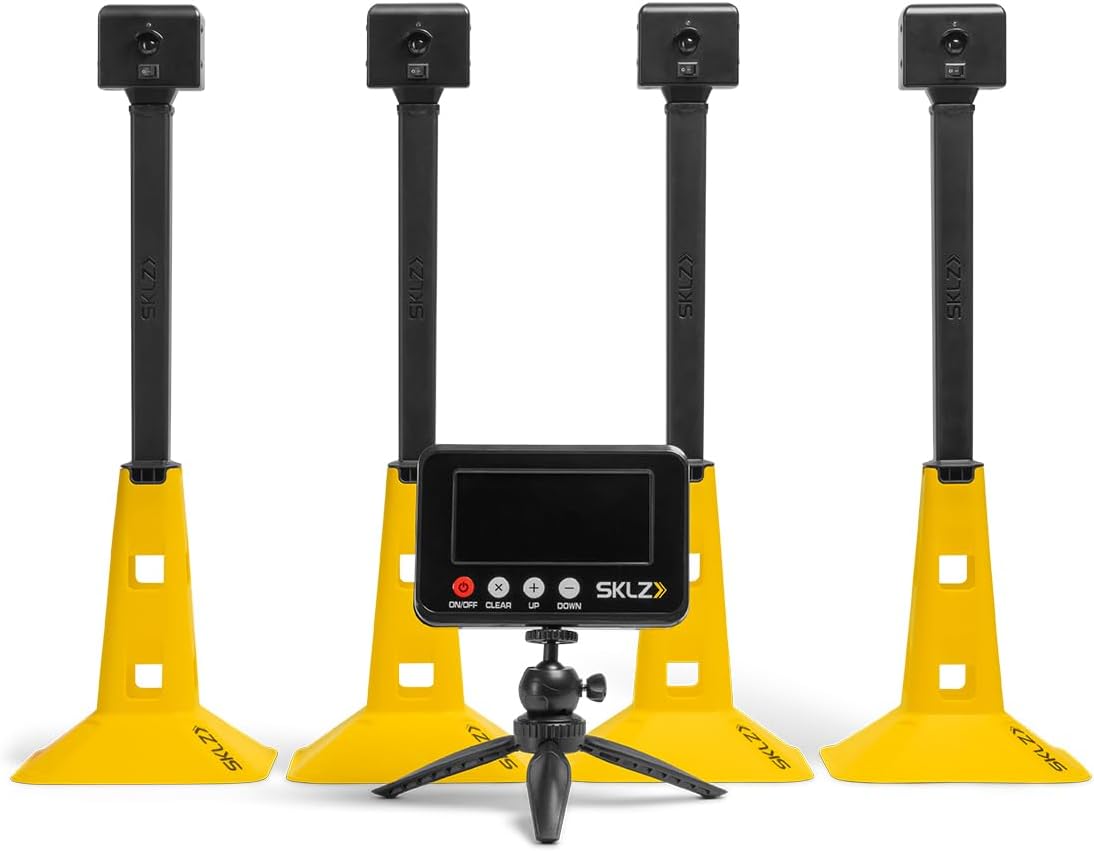
Speed Gates Pro
3.7Editor score
Radio frequency sensors up to 50 yards
LED timer visible indoors and outdoors
Portable design with carry bag included
Compare the top Electronic Sprint Timing System models for accurate speed tracking. This guide reviews features, sensors, and performance for athletes and
Choosing the right timing equipment is crucial for athletes aiming to improve speed and coaches seeking accurate performance data. An electronic sprint timing system provides precise measurements that manual stopwatches simply cannot match, ensuring reliable results for every training session.
We evaluated ten leading systems based on accuracy, ease of use, battery life, and sensor technology. Our comparison covers wireless laser timers, radio frequency gates, and portable setups suitable for tracks, fields, and indoor gyms.
Each pick highlights specific strengths like durability, display visibility, or memory capacity to help you find the best fit. Remember that availability and pricing may fluctuate, so check current listings before making your final purchase decision.
3.7Editor score

4.7Editor score

This side-by-side comparison outlines the core specifications of each system to help you identify the right fit for your training environment.




The Speed Gates Pro offers an accessible entry point for those seeking an electronic sprint timing system without a high price tag. With a rating of 3.7, it provides reliable radio frequency sensors for measuring speeds up to 50 yards. Its LED timer ensures visibility in various lighting conditions, making it versatile for different training environments.
We may earn a commission when you buy through this link, at no additional cost to you.
Key strengths include its rechargeable lithium batteries which eliminate the need for constant battery replacements. The timer memory feature stores up to 50 recent times allowing coaches to review progress without needing external devices. The included carry bag makes transport simple for field sessions.
While the system performs well for basic needs, users may find the sensor range limited compared to laser-based alternatives. The rating suggests some variability in performance under extreme conditions. However for these trade-offs are acceptable for teams on a budget seeking consistent baseline data.
This system is ideal for youth leagues or school programs needing a straightforward setup. It delivers essential timing functions effectively. We recommend it for those prioritizing portability and cost over advanced analytics or extended range capabilities.
Radio frequency sensors provide reliable detection without the complexity of laser alignment.
The included carry bag ensures all components stay organized during transport to fields.
We may earn a commission when you buy through this link, at no additional cost to you.
This powered wireless laser timer stands out for its versatility in various training scenarios beyond simple sprints. With a strong 4.5 rating, it features adjustable tripods that extend to 5.25 feet ensuring precise timing for any drill height. The HD display remains clear even in bright sunlight which is crucial for outdoor sessions.
We may earn a commission when you buy through this link, at no additional cost to you.
The chipset ensures precision while the body buttons allow for quick operation without needing a separate remote. It supports a variety of modes from cycling to roller skating making it a multi-purpose tool. The rugged carrying case protects the unit during transport which adds to its durability.
Setup is straightforward but users should note the initial charge requirement before first use. While the battery lasts up to 8 hours it does require periodic maintenance. The higher price reflects the premium build quality and additional features compared to basic timers.
Athletes needing a robust system for multiple sports will find this model valuable. It bridges the gap between basic timers and professional systems. We suggest it for coaches who require flexibility and reliability across different training activities.
Tripods extend to 5.25 feet to accommodate various athlete heights and drill types.
Intuitive body buttons eliminate the need for lost or unresponsive remotes.
We may earn a commission when you buy through this link, at no additional cost to you.
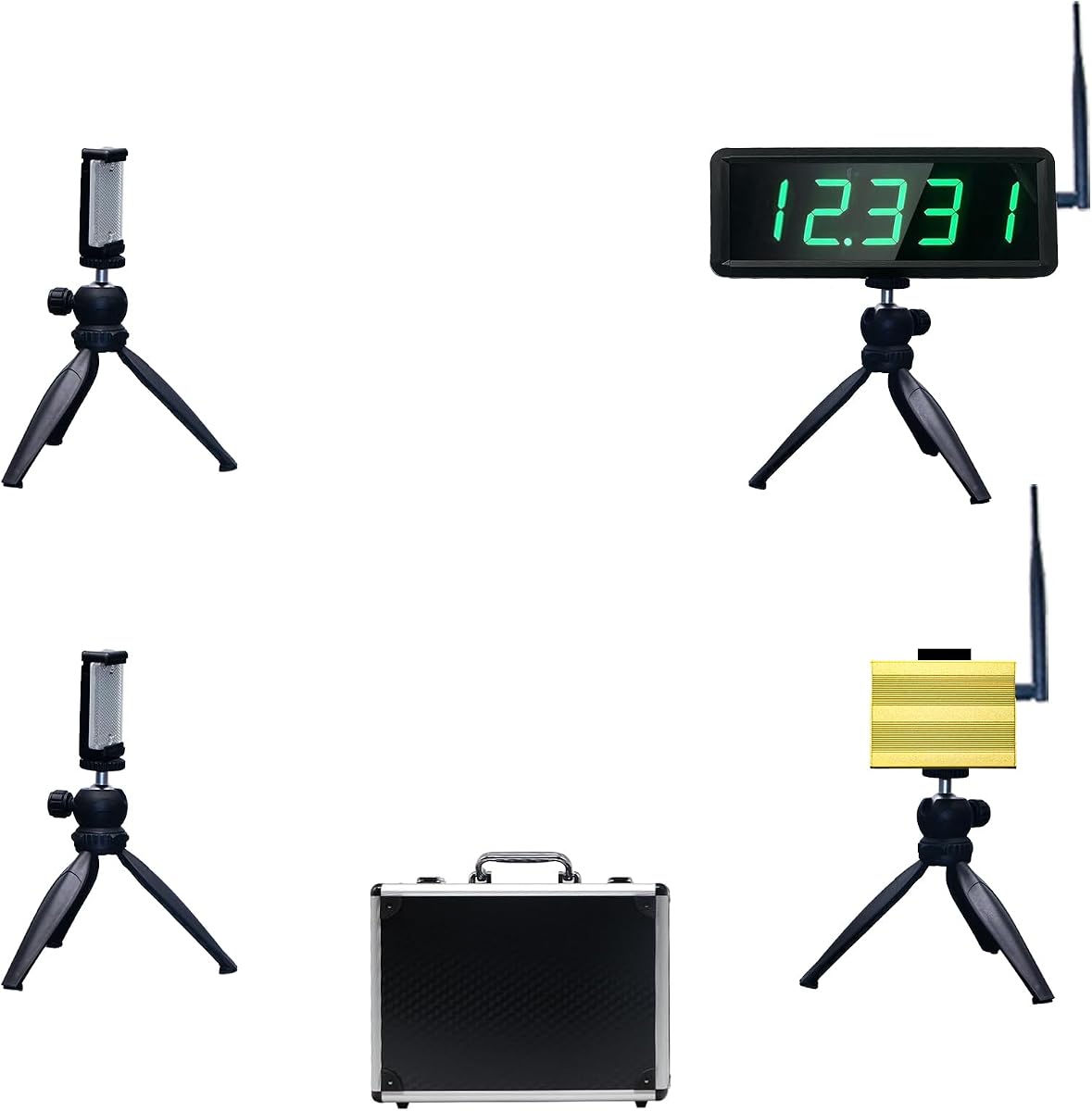
Our top pick for accuracy is the 40/60 Yard Sprint Timer which boasts an impressive 4.7 rating. It delivers timing accurate to 0.001 seconds making it suitable for competitive track and field events. The wireless communication reaches up to 400 meters allowing flexibility in positioning the timer away from the start line.
We may earn a commission when you buy through this link, at no additional cost to you.
The LED digital display is flicker-free ensuring clear visibility indoors and outdoors. It resists light interference which maintains signal stability under direct sunlight. The built-in battery offers 8 hours of use after a 5-hour charge providing ample time for extensive training sessions.
While the included tripod is smaller the system supports purchasing high brackets separately for longer distances like 100-meter sprints. This modularity allows customization based on specific event needs. The touch zero button offers quick resets without navigating complex menus.
This system is ideal for serious athletes and coaches demanding high precision. Its reliability justifies the investment for competitive environments. We highly recommend it for anyone prioritizing accurate data and versatile setup options.
Timing accurate to 0.001 seconds meets standards for official track competitions.
Wireless signal reaches 400 meters allowing flexible placement of the display unit.
We may earn a commission when you buy through this link, at no additional cost to you.
The Dashr 2.0 Timing System earns a perfect 5.0 rating for its professional grade capabilities. It includes three gates with lasers reflectors and tripods allowing for complex drill setups. This system is designed for serious athletic training where precise multi-point timing is essential.
We may earn a commission when you buy through this link, at no additional cost to you.
Its laser technology ensures minimal delay in detection providing instant feedback for sprinters. The included tripods offer stability during use. Because it is a complete kit users do not need to source additional components separately which simplifies deployment.
While the price point is higher than basic models the accuracy and durability justify the expense. The three gate setup enables split time analysis which is valuable for endurance and agility training. It remains a robust choice for facilities with dedicated space.
Teams looking for a comprehensive solution should consider this system. It handles multiple athlete tests efficiently. We recommend it for clubs and institutions prioritizing data integrity and consistent operation.
Three gates allow detailed split time tracking for advanced performance metrics.
Includes all necessary reflectors and tripods for immediate setup out of the box.
We may earn a commission when you buy through this link, at no additional cost to you.
SKLZ Speed Gates are designed for quick deployment in team environments. With a rating of 3.6, they offer sensor-based timing for runs up to 20 yards. The indicator lights confirm alignment in seconds removing guesswork during setup. The LED display is readable in all lighting conditions ensuring clear feedback.
We may earn a commission when you buy through this link, at no additional cost to you.
Memory storage allows coaches to keep track of 50 recent times without a separate device. The kit includes sensor cones and a carry bag for easy transport. It uses 10 AA batteries which are easily replaceable anywhere. This makes it practical for frequent on-field use.
The 20-yard limitation might not suit all sprint drills but it covers common speed tests. Battery reliance means carrying extras is necessary for long sessions. However the ease of use outweighs these minor inconveniences for general training.
This system fits well for school PE classes or youth sports tryouts. It simplifies the timing process for large groups. We recommend it for coaches seeking reliability and simplicity over advanced range features.
Visual lights confirm sensor connection instantly ensuring ready status.
Stores 50 recent times for easy review without external tools.
We may earn a commission when you buy through this link, at no additional cost to you.
The YZ Laser Timer combines accuracy with practical portability. It has a 4.3 rating and features a five-digit display accurate to 0.001 seconds. The timing error remains low even over long hours ensuring reliable data. Charging takes four hours but provides ten hours of continuous use.
We may earn a commission when you buy through this link, at no additional cost to you.
Toolbox packaging keeps components organized and easy to carry. The kit includes stands cables and reflectors ensuring you have everything needed for setup. It works well for various sports from running to football drills. Its durability makes it suitable for frequent transport.
While it requires a recharge cycle before use the battery life minimizes interruptions. The interface is straightforward but lacks advanced analytics found in pricier models. This simplicity appeals to users wanting focused timing without distractions.
Ideal for coaches needing a reliable portable solution this timer delivers solid performance. It balances features and cost effectively. We suggest it for those prioritizing battery longevity and ease of transport.
Ten-hour battery life supports full day training sessions without recharging.
Toolbox packaging ensures all accessories remain secure and accessible.
We may earn a commission when you buy through this link, at no additional cost to you.
This wireless laser timer offers six usage modes catering to various training scenarios. It supports timing up to 99 minutes which covers long endurance events. A flight case protects the device including receiver box and antennas. Wireless operation removes the need for cables during setup.
We may earn a commission when you buy through this link, at no additional cost to you.
The 7-hour battery life allows for a full session after a 3-hour charge. It is suitable for 40-yard and 60-meter sprints as well as cycling. The antenna requirement ensures proper signal transmission but users must verify connections. This attention to detail ensures consistent operation.
User ratings vary indicating potential learning curve or setup nuances. Ensuring the receiver is configured correctly is vital for performance. When set up properly the system offers robust functionality for diverse athletic needs.
Coaches seeking mode versatility will appreciate this model. It handles single and receiver modes effectively. We recommend careful setup and testing to maximize its potential for accurate results.
Six modes include single-timer and monitor options for different training goals.
Flight case ensures all components survive transport without damage.
We may earn a commission when you buy through this link, at no additional cost to you.
The Speed tech Single Training Version uses infrared induction for precise timing of a single person. With a 4.2 rating it offers a 500-meter wireless communication range. The effective laser distance is 0 to 8 meters suitable for start-to-finish points. It operates via a 5V power bank for convenient charging.
We may earn a commission when you buy through this link, at no additional cost to you.
Users must ensure sensors are at least 2 meters apart to avoid crosstalk. This setup requirement ensures signal clarity during timing. The system is ideal for motorcycle racing or track training where specific distances are monitored. Plug and play operation via USB makes it easy to use.
Power bank dependency means carrying spare power is necessary for long events. Proper placement is critical to prevent communication errors. Once configured correctly the device delivers stable and repeatable timing data.
This system suits niche applications like racing or specific drills. It balances range with precision effectively. We recommend it for users who prioritize wireless flexibility and infrared accuracy.
Infrared induction ensures precise detection of athlete movement.
Compatible with standard power banks for flexible power supply.
We may earn a commission when you buy through this link, at no additional cost to you.
TimeRider Laser Timing System provides accurate timing down to 0.001 seconds for speed training. It features a dual power source allowing rechargeable battery or plug-in power for extended use. The battery life supports up to 10 hours of operation. A solid body ensures durability during outdoor use.
We may earn a commission when you buy through this link, at no additional cost to you.
The wireless design eliminates tripping hazards making it safer for athletes. An adjustable height stand fits various training scenes. A portable storage case makes transport easy. The bright LED display ensures clear visibility even under direct sunlight.
Without user ratings it remains a newer option in the market. However its specs suggest it aligns with high standards for precision training. The combination of wireless convenience and adjustable stands offers practical benefits.
This model is well-suited for agility drills and track tests. It balances performance with portability. We suggest it for those seeking a reliable laser timing unit with flexible power options.
Dual power allows continuous use via battery or plug-in adapter.
Wireless setup prevents tripping hazards during active training sessions.
We may earn a commission when you buy through this link, at no additional cost to you.
The Power Systems Brower TCi represents the premium tier of timing systems. It sends redundant transmissions to ensure times are never missed. With 32 independent channels multiple systems can operate without interference. Handsfree operation enhances safety during sprint events.
We may earn a commission when you buy through this link, at no additional cost to you.
Signal strength analysis displays radio signal quality for each start and finish. Wireless sync simplifies setup without cable requirements. This level of control is ideal for professional settings where accuracy and reliability are non-negotiable. It supports multiple systems in close proximity seamlessly.
While the investment is significant the redundancy and channel capacity justify it for high-level facilities. The complexity may be unnecessary for casual users but is essential for competitive environments. It sets the standard for industrial-grade performance.
This system is designed for professional tracks and training centers. It offers unmatched reliability for large events. We recommend it for institutions requiring robust and interference-free timing solutions.
Sends start and finish signals up to 12 times to prevent errors.
32 channels allow parallel use of multiple systems without interference.
We may earn a commission when you buy through this link, at no additional cost to you.
Selecting the right timing system depends on your specific training needs and environment. Key factors include sensor technology, range, accuracy, and portability.
Different systems use laser radio frequency or infrared sensors. Lasers offer precision but require clear lines of sight. Radio frequency works well for agility drills without line-of-sight issues. Choose based on your specific drill types.
Opt for lasers for pure speed and radio frequency for complex movement drills.
High-level training often demands accuracy to 0.001 seconds. Basic systems may round to hundredths. Competitive events need the higher precision to detect marginal improvements. Check the stated resolution of the display.
Select 0.001s precision for competitive or scientific training needs.
Systems vary in max distance from 20 to 100 yards. If your drills exceed the range you will need a model with extendable options or separate brackets. Longer ranges provide more flexibility for track events.
Ensure the range matches your typical drill lengths or training fields.
Rechargeable lithium batteries reduce ongoing costs compared to AA replacements. Look for at least 8 hours of continuous runtime for full-day sessions. Some models offer plug-in options to extend usage during long events.
Prioritize systems with 8+ hour battery life for uninterrupted training.
Training often moves between locations. A carry bag or flight case keeps components organized and safe. Lightweight tripods and compact designs make transport easier. Consider weight if moving gear frequently.
Choose models with included cases for organized and protected transport.
Outdoor use requires screens readable in bright sunlight. LED displays with anti-glare coatings work best. Indoor gyms benefit from adjustable brightness. Ensure the numbers are large enough for viewing from a distance.
Pick high-contrast displays with glare resistance for outdoor visibility.
Quick setup saves training time. Systems with auto-alignment indicators or simple touch buttons reduce friction. Wireless options avoid tangled cables. Avoid models needing complex calibration for regular use.
Look for one-touch operation and intuitive interfaces for efficiency.
Athletic environments can be harsh. Look for rugged frames and weather-resistant materials. Warranty coverage indicates manufacturer confidence. A durable unit saves money long-term by reducing replacement needs.
Select units with robust build quality and warranties for longevity.
Begin by placing the start and finish sensors on stable surfaces or tripods. Ensure sensors are aligned precisely to avoid missed triggers. Secure all components before athletes begin runs to prevent accidents.
Calibrate the timer to zero before every session. Check battery levels to ensure uninterrupted timing. If using wireless modes verify the connection status lights confirm the link is active.
Store the system in its protective case when not in use to avoid damage. Keep sensors clean from dust and dirt. Avoid extreme temperatures to maintain battery performance and electronics longevity.
Laser timing uses a light beam requiring direct line of sight between sensors. It offers high precision for straight sprints. Radio frequency uses signals that can pass through obstacles better making it ideal for agility drills.
Connect the start and finish sensors first then power on the main unit. Pair them via the wireless sync button. Ensure the distance is within the supported range. Verify signal lights show connection before testing.
Basic models track one runner at a time. Advanced systems like the TCi support 32 channels allowing multiple simultaneous runs. Check specific product specs if team testing is a priority.
Yes most models are designed for both environments. LED displays ensure readability indoors. Outdoor models often include glare resistance. Ensure the range covers your gym or field dimensions appropriately.
Electronic timers provide millisecond accuracy removing human reaction delays. Stopwatches rely on manual timing which can vary by 0.2 seconds or more. This accuracy helps athletes track small improvements reliably.
Most rechargeable models offer 8 to 10 hours of continuous use. Some allow plug-in operation to extend runtime. Check battery type before buying to ensure it meets your session lengths.
Most modern systems are factory calibrated but a zero reset before use is recommended. Some models allow touch zero adjustments. Proper alignment ensures consistent results across different training days.
Ensure tripods are stable to prevent tipping during runs. Keep cables secured if wired. Wireless setups reduce trip hazards. Always check the area for athletes before starting timed runs.
We highlighted diverse systems from budget-friendly options to professional-grade setups. The 40/60 Yard Sprint Timer stands out for accuracy while SKLZ Speed Gates offer team-friendly simplicity.
Prioritize accuracy and range based on your training goals. For competitive teams invest in models with 0.001s precision. For general fitness portable options suffice for consistent progress tracking.
Always check current availability and warranties before purchasing. Specifications and pricing change frequently. This guide ensures you select a system tailored to your specific performance needs.