
Renogy Flexible Solar Panel 100 Watt
4.4Editor score
240 Degree Flexibility
70 Percent Lighter
Ultra Thin Lamination
This guide compares the top 10 flexible solar panels for RV rooftops based on efficiency, durability, and ease of installation for off grid adventures.
Choosing the right power source for your recreational vehicle is essential for comfortable off grid living. Flexible solar panels offer a unique solution that conforms to curved roofs where rigid panels cannot fit easily. They provide reliable energy for appliances without adding significant weight to your vehicle structure. These panels are designed for marine and RV applications requiring adaptability.
We have evaluated ten leading models available on the market today based on technical specifications and user feedback. Our analysis focuses on conversion efficiency, bending flexibility, waterproof ratings, and overall build quality. Each product was reviewed to determine its suitability for different vehicle types and power needs. This list covers a wide range of options from budget friendly to premium high output kits.
Each entry in this guide highlights key features and potential limitations to help you make an informed decision. We look at how well each panel handles partial shading, temperature extremes, and long term exposure to the elements. Please note that availability and specific configurations may vary by retailer and region. Always verify current compatibility with your battery system before purchasing any solar equipment.
4.4Editor score

4.8Editor score
5.0Editor score
The following table provides a side by side overview of the technical specifications and key attributes for each of the ten models reviewed in this guide to help you compare their capabilities quickly.




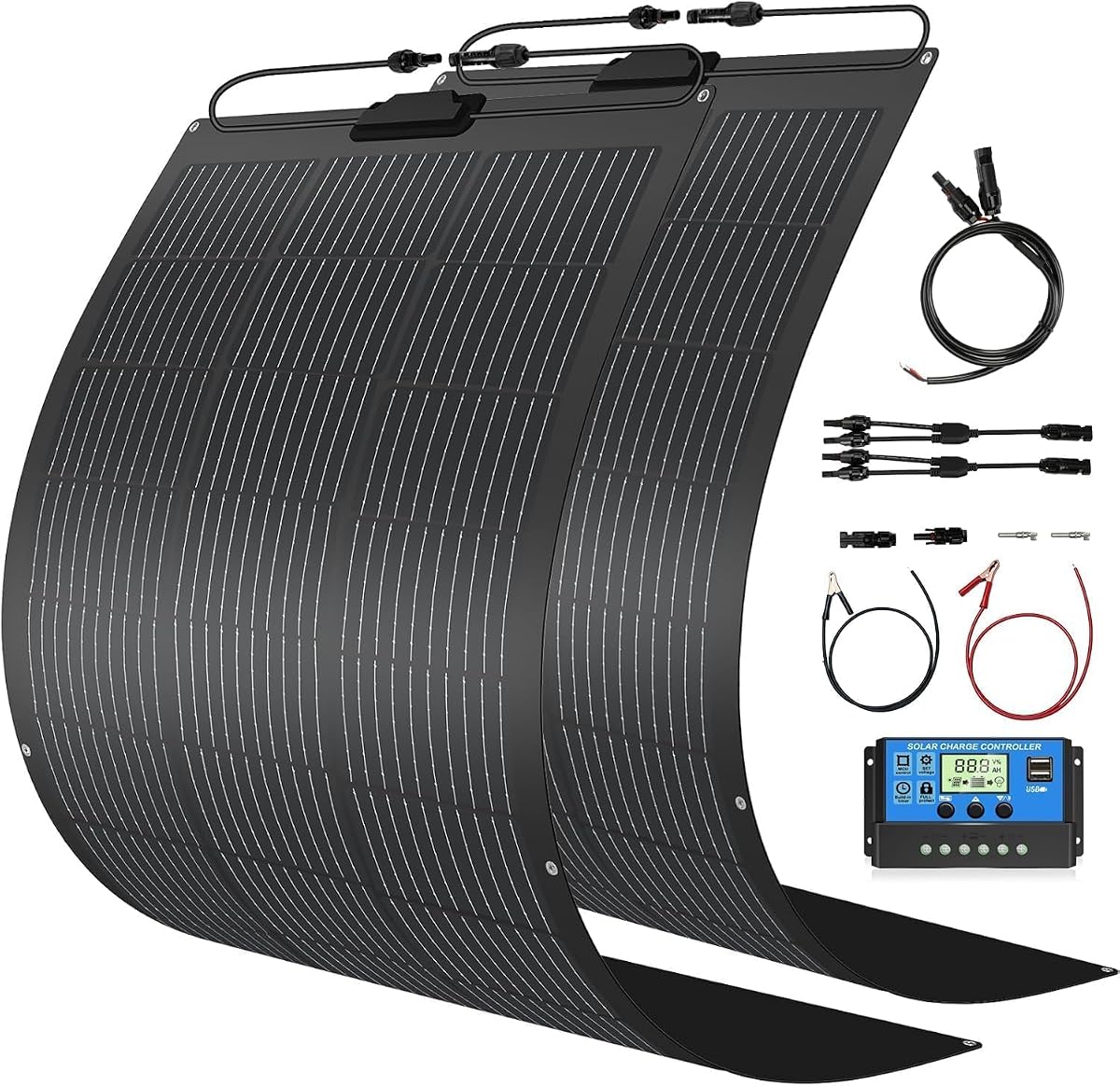
This model stands out as our top pick due to its advanced anti-shading technology and high efficiency N-Type cells. It receives a strong rating of 4.8 from users who value reliable power in variable lighting conditions. The panel is designed to maintain stable output even when parts of the surface are covered by shadows from trees or structures.
We may earn a commission when you buy through this link, at no additional cost to you.
The core strength lies in its upgraded bypass diode system which minimizes power loss when shading occurs. Users report faster charging times for 12V and 24V battery systems thanks to the 25 percent conversion efficiency. The ETFE material offers superior scratch resistance and self-cleaning capabilities which are vital for long term outdoor use.
While the price point is higher than basic options the performance benefits justify the investment for serious off-grid users. The extra cost covers better thermal management and robust construction that resists marine corrosion and heavy weather. It is a premium choice for those who cannot afford frequent power interruptions.
Ideal for RV owners who travel through varied landscapes with frequent tree cover or complex roof layouts. This panel ensures your battery bank stays charged without requiring constant repositioning. It is a reliable foundation for any serious solar power system on a curved rooftop.
The bypass diode technology automatically routes current around shaded cells to prevent hot spots and power loss.
Using ETFE instead of PET provides better UV resistance and longer lifespan in harsh marine or desert environments.
We may earn a commission when you buy through this link, at no additional cost to you.
Renogy is a well known name in the solar industry and this 100 watt model offers an accessible entry point. It holds a solid 4.4 rating from users who appreciate its ease of installation and minimal weight. The panel is designed specifically for surfaces where standard rigid panels cannot fit such as curved RV roofs.
We may earn a commission when you buy through this link, at no additional cost to you.
Its main advantage is the ultra-lightweight construction which weighs 70 percent less than conventional glass panels. This reduces stress on the vehicle roof and simplifies handling during transport and installation. The thin lamination makes it nearly invisible when mounted flat which appeals to stealth campers.
The lower wattage means you may need multiple units to power larger appliances but it is perfect for small setups. It is built to withstand heavy wind and snow loads ensuring durability despite its flexible nature. For beginners this is a safe and effective starting component.
This panel is best suited for small campers or boats where roof space and weight are primary constraints. It provides essential power for lighting and small electronics without complicating the installation process. A reliable choice for those testing solar power for the first time.
The advanced polymer materials ensure the panel adds negligible weight to your RV structure while maintaining power output.
The 240 degree bend allows it to conform perfectly to aerodynamic vehicle roofs without requiring custom mounting frames.
We may earn a commission when you buy through this link, at no additional cost to you.
This kit delivers a massive 800 watts of total power using two flexible 400 watt panels. It has achieved a perfect 5.0 rating from users who need serious energy for large off-grid systems. The panels are ideal for charging battery banks quickly to run high demand appliances like fridges and air conditioners.
We may earn a commission when you buy through this link, at no additional cost to you.
The monocrystalline cells offer over 24 percent efficiency ensuring rapid charging even in moderate sunlight conditions. ETFE coating provides excellent UV resistance and light transmission which boosts overall energy harvest. The system is designed to work with both 12V and 24V battery configurations seamlessly.
Installation is straightforward with pre-drilled holes and no need for heavy mounting frames. However the total weight and surface area required are significant compared to single panels. This is a heavy-duty solution for larger motorhomes or yachts where space is less of a constraint.
Buyers seeking maximum power independence will find this kit highly effective for sustained off-grid living. It ensures your battery bank never runs low even during cloudy periods due to the high capacity. It is the ultimate choice for those who need complete energy autonomy on the road.
The high wattage output allows you to recharge large battery banks in significantly fewer hours of sunlight.
IP68 rating and corrosion proof design ensure this system survives storms and marine environments without degradation.
We may earn a commission when you buy through this link, at no additional cost to you.
This model focuses on high efficiency monocrystalline cells to deliver stable power output. It features a flexible design that bends between 180 and 240 degrees to fit various curved surfaces. Users appreciate its lightweight build which makes transportation and installation easier for mobile applications.
We may earn a commission when you buy through this link, at no additional cost to you.
The panel operates reliably in extreme temperatures from negative 20 degrees to 65 degrees Celsius. This makes it suitable for year-round use in diverse climates without performance degradation. The IP67 rating provides solid protection against water and dust though it is slightly lower than IP68 options.
While the efficiency is strong some users note variability in real-world performance compared to premium brands. It is a good option for those who need more power than a 100 watt panel but do not require a full kit. The price point remains competitive for a 200 watt unit.
This panel is ideal for van conversions or boats where space is limited but efficiency matters. It balances performance and cost effectively for standard off-grid needs. Consider this if you need a single 200 watt unit for a moderate power setup.
The cell technology ensures consistent output whether you are traveling through freezing mountains or hot deserts.
Pre-drilled holes allow for secure installation with adhesives or mechanical fasteners depending on your roof material.
We may earn a commission when you buy through this link, at no additional cost to you.
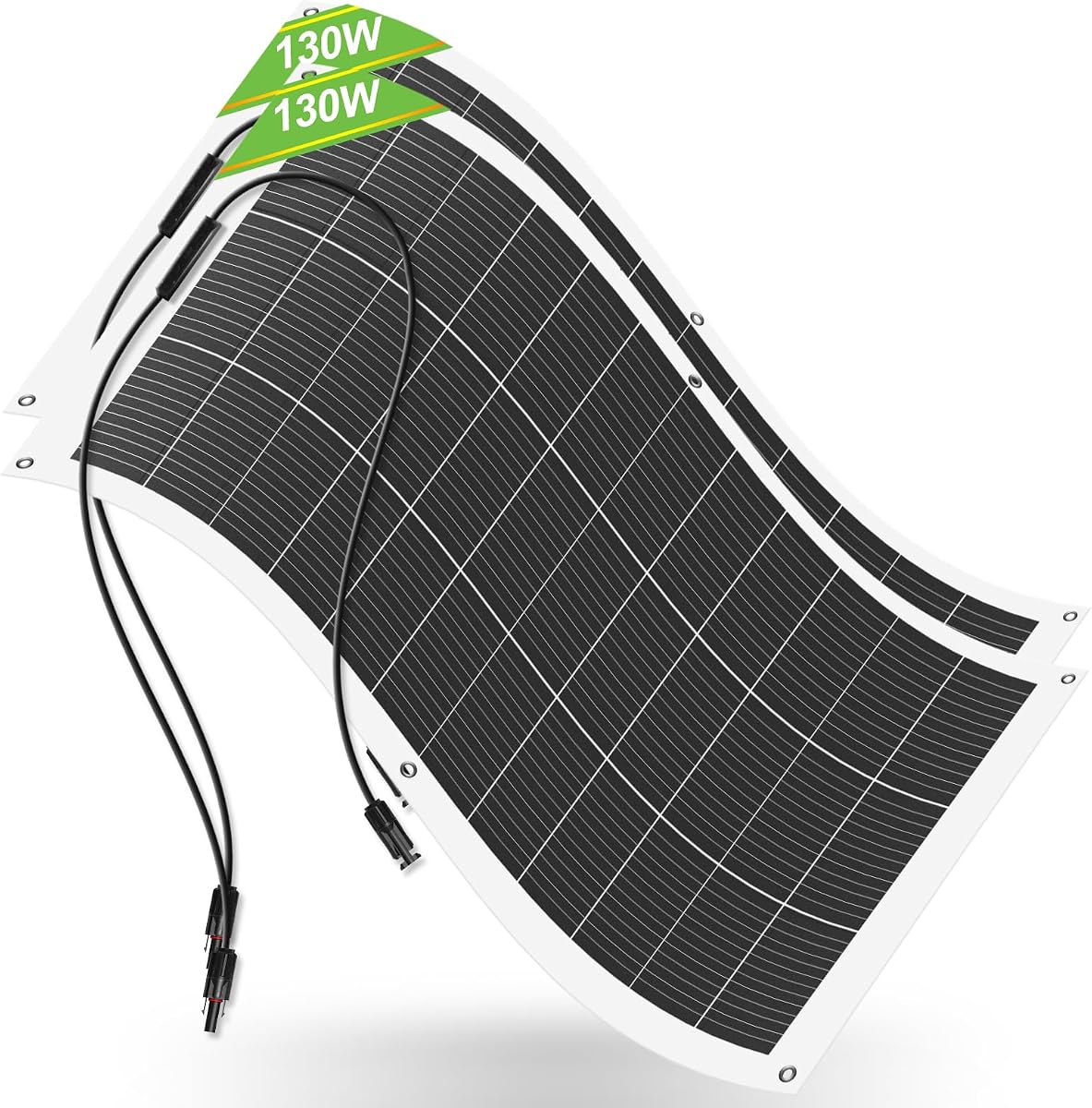
This bundle offers two 130 watt panels providing a total of 260 watts of power. It features an ultra-flexible design that can bend up to 270 degrees to adapt to irregular surfaces easily. Users appreciate the lightweight construction which simplifies handling and installation on curved rooftops.
We may earn a commission when you buy through this link, at no additional cost to you.
The panels are upgraded from 100 watt models to provide 30 percent higher output per unit. The IP68 waterproof rating ensures reliable performance in wet conditions without risk of internal damage. Includes cables for easy series or parallel connections to expand your system as needed.
While the flexibility is high the thin profile may require careful handling during installation to avoid tearing. It is a cost-effective way to get more power without a huge investment in a large kit. The multiple installation methods allow for non-permanent fixes if you rent your vehicle.
This option works well for small trailers or RVs needing moderate power expansion. The two panel design gives you flexibility in layout and wiring configurations. It is a solid middle ground between single panels and large kits.
The 270 degree bend allows for installation on nearly any curved or irregular surface including domed roofs.
Cables included allow you to connect panels in series for higher voltage or parallel for higher current.
We may earn a commission when you buy through this link, at no additional cost to you.
This set includes two 200 watt panels designed for those who value style and performance. The all-black design offers a sleek appearance that blends well with modern RV and yacht exteriors. It uses 18 busbar cell technology to enhance performance and reduce microcrack risks effectively.
We may earn a commission when you buy through this link, at no additional cost to you.
With 25 percent conversion efficiency these panels deliver high power output for their size. The ETFE material offers over 95 percent light transmittance to maximize energy generation in sunlight. Blocking diodes prevent reverse current discharge ensuring your batteries stay charged at night.
The all-black finish adds visual appeal which matters for many users in design conscious communities. However the cost is higher than standard models which is a trade-off for the premium look. The mounting options are convenient with included zip ties for quick secure attachment.
This choice is perfect for RV owners who want their solar setup to look clean and professional. It offers high efficiency in a package that prioritizes aesthetics alongside technical performance. Consider this for luxury builds where appearance is as important as power.
The all-black design hides mounting hardware and blends seamlessly with dark roof materials.
N-type cells with 18 busbars deliver higher efficiency and better low-light performance than older types.
We may earn a commission when you buy through this link, at no additional cost to you.
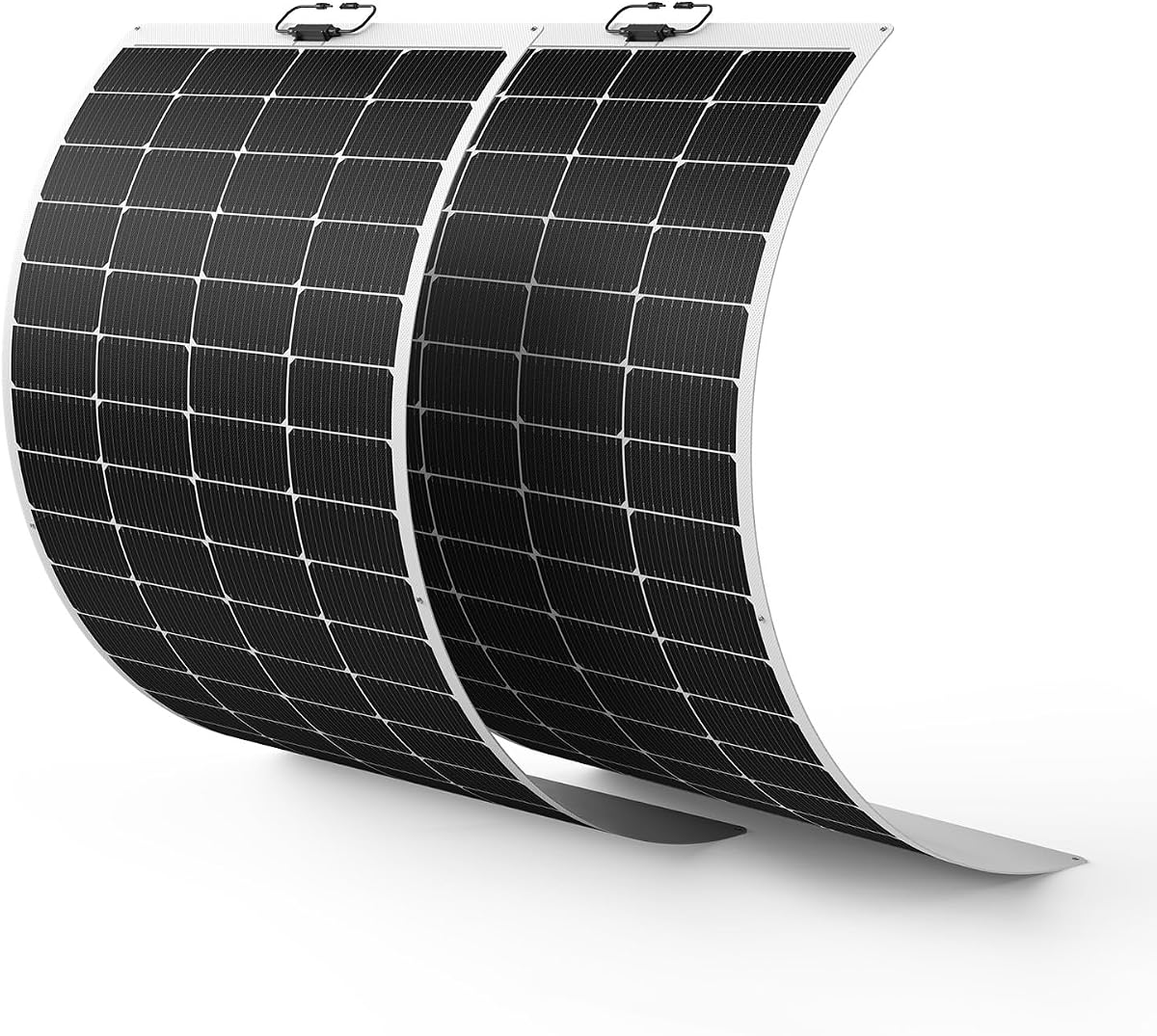
This set consists of two 200 watt panels featuring a white backsheet that reflects excess heat. The cooling effect helps maintain higher efficiency in hot climates where standard black panels lose power. It is designed for large RVs and catamarans that need substantial daily energy generation.
We may earn a commission when you buy through this link, at no additional cost to you.
The ETFE coating ensures long durability against hail yellowing and cracking in harsh elements. Users report up to 2 kWh of daily energy harvest under ideal conditions making it great for large stations. The IP68 junction box provides robust protection against water ingress and corrosion.
The white aesthetic blends well with light colored vehicles but may show dirt more than black options. Regular cleaning is recommended to maintain the high efficiency levels expected from this system. The warranty offers added peace of mind for long term outdoor usage.
This panel is ideal for those living in sunny hot climates where heat management is critical. It ensures your system performs efficiently even during the hottest parts of the day. A practical choice for extended stays in warm regions without overheating.
The white backsheet reflects solar heat to keep cell temperatures lower and output higher.
Designed to generate up to 2 kWh per day which supports high demand appliances reliably.
We may earn a commission when you buy through this link, at no additional cost to you.
Designed specifically for BLUETTI systems these panels also work with many other power setups easily. The set includes two 100 watt panels providing 200 watts of total power. They use advanced MONO PERC cells to maximize sunlight conversion into usable electrical energy.
We may earn a commission when you buy through this link, at no additional cost to you.
The standard solar connector makes them compatible with BLUETTI generators and other popular brands. This flexibility ensures you are not locked into a single ecosystem for charging. The IP67 rating protects against water and dust ensuring reliability during outdoor adventures.
Installation is straightforward without drilling using adhesive or ties for quick setup. The sturdy build withstands transport vibration better than some ultra-thin panels. This makes them ideal for campers who move frequently and need rugged equipment.
This kit is best for owners of BLUETTI power stations who want a seamless plug and play experience. It provides reliable portable power for weekend trips and emergency backups. A smart choice if you already use compatible portable power hardware.
Uses standard connectors that fit most portable generators making integration simple without adapters.
Sturdy frame resists bending during transport ensuring panels remain intact after travel.
We may earn a commission when you buy through this link, at no additional cost to you.
This 200 watt model from Renogy offers reliable power output suitable for mid-sized setups. It features half-cut PERC cell technology to enhance light capture and electrical performance significantly. The panel provides up to 1000 watt hours of power daily depending on solar availability.
We may earn a commission when you buy through this link, at no additional cost to you.
The all-black design prevents glare making it aesthetically pleasing for most installations. Connector cables are 27.6 inches long which simplifies routing to your charge controller. The IP67 junction box ensures protection against water and heavy weather conditions.
While it is slightly more expensive than some competitors the brand reliability is a key factor. Many users prefer Renogy for their consistent quality and customer support. The 240 degree bend ensures it fits curved roofs securely without damage.
Buyers who trust established brands will find this panel a safe investment. It is suitable for those who value proven technology over experimental designs. A solid mid-range choice for reliable off-grid power.
Half-cut cells reduce resistance and improve performance in partial shading compared to standard cells.
Long cables simplify installation on large roofs by reducing need for extra extension wires.
We may earn a commission when you buy through this link, at no additional cost to you.
Xantrex is known for marine electronics and this panel is designed for boats and salt environments. It uses mesh-grid technology with over 2000 contact points to ensure performance in tough weather. The peel-and-stick installation makes mounting simple without tools or drilling on fiberglass.
We may earn a commission when you buy through this link, at no additional cost to you.
The encapsulate provides exceptional protection against moisture and corrosion in humid and salty conditions. This makes it perfect for saltwater use where standard panels might fail quickly. The 110 watt output is adequate for small systems on sailboats or yachts.
While the price is higher per watt the specialized marine protection justifies the cost. It reduces maintenance needs caused by salt spray and constant moisture exposure. The adhesive backing holds securely even on curved hull surfaces.
This is the ideal choice for sailors or boaters who need dependable power without heavy mounting gear. It ensures your navigation and lighting systems stay powered in wet conditions. A specialized tool for marine energy needs.
Encapsulate materials prevent salt mist corrosion which is critical for long-term marine use.
Adhesive backing allows secure mounting on fiberglass hulls without risking leaks from drilled holes.
We may earn a commission when you buy through this link, at no additional cost to you.
Selecting the right flexible solar panel involves evaluating several technical factors that impact performance and longevity in mobile environments.
Efficiency determines how much sunlight is converted into electricity so look for 25 percent or higher where possible. Higher wattage means faster charging but requires more surface area which may be limited on smaller RVs. Balance the total power needed against the roof space available before buying.
Prioritize higher efficiency cells to maximize power from limited roof space available.
Check the maximum bend angle of the panel to ensure it fits your roof curvature without cracking. Most panels bend up to 240 degrees but some offer more for extreme shapes like domed roofs. Ensure the flexibility matches your vehicle geometry before finalizing your purchase.
Verify the bend angle matches your specific roof curvature to prevent permanent damage.
Look for IP67 or IP68 ratings to ensure the panel withstands rain and heavy weather conditions. ETFE coatings offer better UV resistance and scratch protection than standard PET materials for longer life. Durability is critical for vehicles exposed to constant wind and sun.
Choose higher waterproof ratings to protect against water damage in all weather.
Flexible panels are significantly lighter than rigid ones but total weight still matters for smaller RVs. Calculate the total load of multiple panels to avoid stressing the roof structure or warranty. Lightweight materials like polymer reduce stress on your vehicle frame.
Ensure the total weight of all panels does not exceed your roof structural limits.
If you travel through trees or urban areas look for bypass diode technology to reduce shade losses. Some models offer advanced anti-shading features that keep output stable even with partial cover. Shading can drop output by 50 percent if the technology is missing.
Bypass diodes are essential for reliable power when shade is common on your route.
Most flexible panels use adhesive or double-sided tape but some include pre-drilled holes for screws. Decide if you need a permanent or removable solution based on your vehicle lease status. Adhesive methods are easier but may leave residue later if removal is needed.
Select a mounting method that suits your need for permanent or temporary installation.
Check the warranty length for materials and output which often ranges from 2 to 5 years. Reputable brands offer technical support for system building which helps avoid wiring errors. A solid warranty protects your investment against early material failure.
Opt for brands with longer warranties and active technical support teams for help.
Clean the panel surface regularly with water and a soft cloth to remove dust or debris that blocks sunlight. Avoid harsh chemicals that might damage the ETFE coating or the anti-reflective layer on the surface. Clean panels maintain high efficiency and prevent long term degradation from built up dirt.
Inspect the mounting adhesive and edges every few months to ensure the panel is still securely attached. Reapply adhesive or silicone sealant if you notice lifting or gaps where water could enter the edges. Secure mounting prevents wind damage and maintains the waterproof integrity of the installation.
Monitor your battery voltage and charge controller settings to ensure the system operates within safe limits. Avoid leaving panels connected directly to batteries without a controller to prevent overcharging at night. Proper monitoring ensures safe power generation and protects your battery health over time.
Yes most flexible panels operate reliably down to minus 20 degrees Celsius without losing efficiency. The polymer materials are designed to remain flexible in cold conditions. However extreme thermal shock from rapid warming may cause stress on seals over time.
Some models are specifically designed for marine use with enhanced corrosion protection. Look for IP68 ratings and marine-grade encapsulation to survive salt mist. Standard panels may corrode faster if not explicitly rated for saltwater conditions.
Use mild soap and water with a soft sponge to clean the surface gently. Avoid abrasive scrubbers or pressure washers that could scratch the ETFE coating. Dry with a soft cloth to prevent water spots from forming on the panel.
Yes most flexible panels come with cables for series or parallel connections. Check the voltage compatibility with your controller before linking multiple units together. Wiring diagrams are usually included to help you match your battery system.
Most panels use adhesive tape or double-sided tape instead of traditional racking systems. Some include pre-drilled holes for screws if you prefer mechanical mounting. Ensure your roof surface is clean and dry for the adhesive to bond properly.
Flexible panels typically last 10 to 15 years depending on environmental exposure. ETFE coated panels often last longer due to better UV resistance. Regular maintenance and proper installation extend their service life significantly.
We highlighted ten distinct models ranging from budget 100 watt options to high capacity 800 watt kits. Each panel offers unique advantages in efficiency, flexibility, and durability for different user needs. The ZETAWALE model stands out for anti-shading while the Renogy 100 watt is best for beginners.
Prioritize panels with high conversion efficiency and strong weather ratings for long term reliability on the road. If you travel through shaded areas invest in models with advanced bypass diode technology. Weight and bend angle should match your specific vehicle roof constraints.
Remember that pricing and availability change frequently so verify current details before making a purchase. Always check compatibility with your existing battery bank and charge controller for a safe setup. With the right panel your off-grid adventures can remain powered and comfortable anywhere you go.