
ST to LCU Fiber Optic Adapter
5.0Editor score
Single Mode 9/125um
Ceramic Sleeve Housing
Vibration Resistant
This guide compares the top Lc to St Fiber Optic Adapter models for reliable network connectivity, signal integrity, and professional performance in 2026.
Connecting legacy ST systems with modern LC equipment requires precise fiber optic adapters that maintain signal integrity. Choosing the right adapter ensures minimal loss and reliable data transmission across your network infrastructure.
We analyzed ten top-rated models based on insertion loss, return loss, connector types, and durability. Each product was evaluated for compatibility with single mode and multimode fibers in various professional environments.
Every pick highlights specific strengths for telecom, enterprise, and testing applications. Prices and availability may change, so verify current details before purchasing your essential network components.
5.0Editor score

4.8Editor score

5.0Editor score
The following table provides a side-by-side comparison of all ten selected adapters to help you identify the specific connector types and fiber modes that best match your installation needs.
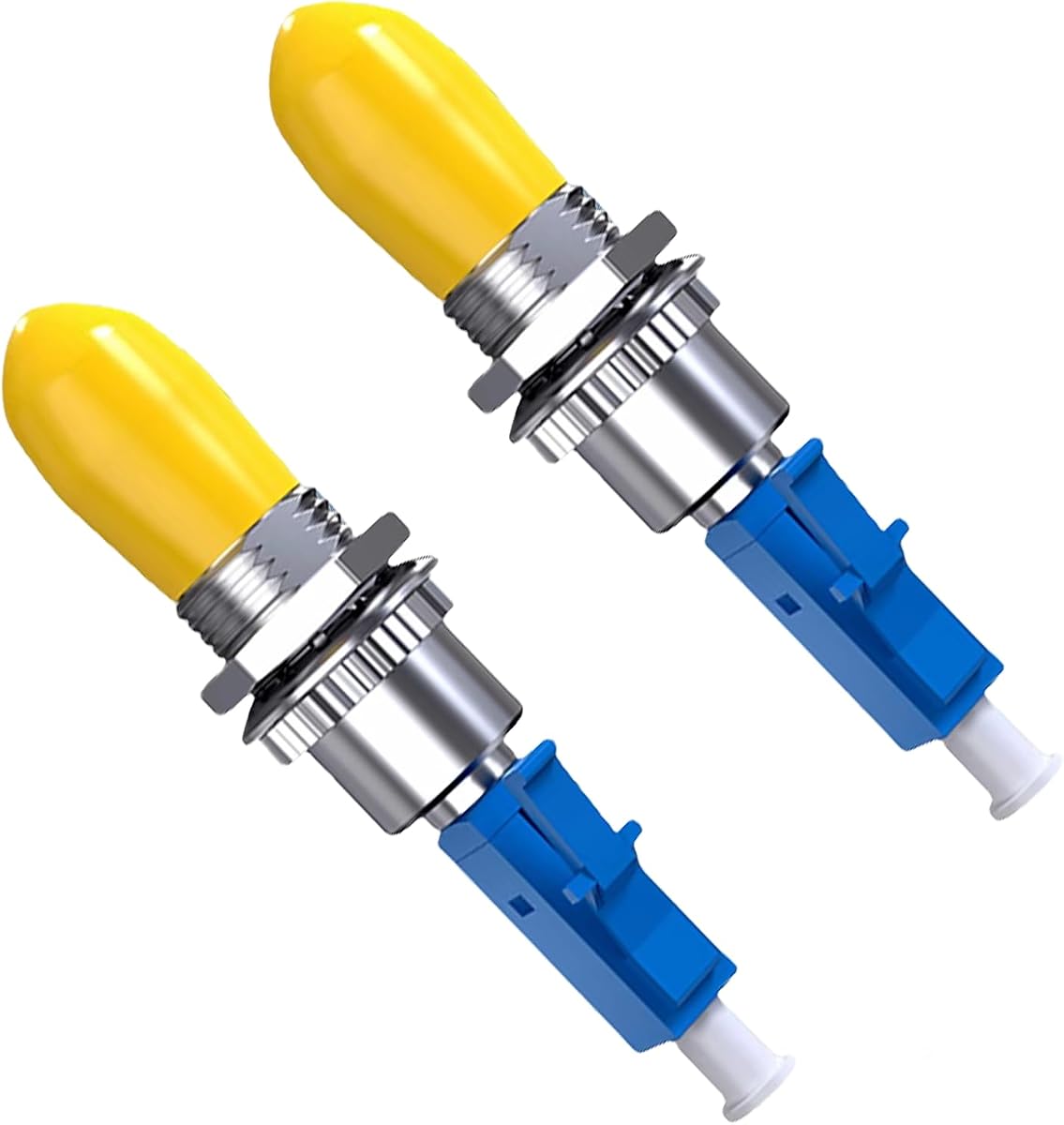
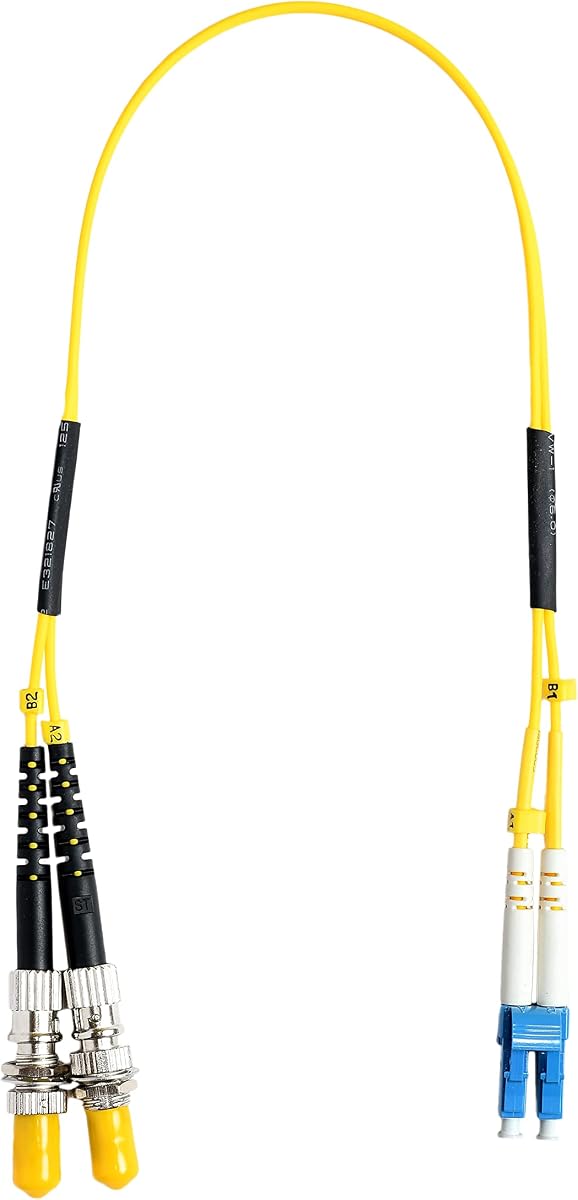


This adapter set offers excellent value for professionals needing multiple connection points. With a high user rating, it stands out for its reliable performance in maintaining signal integrity.
We may earn a commission when you buy through this link, at no additional cost to you.
The UPC hybrid design ensures minimal signal loss across standard wavelengths. Its compact ceramic and metal housing provides robust protection against physical damage and heat stress.
While designed for single mode applications, the insertion loss specifications meet industry standards for high-speed data transfer. Users note its effectiveness when used with optical power meters and fault locators.
Ideal for telecom maintenance and engineering teams managing legacy and modern systems. This adapter provides a dependable bridge between incompatible connector types without sacrificing performance.
The adapter maintains insertion loss below 0.2dB ensuring stable optical transmission across 1310nm and 1550nm bands.
Constructed with a ceramic sleeve and metal housing it withstands over 1000 insertion cycles with consistent performance.
We may earn a commission when you buy through this link, at no additional cost to you.
This model provides a high-performance solution for connecting LC and ST fiber types. Users appreciate its consistent quality and strong compatibility with optical testing instruments.
We may earn a commission when you buy through this link, at no additional cost to you.
The hybrid design supports both 1310nm and 1550nm wavelengths effectively. Its return loss performance ensures minimal signal reflection which is critical for stable network operation.
Despite focusing on single mode fiber the adapter meets rigorous industry standards for insertion loss and durability. The lightweight design simplifies handling during field installations.
Network technicians and maintenance teams will find this adapter useful for patching and testing. It bridges the gap between legacy ST ports and modern LC interfaces efficiently.
Engineers use this adapter to check continuity with visual fault locators ensuring reliable signal paths.
The adapter features a durable ceramic and metal sleeve that resists wear and environmental stress.
We may earn a commission when you buy through this link, at no additional cost to you.
This product combines an adapter and a patch cable into one convenient unit. It simplifies connectivity for setups requiring quick and reliable LC to ST transitions.
We may earn a commission when you buy through this link, at no additional cost to you.
The LSZH jacket ensures safety in enclosed spaces by reducing toxic smoke emissions. Factory testing guarantees low link loss and consistent performance right out of the box.
While the fixed length limits flexibility the duplex design supports bidirectional data transmission. This makes it ideal for structured cabling runs where short distances are standard.
Installers benefit from the plug and play design needing no extra tools. It is a practical choice for data centers and enterprise wiring closets needing compact solutions.
The Low Smoke Zero Halogen jacket reduces fire hazards by minimizing smoke production during overheating.
Featuring a 2.0mm outer diameter the tight buffered duplex cord is easy to manage and route.
We may earn a commission when you buy through this link, at no additional cost to you.
This adapter cable is designed for multimode networks requiring a simple connection between LC and ST ports. It offers reliable performance for legacy or specialized equipment setups.
We may earn a commission when you buy through this link, at no additional cost to you.
The 62.5/125 micron fiber core supports standard 850nm transmission used in many local area networks. Its duplex construction allows for simultaneous send and receive data paths.
Though the length is fixed the standard zip cord jacket makes it flexible enough for patch panel use. Users report stable connections with minimal signal degradation over time.
Network administrators managing older systems will find this cable useful for testing or temporary connections. It provides a cost-effective way to bridge incompatible connector types.
This cable is optimized for 62.5/125 multimode fiber ensuring compatibility with older LAN standards.
The standard zip cord duplex design simplifies routing in crowded patch panels or rack mounts.
We may earn a commission when you buy through this link, at no additional cost to you.
This kit offers a comprehensive solution for various fiber connector needs. Users praise its versatility and ability to handle multiple adapter transitions without buying separate items.
We may earn a commission when you buy through this link, at no additional cost to you.
The durable metal housings ensure long-term reliability even in demanding field conditions. Precision manufacturing keeps insertion loss low and return loss high for optimal signal quality.
Although priced higher than single adapters the kit provides excellent value for technicians needing a full range of connectors. Its compact design minimizes downtime during maintenance tasks.
Ideal for OTDR testing network construction and general maintenance the adapters work with both single and multimode fibers. This makes it a critical tool for any professional fiber toolkit.
Supporting OTDRs and power meters this kit simplifies diagnostic and maintenance tasks in the field.
Precision manufactured metal housings provide corrosion resistance and structural stability for everyday use.
We may earn a commission when you buy through this link, at no additional cost to you.
This adapter set delivers reliable performance at an affordable price point. It is highly rated for integrating legacy ST equipment with modern LC systems effectively.
We may earn a commission when you buy through this link, at no additional cost to you.
The threaded ST coupling ensures a secure connection that resists vibration and movement. Precision ceramic sleeves maintain alignment for stable signal transmission over time.
Users appreciate the compact design which fits easily into high-density patch panels. The tool-free push-pull LC side simplifies installation without needing extra equipment.
Budget-conscious network teams will find this adapter useful for expanding existing networks. It maintains excellent signal integrity while providing a cost-effective upgrade path.
The threaded bayonet style ST connection provides a strong and vibration-resistant link for stable networks.
Its compact footprint allows more ports in standard adapter panels maximizing space efficiency in racks.
We may earn a commission when you buy through this link, at no additional cost to you.
This adapter cable offers the reverse connector configuration compared to the standard LC Male to ST Female type. It serves specific network requirements where polarity matters.
We may earn a commission when you buy through this link, at no additional cost to you.
Constructed with multimode fiber it supports standard LAN wavelengths. The duplex design ensures both transmission paths are active for reliable data flow.
While the length is fixed the cable remains flexible and durable for repeated use. Users note its consistent performance in testing and patching scenarios.
Installers needing a quick connection between female LC ports and male ST ports will find this useful. It simplifies cabling in environments with mixed connector genders.
This cable connects female LC ports to male ST ports resolving specific patching requirements.
The standard zip cord duplex jacket provides protection while allowing easy handling in patch panels.
We may earn a commission when you buy through this link, at no additional cost to you.
This singlemode adapter cable provides a direct connection between LC male and ST female ports. It simplifies setup for networks requiring quick and secure duplex links.
We may earn a commission when you buy through this link, at no additional cost to you.
The 9/125 micron core is optimized for 1310nm transmission which is common in long-distance data applications. Its duplex design supports full-duplex communication for stable throughput.
Users note that the standard zip cord makes it easy to route through crowded panels. Although the length is fixed it works well for short patching needs.
Technicians managing singlemode fiber infrastructures will find this cable practical for maintenance tasks. It reduces the need for separate adapters and patch cords during repairs.
The 9/125 micron fiber core supports standard singlemode transmission ensuring minimal attenuation.
Integrated connectors eliminate loose connections ensuring a secure link between LC and ST ports.
We may earn a commission when you buy through this link, at no additional cost to you.
This converter adapter offers precise performance for single mode fiber networks. It is particularly well-suited for testing and maintenance using optical power meters and red light pens.
We may earn a commission when you buy through this link, at no additional cost to you.
The UPC contact surfaces ensure low insertion loss and high return loss which minimizes reflection and signal degradation. These specs exceed industry expectations for hybrid adapters.
Despite its compact size the adapter supports both 1310nm and 1550nm bands effectively. This versatility makes it useful for a wide range of fiber optic applications.
Network engineers and installers will appreciate its reliability for patch cord and pigtail connections. It provides a solid bridge between older ST and newer LC equipment.
Designed for optical power meters and fault locators this adapter ensures accurate measurement results.
The adapter supports both 1310nm and 1550nm bands making it versatile for various fiber projects.
We may earn a commission when you buy through this link, at no additional cost to you.
This adapter cable provides the reverse connection configuration for singlemode fiber networks. It is useful for connecting female LC ports to male ST ports in structured cabling systems.
We may earn a commission when you buy through this link, at no additional cost to you.
The 9/125 micron core supports standard singlemode transmission at 1310nm wavelengths. Duplex construction ensures both data paths are active for reliable full-duplex communication.
Users appreciate the standard zip cord jacket which allows easy routing in patch panels. The fixed 1ft length is ideal for short connections where flexibility is less critical.
Technicians maintaining fiber infrastructures will find this cable practical for specific patching needs. It reduces the need for additional adapters when connecting mismatched connector genders.
The 9/125 micron core ensures optimal signal transmission for singlemode fiber projects.
This adapter resolves gender mismatches by connecting female LC ports to male ST ports securely.
We may earn a commission when you buy through this link, at no additional cost to you.
Selecting the right fiber optic adapter depends on understanding connector types, fiber modes, and environmental requirements. This guide breaks down the critical factors to consider.
Ensure the adapter matches your existing cable connectors. LC to ST adapters connect a Small Form Factor LC plug to a larger Bayonet style ST port. Verify whether your cables use Male or Female connectors to avoid installation issues.
Always match the gender of your cable ends to the adapter ports for a secure connection.
Single mode fiber uses a 9/125 micron core for long distance transmission while multimode uses 50/125 or 62.5/125 micron cores for shorter distances. Using the wrong mode causes high signal loss.
Match the adapter's fiber mode specification to your network infrastructure to ensure optimal performance.
Polish types such as UPC and APC determine the end-face geometry of the connector. APC has an angled face reducing back reflection but is not compatible with UPC adapters.
Choose adapters with matching polish types like UPC to UPC to maintain signal quality and prevent damage.
Insertion loss measures signal attenuation through the adapter and return loss measures reflection. Lower insertion loss and higher return loss ratings indicate better performance and signal integrity.
Look for adapters with insertion loss below 0.2dB and return loss above 50dB for high quality connections.
Environmental conditions like temperature and humidity can affect adapter performance. Industrial grade adapters should withstand extreme temperatures and have flame retardant materials for safety.
Check operating temperature ranges and material specifications to ensure reliability in your specific environment.
Adapter sleeves are typically made of ceramic or plastic. Ceramic sleeves provide better precision and durability against frequent plugging. Metal housings add structural stability.
Opt for ceramic sleeves and robust metal housings for long term use in high traffic network areas.
Buying a kit with multiple adapter types offers flexibility for various projects. Single adapters are more economical for specific needs. Consider your long term requirements when choosing.
Kits save time and money for technicians needing multiple connector types in their toolkit.
Different applications such as FTTH CATV or testing require specific adapter features. For example testing adapters must interface with optical power meters or fault locators.
Choose adapters certified for your specific use case to avoid compatibility issues.
Before installation inspect the adapter and fiber ends for dust or debris. Use a lint-free cloth and cleaning pen to wipe connector faces ensuring no contamination enters the adapter sleeve.
Insert the LC connector by aligning the key and pushing until it clicks into place. For ST connectors twist the bayonet mount clockwise until it locks securely to prevent signal loss.
Periodically clean the adapter and check for physical damage. Store unused adapters in protective caps to prevent dust accumulation and damage to the ceramic sleeve.
No using a single mode adapter with multimode fiber will cause excessive signal loss and performance issues. Always ensure the adapter matches the fiber mode of your cables.
UPC adapters have a flat polish while APC adapters have an angled face. They are not interchangeable because the angle mismatch causes high return loss and potential damage.
You should clean adapters before every connection to prevent dust from scratching the connector faces. This practice maintains signal integrity and extends the life of the hardware.
Some products listed are duplex cables combining two fibers while adapters are typically simplex. Verify the product specifications if you need to connect two strands simultaneously.
Quality adapters can last over 1000 insertion cycles without significant degradation. Proper handling and regular cleaning extend their lifespan significantly.
Most high quality adapters work well with OTDRs and optical power meters. Ensure the adapter meets loss specifications to avoid interfering with test results.
Yes mixing brands is generally safe as long as the connector types and standards match. However consistent quality across components ensures stable performance.
No most LC to ST adapters use a plug and play design requiring no tools. Simply align and push or twist the connectors to secure them in place.
The best adapter depends on your specific network requirements and environment. Top picks like the Sabary kit offer versatility while budget options like the ST to LCU adapter provide reliability for standard connections.
Prioritize low insertion loss and high return loss ratings to maintain signal integrity. Ensure compatibility with both your connectors and fiber modes before purchasing.
Always verify current availability and pricing before ordering. This guide helps you make an informed choice for maintaining a robust and efficient fiber optic network.