
Coral M.2 Accelerator B+M Key
5.0Editor score
4 TOPS peak performance
Debian Linux support
TensorFlow Lite compatible
Discover the top M2 accelerator cards for edge computing and AI inference in October 2026, comparing performance, compatibility, and efficiency across ten
M2 accelerator cards are essential components for modern edge computing systems that require fast machine learning inference without cloud dependency. These devices plug directly into your motherboard or single board computer to provide dedicated processing power for AI tasks like image recognition and object detection.
We evaluated ten top-rated M2 accelerator cards based on real-world performance metrics, power efficiency, software support, and hardware compatibility. Our analysis focuses on how each card handles demanding workloads while maintaining low latency and energy consumption for embedded applications.
Each pick in this guide shows specific strengths for different use cases from budget friendly options to high throughput solutions. Please note that product availability and pricing can change rapidly so verify current details before making your final purchasing decision for your project.
5.0Editor score

4.3Editor score

4.6Editor score
This side-by-side comparison highlights the key specifications and capabilities of each M2 accelerator card to help you choose the right fit for your specific edge AI application requirements.


The MX3 M.2 AI Accelerator stands out as a top choice for developers needing high-performance edge computing without relying on cloud services. With a solid 4.3 rating from users, this card delivers efficient handling of computer vision workloads while maintaining a small form factor that fits standard M.2 slots.
We may earn a commission when you buy through this link, at no additional cost to you.
Its standout quality lies in the flexible integration options and comprehensive software development kit that simplifies deployment across various systems. The card supports Linux operating systems and adheres to the PCI-SIG M.2 M-key 2280 specification ensuring compatibility with devices like the Raspberry Pi 5 using appropriate HATs.
While the MX3 offers excellent performance it does require a Linux environment which may limit options for Windows based projects. Additionally some users note that accessing software and documentation requires visiting the MemryX developer website which can be less convenient than integrated help files.
For teams building AI-driven vision applications or robotics projects the MX3 is an ideal selection due to its balance of power and efficiency. We recommend this card for anyone prioritizing performance and energy savings in embedded systems where space and thermal constraints are critical.
The included software development kit reduces the time needed to deploy models by providing pre-built libraries and clear documentation for common AI tasks.
By minimizing power consumption while delivering high throughput the MX3 ensures longer battery life and reduced thermal output for embedded deployments.
We may earn a commission when you buy through this link, at no additional cost to you.
This Dual Edge TPU M.2 Accelerator offers a compelling budget-friendly solution for developers needing more processing power than a single TPU can provide. With a 4.1 rating it serves well for basic machine learning tasks while maintaining an accessible price point for hobbyists and small startups.
We may earn a commission when you buy through this link, at no additional cost to you.
The key strength is the inclusion of two Google Edge TPUs connected via separate PCIe interfaces enabling parallel inference that doubles throughput compared to single TPU setups. This design achieves 8 TOPS total peak performance while consuming just 2 TOPS per watt making it highly efficient for always-on applications.
One limitation is the requirement for an E-key slot which may not be present on all motherboards or single board computers. Additionally the reliance on Google Edge TPU specific tooling means you may need to convert models using the Coral compiler which adds a step to the workflow.
Choose this card if you need a cost-effective way to scale ML inference without upgrading to a full GPU workstation. It is particularly suitable for projects involving object detection or image classification where efficiency and low cost are more important than extreme flexibility.
Running two Edge TPUs simultaneously allows you to process multiple camera streams or model inferences at once without latency bottlenecks.
The 2230 size fits into tight enclosures making it ideal for portable devices or systems with limited internal clearance for expansion cards.
We may earn a commission when you buy through this link, at no additional cost to you.
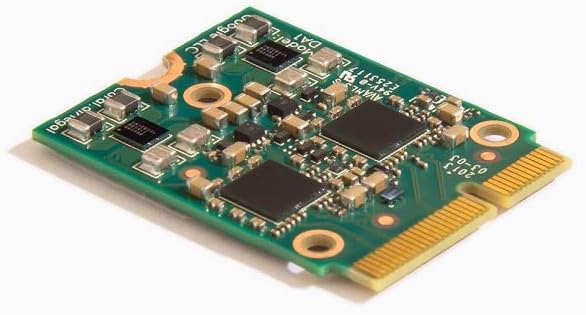
The G650-04686-01 Coral M.2 Accelerator delivers exceptional value for users seeking reliable machine learning inference at an affordable price. Its perfect 5.0 rating reflects high customer satisfaction with performance and ease of use across various Debian-based Linux systems.
We may earn a commission when you buy through this link, at no additional cost to you.
This card integrates seamlessly with Debian Linux environments and supports TensorFlow Lite models which can be compiled to run efficiently on the Edge TPU. With 4 TOPS peak performance and 2 TOPS per watt efficiency it handles mobile vision models like MobileNet v2 at high frame rates without overheating.
While it offers strong performance it is limited to a single TPU which may not suffice for heavy multi-stream video analytics. Also you must compile your models using Coral tools before deployment which adds an initial setup step compared to pure software solutions.
We recommend this accelerator for DIY smart home projects or industrial monitoring systems where reliability and low power draw are critical. It is an excellent entry point into edge AI for those already using Debian based hardware and comfortable with command line tools.
The card works directly with any Debian-based system so you can start deploying models immediately without complex driver installation procedures.
Running models like MobileNet v2 at 400 FPS ensures smooth real-time object tracking and recognition with minimal latency for responsive applications.
We may earn a commission when you buy through this link, at no additional cost to you.
The QNAP QM2-2P10G1TB is an expansion card designed to enhance storage and network performance rather than provide dedicated AI acceleration. It achieves a 4.4 rating by offering dual M.2 NVMe slots and a 10GbE port which boosts data transfer speeds for NAS environments.
We may earn a commission when you buy through this link, at no additional cost to you.
Its key strength is the combination of PCIe Gen3 x8 bandwidth and Marvell Ethernet controller enabling high speed caching and connectivity for servers or workstations. The card supports multiple operating systems including Windows and Linux making it versatile for various enterprise or home lab setups.
This product is not intended for machine learning inference tasks but rather for storage expansion and network throughput improvement. Users seeking AI processing power should look at dedicated accelerator cards instead while this option excels at data handling and caching applications.
Choose this card if you need to upgrade your NAS or workstation with faster storage and network options. It is ideal for users managing large media libraries or databases where quick access to data is more critical than running inference models locally.
The two M.2 NVMe slots allow you to set up high-speed cache layers that reduce load times for frequently accessed files on your NAS.
The included 10GbE port connects to high speed networks enabling fast data transfers between devices and reducing bottlenecks in multi-user environments.
We may earn a commission when you buy through this link, at no additional cost to you.
The Rocket 1604L is a high-performance expansion card designed to maximize storage bandwidth using the latest PCIe 5.0 interface. It supports four M.2 NVMe devices with dedicated lanes ensuring each drive gets full throughput which is rare in multi-slot cards.
We may earn a commission when you buy through this link, at no additional cost to you.
This card stands out for its compatibility with both mainstream x86 Intel/AMD and ARM platforms providing flexibility for custom system builders. Natively supported by standard operating systems it allows quick installation and configuration without complex drivers or BIOS tweaks.
Because it focuses on storage expansion rather than AI processing it does not offer dedicated machine learning acceleration. Users looking for AI capabilities will need to pair this with a separate accelerator but it serves perfectly for high-speed data pipelines or scratch disks.
We recommend this card for professionals working with large datasets or video editing where fast sequential read/write speeds are paramount. If you have a PCIe 5.0 slot available this option provides future-proof storage bandwidth that scales well with next-generation NVMe SSDs.
Each of the four M.2 ports gets dedicated x4 lanes preventing performance bottlenecks when all slots are populated with high-speed drives.
Built on PCIe 5.0 this card prepares your system for emerging storage technologies that require higher bandwidth than current PCIe 4.0 offers.
We may earn a commission when you buy through this link, at no additional cost to you.
This PCIe Adapter allows you to build a dual TPU workstation by splitting a single PCIe slot into connections for two Coral M.2 Accelerator cards. With its focus on AI edge computing it offers a cost-effective way to double your inference capacity without adding more physical slots.
We may earn a commission when you buy through this link, at no additional cost to you.
The adapter features a built-in heatsink to manage thermal output from the two connected cards ensuring stable performance during extended operation. Its design transforms your system into a powerful machine learning workstation suitable for object detection and real-time video analytics projects.
Since it requires two separate Coral TPU modules to function you must already own or plan to purchase those accelerators separately. This makes it less ideal for beginners starting from scratch compared to a single integrated card but excellent for scaling up existing setups.
Choose this adapter if you need to scale AI workloads on a budget and have the necessary M.2 cards already. It is a smart investment for developers who want to maximize hardware investment by utilizing existing slots more efficiently.
By leveraging a single PCIe slot for dual TPUs you avoid buying a new motherboard or system which keeps project costs lower and simpler.
The included heatsink prevents thermal throttling ensuring that both TPU modules maintain peak performance during long inference sessions.
We may earn a commission when you buy through this link, at no additional cost to you.
The ASUS Hyper M.2 x16 Gen5 Card is a storage expansion solution that supports up to four NVMe M.2 drives with server-grade reliability and active cooling. It receives a 4.2 rating from users who appreciate its ability to handle high-speed transfers and RAID functions across AMD and Intel platforms.
We may earn a commission when you buy through this link, at no additional cost to you.
Its standout feature is the massive 512 Gbps bandwidth combined with active fan cooling that maintains unthrottled speeds even under heavy workloads. The two-phase power solution supports up to 14-watt output ensuring stable power delivery for demanding NVMe drives.
This card does not provide AI acceleration capabilities so it is not suitable for inference tasks. It focuses purely on storage performance and reliability making it ideal for video production workstations or servers where data integrity and speed are critical.
We recommend this card for users who need a bootable RAID array or high-throughput scratch space. It is a professional-grade option for those requiring robust storage expansion without compromising on thermal performance or bandwidth.
The top and bottom thermal pads plus active fan keep SSD temperatures low preventing thermal throttling during prolonged read/write operations.
Create bootable RAID arrays easily on both AMD and Intel systems providing data redundancy and improved performance for critical applications.
We may earn a commission when you buy through this link, at no additional cost to you.
The waveshare Hailo-8 M.2 AI Accelerator Module delivers industry-leading performance with 26 TOPS processing power designed for demanding edge AI applications. It achieves a 4.6 rating by balancing raw power with energy efficiency making it ideal for real-time inferencing on devices like Raspberry Pi 5.
We may earn a commission when you buy through this link, at no additional cost to you.
This module supports a wide range of frameworks including TensorFlow Lite ONNX and Pytorch allowing flexible model deployment across Linux and Windows systems. Its scalable architecture enables simultaneous processing of multiple streams and models which is critical for complex vision systems.
While it offers top-tier performance it comes at a higher cost than entry-level options and requires careful mounting as a module only product. Also the broader framework support may require more initial configuration time compared to simpler closed ecosystems.
Select this module for professional applications requiring high throughput and multi-stream analysis such as security or autonomous systems. It is the premium choice for developers who need maximum inference power without increasing physical footprint significantly.
Scalability enables you to run several different models at once on different camera inputs without performance degradation or latency spikes.
Support for multiple popular frameworks reduces the need to convert models and lets you reuse existing codebases more effectively across projects.
We may earn a commission when you buy through this link, at no additional cost to you.
The Coral M.2 Accelerator with A+E Key is optimized for embedded systems needing reliable machine learning inference in harsh conditions. With a 4.2 rating it performs well in industrial environments thanks to its rugged design and low power consumption suited for energy-efficient applications.
We may earn a commission when you buy through this link, at no additional cost to you.
Its key strength is the industrial-grade reliability with an operating temperature range of -20C to +85C ensuring consistent performance in extreme heat or cold. The card supports Windows 10 and Debian 10 making it versatile for diverse software stacks.
This module delivers 4 TOPS peak performance which is sufficient for many vision tasks but may not scale to heavy multi-camera workloads. You will need to compile TensorFlow models using Coral tools which adds a step but results in optimized inference speed.
Choose this accelerator for rugged embedded deployments like smart cameras or field sensors where reliability and power efficiency are priorities. It is an excellent fit for hobbyists or professionals needing a sturdy solution for localized AI inference.
The wide operating temperature range ensures the card functions correctly even in outdoor or industrial settings with fluctuating environmental conditions.
At 2 TOPS per watt it minimizes energy draw which extends battery life for portable or remote devices running continuous inference.
We may earn a commission when you buy through this link, at no additional cost to you.
The Coral Dual Edge TPU Adapter provides a straightforward way to connect dual Coral M.2 Accelerator modules to a standard M.2 slot. Its perfect 5.0 rating highlights reliability and clear instructions that prevent buyer errors by explicitly stating incompatible devices like Raspberry Pi CM4.
We may earn a commission when you buy through this link, at no additional cost to you.
This adapter uses PCIe Gen2 x1 bandwidth to feed two downstream lanes to your TPU modules ensuring stable connection and performance. The stainless steel mounting screw provides vibration resistant fixation which is vital for mobile or vibrating environments like vehicles or machinery.
It is important to note that this adapter only works with PCIe protocol M.2 slots and is incompatible with SATA M.2 slots which simplifies setup by avoiding confusion. However this means you cannot use it with certain legacy laptops that lack PCIe M.2 slots.
We recommend this adapter for users building a dual TPU system who need a reliable mounting solution. It is a practical choice for those who want to maximize their hardware investment by adding performance without buying a new motherboard.
Explicit incompatibility notices help you avoid costly mistakes by clarifying exactly which devices and interfaces will work with this adapter.
The included stainless steel screw ensures the PCB stays secure even in moving vehicles or industrial settings where vibrations could loosen typical mounts.
We may earn a commission when you buy through this link, at no additional cost to you.
Selecting the right M2 accelerator card requires understanding your project requirements regarding power performance and compatibility.
Performance is measured in Tera Operations Per Second (TOPS) which indicates how many calculations the accelerator can perform in one second. For basic tasks like object detection a card with 4 to 8 TOPS is often sufficient while complex multi-stream video analytics may benefit from 26 TOPS or higher.
Always compare the peak TOPS rating against your model size and desired frame rates to ensure the card can meet your application needs without lag.
Edge devices often run on limited power sources so look for accelerators that offer high TOPS per watt efficiency. Lower power consumption reduces heat generation and extends battery life which is critical for portable or remote deployments.
Check the typical power draw listed in specifications to ensure your power supply or battery can handle the load during continuous operation.
M.2 slots come in different keying types such as M-key E-key and A+E key which determine compatibility with your motherboard. A card with an M-key will not fit into an E-key slot so verify your hardware slot before purchasing.
Also consider the length of the module such as 2230 or 2280 to ensure it fits within your device enclosure without physical obstruction.
Some accelerators work exclusively with Linux while others support Windows as well. If you are building on a Raspberry Pi or similar board you will need Linux support but desktop projects may require Windows compatibility.
Ensure the manufacturer provides drivers and documentation for your target OS to avoid integration headaches during development.
The card must support the deep learning frameworks you plan to use such as TensorFlow Lite Pytorch or ONNX. Some providers offer compilers to convert standard models into optimized versions for their hardware which simplifies deployment.
Choose a card with a robust software development kit that includes pre-trained models and tools to reduce development time and effort.
Continuous inference tasks generate heat which can throttle performance if not managed properly. Look for cards with integrated heatsinks or active fan support to maintain stable performance under load.
If your enclosure is sealed you may need a passive cooler or airflow plan to prevent overheating over long periods of operation.
Your project may grow from single TPU to dual TPU setups so consider if the system supports expansion cards or adapters. Adapter boards can split a single slot into multiple connections but verify bandwidth limitations.
Evaluate future needs upfront to avoid replacing hardware prematurely by choosing a system that can scale with your workload demands.
For outdoor or industrial use check the operating temperature range of the card. Standard components may fail in extreme cold or heat whereas industrial-grade modules function reliably across wider ranges.
Select hardware designed for your environment to ensure long-term stability and avoid failures caused by thermal stress.
Begin by verifying that your motherboard or single board computer has a compatible M.2 slot with the correct key type for your accelerator card. Align the notch on the card with the slot and insert it gently at an angle until it clicks into place.
Install the necessary drivers and software libraries from the manufacturer website to enable communication between your operating system and the accelerator. This often includes installing Python packages and model compilers for TensorFlow or other frameworks.
Monitor thermal performance during initial testing to ensure the card does not throttle under load. If temperatures rise too high consider adding a fan or heatsink to maintain consistent performance and extend the lifespan of the device.
M2 accelerator cards are specialized hardware modules designed to speed up machine learning inference on edge devices. They perform computations locally rather than in the cloud which reduces latency and preserves privacy for applications like smart cameras or robots.
No these cards function independently to handle AI workloads without needing a GPU. They are optimized for inference tasks and can be installed directly into M.2 slots on compatible motherboards or development boards.
Some models support Windows while others are designed exclusively for Linux. Check the product specifications carefully to ensure compatibility with your OS before purchasing to avoid integration issues.
Most cards require you to compile standard models using the manufacturer provided compiler tools. This process optimizes the model for the hardware and results in faster inference times on the accelerator.
M-key slots are primarily used for NVMe storage while E-key slots are common for Wi-Fi cards and AI accelerators. The physical notch position differs so using the wrong key type will prevent the card from fitting.
These cards are designed for inference rather than training. Training requires significantly more compute power and typically relies on GPUs or cloud services for efficient execution.
Many accelerators include passive heatsinks to dissipate heat naturally. For continuous heavy workloads adding active cooling like a fan helps maintain performance and prevents thermal throttling.
We have reviewed ten of the most capable M2 accelerator cards available today ranging from budget options to high-performance premium modules. The MX3 leads our list for balanced performance while the Coral options offer excellent value for entry-level developers.
When making your final decision prioritize factors like power efficiency and OS support that match your specific project needs. Scalability and thermal management also play crucial roles in ensuring long-term reliability for your embedded system.
Remember that product pricing and availability can fluctuate so verify current stock and costs before purchasing. Check back regularly for updates on new models that may offer improved performance or efficiency for your next AI deployment.