
FotoZ Macro Conversion Lens
4.6Editor score
Universal 37mm to 72mm fit
Multi-coated glass elements
Tool-free spring-loaded snap-on
Discover the top macro lens for insect photography options for 2026. We compare features, optics, and value to help you capture stunning close-ups of nature.
Capturing the intricate world of insects requires specialized optics that reveal details invisible to the naked eye. A dedicated macro lens allows photographers to focus extremely close while maintaining sharpness and clarity throughout the frame. This guide explores the best tools available for turning tiny subjects into breathtaking images.
We evaluated ten distinct options ranging from smartphone attachments to professional full-frame lenses. Our analysis considers optical quality, magnification ratios, build durability, and ease of use across different camera systems. Each product was selected for its ability to deliver exceptional results when photographing small creatures and delicate textures.
Every recommendation highlights specific strengths for various budgets and skill levels. You will find detailed breakdowns of performance, key specifications, and real-world usage scenarios for each model. Please note that market prices fluctuate frequently so always verify current listings before making a final purchase decision today.
4.6Editor score

4.7Editor score
4.6Editor score
This side-by-side comparison evaluates all ten selected macro lenses based on critical performance metrics. We examine magnification capabilities, optical construction, compatibility with camera systems, and overall value for money. Use this table to quickly identify which model aligns with your specific photographic needs and equipment setup.


The APEXEL 100Ultra Macro Lens stands out as the premier choice for mobile photographers seeking professional insect details. With a 10X magnification and lossless technology it brings tiny subjects closer without sacrificing image quality. This lens transforms standard smartphone cameras into powerful macro tools capable of capturing intricate natural textures.
We may earn a commission when you buy through this link, at no additional cost to you.
Its F1.05 aperture allows for significant background blur and better low-light performance compared to typical phone attachments. The 50 to 110mm telephoto range lets you shoot from a distance so you do not disturb nervous insects. Optical coatings reduce flare ensuring sharp clarity across the entire frame.
While it requires manual stability during use the benefits outweigh the effort for casual nature lovers. You avoid the bulk and cost of dedicated macro gear while still achieving stunning results. The universal clip design ensures compatibility with most modern iPhone and Samsung Galaxy models effortlessly.
Anyone looking to explore macro photography without investing in a camera system should consider this lens highly. It is ideal for social media creators or hobbyists wanting to share detailed images of flowers and bugs. The combination of magnification and ease of use makes it a top pick for beginners today.
The 10X zoom allows users to see details normally invisible to the naked eye on a phone screen.
Multi-lens combinations boost light transmission to 99.5% minimizing reflections for clearer images.
We may earn a commission when you buy through this link, at no additional cost to you.
The TTARTISAN 40mm offers a true 1:1 magnification ratio that is rare at this price point for mirrorless cameras. It is specifically designed for Sony E-Mount sensors making it a perfect match for A6000 and A7 series bodies. The all-metal build provides durability while remaining light enough for travel nature walks.
We may earn a commission when you buy through this link, at no additional cost to you.
Its 11-blade aperture creates stunning background blur that isolates insects effectively from busy backgrounds. The dual LD glass elements minimize aberrations ensuring edge to edge sharpness on small subjects. This lens is a solid choice for photographers who prioritize image quality over autofocus speed.
Manual focus requires patience but it grants precise control over depth of field which is crucial in macro work. Users should expect a learning curve but the results justify the effort. The compact size means it fits easily in small bags for spontaneous shooting opportunities.
For those seeking a dedicated macro option without breaking the bank this lens delivers exceptional performance. It balances optical quality and build material better than many competitors in its class. Consider it if you shoot on Sony E-mount and want serious macro capabilities.
The 1:1 magnification ensures that a one-inch subject fills the sensor frame completely.
Constructed with all-metal parts it feels robust and professional in the hand.
We may earn a commission when you buy through this link, at no additional cost to you.
The ULANZI CL-003 brings a professional DSLR experience to smartphone users through its unique 17mm thread design. It offers 10x optical magnification with clear imaging that highlights millimeter details of insects and plants. The aluminum alloy body feels premium and provides a non-slip texture for secure handling.
We may earn a commission when you buy through this link, at no additional cost to you.
This lens utilizes advanced optical technology to reduce distortion and increase light throughput. The tele-focusing operation allows control over shooting distance similar to traditional camera setups. It works well with cases that have matching threads or the included cold shoe clip for attachment.
While it demands a specific setup with a compatible phone case the stability and quality are worth it. Photographers who want reliable results without worrying about clips slipping will appreciate this approach. The design also prevents vignetting that often plagues cheaper clip-on solutions.
Ideal for serious mobile photographers who want a step up from standard clip-ons this lens delivers clarity. It supports various scenarios from jewelry to insects with consistent sharpness. Consider this option if you already have or plan to get a phone case with macro threads.
New lens combinations improve light throughput to capture clearer and more vibrant images.
The aluminum alloy construction provides durability and a comfortable grip during use.
We may earn a commission when you buy through this link, at no additional cost to you.
The FotoZ Macro Conversion Lens transforms existing DSLR lenses into close-up setups for a fraction of dedicated costs. It fits filters threads from 37mm to 72mm making it versatile for various camera systems. The 8 diopter strength allows for detailed shots of insects and flowers without changing your primary lens.
We may earn a commission when you buy through this link, at no additional cost to you.
Its 3-element 3-group design includes multi-coated glass to improve light transmission and reduce flare. The spring-loaded adapter snaps on instantly so you can switch between macro and normal photography quickly. This convenience is invaluable when moving between different subjects in the field.
While it does not offer the full magnification of a prime macro lens it provides excellent value for beginners. Users should handle the glass elements carefully as they lack the rugged coating of professional glass. The included adapter rings ensure compatibility with most common lens diameters.
This is the best entry point for photographers wanting macro capabilities on a tight budget. It allows experimentation with close-up work before committing to expensive dedicated optics. Choose this if you already own a DSLR and want to try macro photography today.
Adapter rings allow this lens to work with over ten different filter thread sizes.
Multi-coated glass minimizes internal reflections for sharper and brighter images.
We may earn a commission when you buy through this link, at no additional cost to you.
The Canon RF100mm F2.8 L Macro sets a new standard with its unique 1.4x maximum magnification. This allows photographers to capture extreme details on insects that other lenses cannot achieve. The Hybrid IS system compensates for both angular and shift shake ensuring stable handheld shots even at close distances.
We may earn a commission when you buy through this link, at no additional cost to you.
A special Spherical Aberration control ring lets users adjust the shape of foreground and background bokeh for creative effects. The optical design delivers exceptional image quality with sharpness and contrast suitable for professional work. Its fixed f/2.8 aperture provides consistent exposure control across all focusing distances.
The build quality is robust with weather sealing that protects against dust and moisture in the field. However the price is significant so it is best reserved for serious professionals or enthusiasts. Users must have a Canon RF camera system to utilize this lens effectively.
For those needing top-tier macro performance the RF100mm delivers unmatched versatility and optical precision. The ability to shape bokeh adds a unique creative layer to standard macro work. Consider this lens if you demand the best possible image quality from a macro optic.
The 1.4x magnification allows subjects to appear larger than life on the sensor.
The SA ring lets you tweak the smoothness of out of focus areas manually.
We may earn a commission when you buy through this link, at no additional cost to you.
The Canon RF35mm F1.8 offers a more affordable and compact alternative to the 100mm macro option. While it provides 0.5x magnification it still captures detailed close-ups of small subjects with high clarity. The wide f/1.8 aperture makes it ideal for low-light insect photography where light may be limited.
We may earn a commission when you buy through this link, at no additional cost to you.
Its small size and weight make it perfect for travel or walkabouts where carrying heavy gear is impractical. The control ring allows direct adjustments to settings like aperture or ISO without taking your eye from the viewfinder. Optical stabilization ensures sharp images even when shooting handheld.
The trade-off is less reach compared to longer focal lengths which may require getting closer to subjects. This can be challenging with skittish insects but it offers a different perspective. It serves well as a general-purpose lens that doubles for macro work on RF bodies.
This lens is recommended for photographers who want a versatile daily driver with macro capabilities. It balances performance and size effectively for everyday RF users. If you need a lighter option than the 100mm this is a strong contender.
At 35mm this lens can be used for wider environmental shots beyond just close-ups.
The f/1.8 maximum aperture excels in dim light environments common in forests.
We may earn a commission when you buy through this link, at no additional cost to you.
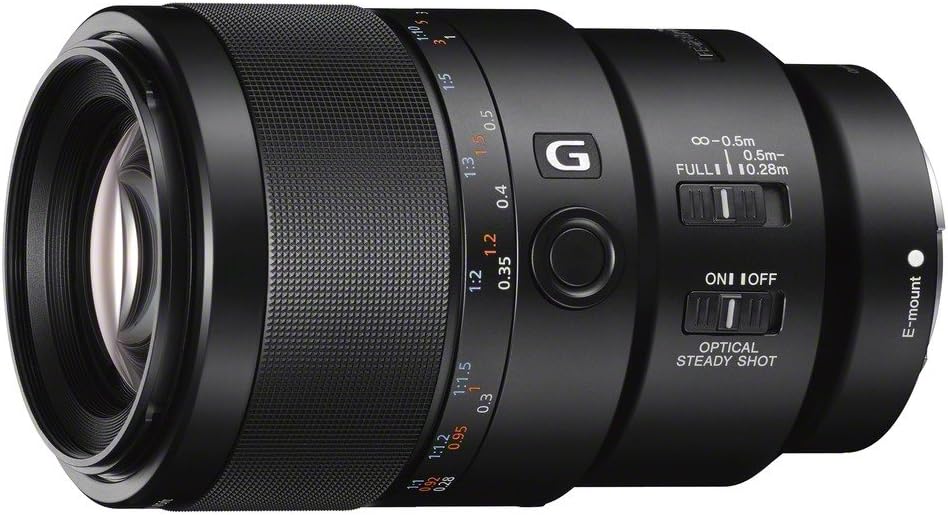
The Sony FE 90mm F2.8 Macro G OSS is a gold standard for E-mount users seeking professional macro results. Its Nano AR coating suppresses reflections to ensure high contrast even in challenging lighting. The lens is built to withstand dust and moisture so it can be used reliably outdoors.
We may earn a commission when you buy through this link, at no additional cost to you.
Optical Steady Shot stabilization helps handheld shooting by reducing shake during close-ups. The 9-blade aperture creates smooth circular bokeh that enhances subject isolation. Direct Drive SSM provides quiet and precise focusing which is essential when working with delicate insects.
While heavier than some manual alternatives the autofocus convenience is worth the weight for many users. Corner to corner sharpness ensures every part of the subject remains crisp. The design is optimized for full-frame cameras but works well on APS-C as well.
For serious wildlife macro photographers this lens offers reliability and top-tier optical performance. It is an investment that will serve your work for years without degradation. Choose this if you prioritize autofocus speed and build quality on Sony systems.
Nano AR coating minimizes ghosting for cleaner images in high contrast scenes.
Sealed against dust and moisture this lens is ready for tough field conditions.
We may earn a commission when you buy through this link, at no additional cost to you.
This kit provides four close-up lenses ranging from +1 to +10 strength for versatile macro experimentation. They are designed for 67mm threads allowing quick attachment to compatible camera lenses. The filters can be stacked to create intermediate strengths like +3 or +5 for customized magnification.
We may earn a commission when you buy through this link, at no additional cost to you.
The double threaded design allows you to attach other filters like polarizers or UV filters without removing the macro lens. This flexibility is rare in cheaper kits and adds significant value to the package. Each lens maintains decent resolution while magnifying subjects for small details.
Optical clarity may not match dedicated macro lenses but the affordability makes it accessible for beginners. Users should verify their lens thread size before purchasing to ensure a proper fit. The included nylon pouch protects the glass when not in use.
This kit is ideal for photographers who want to try macro without buying a new lens. It offers multiple magnification levels in one box at a very low price. Consider this as a first step into close-up photography.
Combining filters allows you to fine-tune the exact magnification power you need.
The double threaded design lets you stack additional optical filters easily.
We may earn a commission when you buy through this link, at no additional cost to you.
The Xenvo Pro Lens Kit offers a complete set for mobile photographers including a 15x macro lens and wide angle option. It comes with a rechargeable LED light that clips onto the phone to illuminate subjects naturally. The TruGrip lens clip provides superior gripping power to prevent slipping during action.
We may earn a commission when you buy through this link, at no additional cost to you.
The macro lens magnifies nearby subjects to reveal tiny textures on insects and flowers. Positioned close to the subject it can capture details that look like they were shot with a dedicated camera. The wide angle lens allows for broader scenic shots when macro is not needed.
While the LED light helps in low light the macro lens still requires steady hands for best results. The case stores all components safely making it easy to carry on outings. It is a comprehensive solution for beginners who want multiple capabilities in one package.
This kit is perfect for families or travelers who want to upgrade their phone photography quickly. The variety of lenses and the lighting tool add significant value. Choose this if you want a versatile mobile toolkit for under forty dollars.
The rechargeable LED provides warm continuous light for better detail in shadows.
Includes both macro and wide angle lenses for different types of photography.
We may earn a commission when you buy through this link, at no additional cost to you.
The AstrHori 25mm F2.8 is designed specifically for extreme macro work with a 2 to 5x magnification range. This capability allows imaging that surpasses life-size proportions which is essential for detailed insect photography. It is compatible with full-frame Sony E-Mount cameras and works well on APS-C bodies too.
We may earn a commission when you buy through this link, at no additional cost to you.
Its wide-angle configuration optimizes depth of field compared to longer lenses at high magnification. This means more of the subject can remain in focus simultaneously which is often hard to achieve. Manual focus ensures precise control over the exact point of sharpness on small details.
The lens does not support infinity focus so it is exclusively for macro applications. Users should be prepared to handle focus manually but the precision is rewarding. Its slim and lightweight design facilitates handheld use with ease during long shooting sessions.
This lens is ideal for specialists who need higher magnification than standard macro optics provide. It bridges the gap between standard macro and microscope-level work. Consider this if you require extreme detail and have experience with manual focusing.
The 5x maximum magnification reveals textures that other lenses simply cannot reach.
Manual focus allows photographers to dial in exact focus points manually.
We may earn a commission when you buy through this link, at no additional cost to you.
Selecting the right macro lens depends on your camera system, budget, and specific subject needs. Understanding key factors like magnification, optical design, and build quality will help you make an informed decision. Below we break down the most important elements to consider.
Magnification ratio defines how large a subject appears on the sensor relative to its actual size. A 1:1 ratio means the subject is life-size on the sensor which is standard for macro work. Higher ratios like 2:1 or 5:1 allow for extreme close-ups revealing microscopic details.
For insect photography look for at least 1:1 to capture fine features clearly. If you need more detail consider lenses with higher magnification capabilities or extension tubes.
Focal length determines how far away you can be from the subject. Longer focal lengths like 90mm or 100mm allow more working distance which is critical when photographing skittish insects. Shorter lengths like 35mm require you to be very close to the subject.
Choose a longer focal length if you want to avoid disturbing insects while shooting. Shorter lenses are more versatile for portraits but may scare off sensitive subjects.
Ensure the lens matches your camera body mount to avoid adapters that may compromise quality. Most major systems like Canon RF, Sony E, and Nikon Z have dedicated macro lenses. Smartphone users must verify thread sizes or clip compatibility before buying.
Always check your camera model's manual to confirm the exact mount type. Using an adapter can reduce autofocus speed and optical performance.
The internal lens construction affects sharpness, distortion, and color accuracy. Multi-coated elements and low dispersion glass reduce aberrations and flare. Complex designs with spherical elements often deliver smoother bokeh and higher clarity.
Look for lenses with multi-coating and premium glass elements for the best image quality. Better optics ensure your insects look sharp and colorful in every shot.
Autofocus offers convenience for moving subjects but can struggle at close distances. Manual focus provides precise control over depth of field which is crucial in macro work. Some lenses offer focus limiters to speed up the process.
Decide based on your shooting style. If you shoot moving insects autofocus helps, but for static subjects manual is often better.
Insect photography often takes place outdoors in various weather conditions. Dust and moisture resistance protects the lens from damage in humid or dusty environments. Solid metal construction adds durability for field use.
Prioritize weather sealing if you plan to shoot in forests or grassy areas. It extends the lifespan of your lens significantly.
Image stabilization reduces shake from hand movement which is amplified at close distances. Optical stabilization inside the lens works best for handheld macro shots. Without it, you may need a tripod even for brief moments.
For handheld shooting look for lenses with at least 4 to 5 stops of stabilization. This ensures sharper images without external support.
Dedicated macro lenses range from affordable adapters to high-end professional optics. Smartphone attachments offer the lowest entry cost while full-frame options deliver superior results. Consider your long-term needs when allocating your budget.
Start with budget options if you are unsure about your commitment. Upgrade later when you need higher quality or specific features.
When using your macro lens, always start by setting your camera to aperture priority mode to control depth of field. Keep your aperture small around f/8 or f/11 to ensure enough of the insect remains in focus. This helps prevent parts of the subject from being too blurry.
Focus carefully on the eyes or most detailed part of the insect to maximize sharpness. If your lens is manual, use focus peaking or magnify the screen to confirm the focal point. This step is crucial because even a tiny shift can ruin the shot at high magnification.
Store your lens in a dry, dust-free environment when not in use. Use a blower brush to remove any dust from the front element before putting it away. Avoid leaving the lens in direct sunlight or humid conditions to protect the glass and coating.
A 1:1 magnification ratio is generally considered the minimum for true macro photography. This allows the subject to appear life-size on your camera sensor. Anything less may not reveal enough detail to qualify as proper insect macro shots.
Yes, high-quality smartphone lenses can produce impressive macro images if used correctly. They are limited by sensor size and optical design but work well for social media. Choose lenses with high magnification and proper coatings for best results.
Longer focal lengths allow you to stay further away from your subject. This reduces the chance of scaring off nervous insects or blocking the light. It also helps create a more pleasing background separation in your photos.
Yes, image stabilization is highly recommended especially for handheld shooting. Small movements are magnified at close distances which causes blurry images. Stabilization helps keep your shots sharp without needing a tripod constantly.
Use a blower brush first to remove loose dust particles. Then gently wipe with a microfiber cloth using circular motions. Avoid using harsh chemicals or paper towels as they can scratch the delicate coatings on the lens.
Close-up filters are more affordable but often have lower optical quality. They can introduce distortion or softness compared to dedicated macro optics. They are good for beginners but serious work usually requires a dedicated lens.
Apertures between f/8 and f/16 are typically best for insect macro shots. This range provides a balance between depth of field and overall sharpness. Wider apertures can leave too little of the subject in focus.
We reviewed ten options ranging from smartphone attachments to professional full-frame lenses to help you find the right tool. The Canon RF100mm stands out for pros while the FotoZ lens offers the best budget entry point. Each model has unique strengths for different needs and camera systems.
Prioritize factors like magnification ratio and focal length based on your specific shooting goals. Working distance is critical for insects so longer lenses often perform better. Do not overlook build quality if you shoot outdoors frequently.
Prices for these lenses fluctuate frequently so check current listings before buying. Use our comparisons to narrow down the options that fit your budget. With the right gear you can capture stunning detailed images of the insect world.