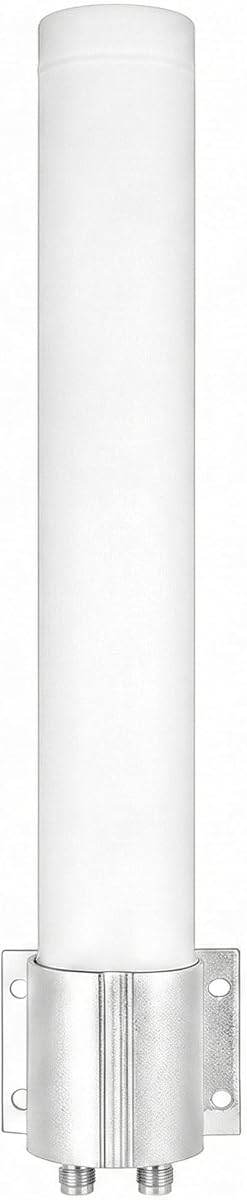
Pro-Gain 2.4G/5.8G MIMO WIFI Antenna
4.5Editor score
Eight dBi high gain
Dual band MIMO technology
Fiberglass construction
Low signal reflection loss
This guide compares the top marine WiFi antennas for boats, featuring dual-band options, high-gain models, and rugged designs for reliable connectivity on the
Reliable internet access on the water is essential for modern boaters who need navigation updates, weather alerts, and communication with shore. A high-quality marine WiFi antenna extends your range significantly, ensuring you stay connected even when docked far from hotspot sources or cruising in remote areas.
We evaluated ten leading marine WiFi antennas based on durability, gain, frequency support, and ease of installation. Our analysis considers resistance to saltwater and UV exposure, connector types, and real-world performance claims to help you choose the right hardware for your vessel and usage needs.
Each pick below highlights key specifications and ideal use cases to simplify your decision process. Prices and availability fluctuate frequently, so verify current details on the retailer site before purchasing to ensure you get the best value for your specific marine connectivity setup.
4.5Editor score

5.0Editor score

4.2Editor score
This side-by-side comparison highlights the core specifications and capabilities of each marine WiFi antenna to help you identify the model that best fits your connectivity requirements and vessel type.


The Poynting Omni-496 stands out as a top-tier marine WiFi antenna designed specifically for harsh coastal environments. It achieves a perfect five-star rating by delivering reliable connectivity even under challenging weather conditions.
We may earn a commission when you buy through this link, at no additional cost to you.
This antenna supports dual-band Wi-Fi including Wi-Fi 6e and Wi-Fi 7 standards alongside 5G frequencies. Its eight dBi gain ensures extended range while the IP68 ingress protection keeps internal components safe from water and salt spray.
While the cost is higher than generic alternatives, the build quality justifies the investment for serious boaters. The included mounting bracket fits standard marine poles, simplifying installation without needing custom hardware.
Buyers seeking a permanent, high-performance solution for their vessel should prioritize this model. It balances durability and signal strength effectively for long-term marine use.
Its IP68 rating and UV-resistant materials ensure the antenna survives prolonged exposure to sun, rain, and salt spray without degradation.
Supporting Wi-Fi 6e, Wi-Fi 7, and 5G bands ensures compatibility with next-generation routers and devices for years to come.
We may earn a commission when you buy through this link, at no additional cost to you.
The Pro-Gain MIMO WiFi antenna targets remote and rugged environments where standard antennas fail. Its high VSWR performance minimizes signal loss, ensuring stable connections even through dense obstacles or interference.
We may earn a commission when you buy through this link, at no additional cost to you.
Engineered with UV-resistant architectural fiberglass, this unit operates reliably from extreme cold to high heat. The dual-band MIMO technology supports multiple devices simultaneously, making it ideal for remote offices or live streaming on boats.
Installation requires attention to cable quality to unlock full performance. Professional advice suggests using low-loss KMR240 cables and self-fusing silicone tape for connections to maximize signal integrity.
For users needing enterprise-level reliability in harsh terrain, this antenna delivers consistent throughput. It is particularly suited for setups requiring lag-free video conferencing or telemetry.
With a VSWR of 1.8, the antenna reflects less power, allowing signals to penetrate obstacles like trees or metal roofs more effectively.
Supporting over ten simultaneous devices ensures stable connectivity for crew members using tablets, phones, and laptops at the same time.
We may earn a commission when you buy through this link, at no additional cost to you.
The ALFA AOA-2458 offers excellent value for those seeking a high-gain outdoor antenna without breaking the bank. Its nine dBi gain significantly boosts wireless signal strength for improved range.
We may earn a commission when you buy through this link, at no additional cost to you.
Constructed from lightweight fiberglass, this antenna is easy to install on various marine poles or masts. The integrated N-Female connector simplifies cabling, reducing setup complexity for DIY installers.
Although it lacks some premium weatherproofing features, it handles standard outdoor conditions well. Users should ensure proper sealing of cable connections to maintain longevity in salt environments.
This model is ideal for budget-conscious boaters needing a reliable upgrade. It provides solid performance for general WiFi access and security camera feeds on smaller vessels.
Delivering nine dBi gain at a fraction of the cost of high-end models makes this a smart choice for casual marine connectivity.
The N-Female connector allows quick attachment to compatible routers or adapters without needing specialized tools.
We may earn a commission when you buy through this link, at no additional cost to you.
The Poynting OMNI-496 is engineered specifically for coastal and marine applications where durability is paramount. It maintains connectivity across wide frequency bands including Wi-Fi and LTE.
We may earn a commission when you buy through this link, at no additional cost to you.
Built to withstand tempestuous weather, the IP68 rating ensures internal electronics remain dry during heavy rain or ocean spray. The UV-resistant housing prevents fading or cracking from prolonged sun exposure.
While it offers seven point five dBi gain, which is slightly lower than premium models, it suffices for most marina docking scenarios. The marine adapter allows quick attachment to standard one-inch poles.
Ideal for vessels frequently exposed to salt air, this antenna delivers reliable performance with minimal maintenance. It is a solid choice for boats needing consistent internet access at dock or anchor.
Optimized for marine environments, it resists corrosion and water ingress better than generic outdoor antennas.
The feed-through one-inch marine standard mount ensures secure attachment to existing boat structures.
We may earn a commission when you buy through this link, at no additional cost to you.
This 3-in-1 combination antenna offers a compact solution for vessels with limited mounting space. It integrates 4G, WiFi, and GPS capabilities into a single unit, reducing clutter on the deck.
We may earn a commission when you buy through this link, at no additional cost to you.
Designed for through-hole mounting, it creates a clean installation without visible brackets or external protrusions. The waterproof construction ensures reliability in wet marine conditions.
While the gain is lower than traditional whip antennas, it suits short-range communication needs. The included 24-inch leads make it easy to connect to internal modems or routers.
Best for smaller boats or setups prioritizing aesthetics, this antenna simplifies cabling by combining multiple signals. It is a practical choice for RVs and boats needing all-in-one connectivity.
Merging 4G, WiFi, and GPS into one puck eliminates the need for three separate antennas and cables.
Its low profile reduces wind resistance and protects against accidental damage compared to tall mast antennas.
We may earn a commission when you buy through this link, at no additional cost to you.
The M19B antenna is built for enterprise-level public safety and IoT applications. Its robust ABS housing withstands demanding marine conditions while supporting multiple cellular technologies.
We may earn a commission when you buy through this link, at no additional cost to you.
Rated for all climates, it operates reliably in extreme temperatures. The two-lead MIMO configuration maximizes data throughput for faster speeds on cellular networks.
While optimized for 4G LTE and 5G, it enhances WiFi setups using cellular gateways. The N Female connectors standardize cabling for professional installations.
Ideal for commercial vessels or boats relying on cellular hotspots for internet, this antenna ensures stable connections even in rough weather.
Heavy-duty injection molded ABS protects internal components from impact and harsh marine elements effectively.
Compliance with multi-carrier standards ensures it works with various network providers globally for flexible roaming.
We may earn a commission when you buy through this link, at no additional cost to you.
This affordable two-pack offers a straightforward upgrade for devices supporting RP-SMA connectors. Its three dBi gain improves signal strength slightly over internal router antennas.
We may earn a commission when you buy through this link, at no additional cost to you.
Though designed primarily for PCs and security cameras, it can adapt to smaller marine setups with external WiFi ports. The omni-directional pattern ensures coverage without precise alignment.
While not ideal for long-range marina connections, it works well for local network access within a dock area. The low price makes it easy to replace if damaged.
Suitable for budget-conscious users with simple needs, it adds flexibility to existing wireless hardware. Consider it for temporary or backup connectivity options.
Purchasing a two-pack provides backup antennas or allows upgrading multiple devices for minimal cost.
The RP-SMA Male connector fits many common router and adapter models without needing additional cables.
We may earn a commission when you buy through this link, at no additional cost to you.
This roof antenna combines two 4G LTE and one dual-band WiFi antenna into a single unit. It simplifies connectivity for routers that require multiple external connections.
We may earn a commission when you buy through this link, at no additional cost to you.
IP67 waterproofing protects it from rain and spray, though it is best for fixed roof installations. The included RG174 cables provide a starting point for setup but may need extension for longer runs.
It works with most standard 4G LTE cellular routers and supports global frequency ranges. Ideal for RVs and boats needing both cellular data and WiFi extension.
Consider this for setups where minimizing external hardware is key. It delivers solid performance for general connectivity needs across different network types.
Mounting all signals on one roof plate reduces drilling and visual clutter on the vessel.
Designed to work seamlessly with specific IoT routers that support dual antenna inputs for better throughput.
We may earn a commission when you buy through this link, at no additional cost to you.
This high-gain antenna aims to extend wireless signal strength significantly for routers and access points. Its nine dBi gain makes it a strong choice for covering larger deck areas or nearby docks.
We may earn a commission when you buy through this link, at no additional cost to you.
Compatible with most standard WiFi routers and cameras, it offers a straightforward replacement for damaged or weak antennas. The outdoor-ready construction handles basic weather conditions well.
While it lacks specialized marine-grade connectors, it fits standard ports on many modern devices. Users may need to adapt connectors for long-term saltwater exposure.
Ideal for budget-conscious boaters needing extended range, it delivers solid performance for everyday tasks. A practical upgrade for enhancing existing wireless setups.
The nine dBi gain focuses signal energy to improve connection stability over longer distances.
Supports a wide variety of WiFi devices making it easy to integrate into existing networks.
We may earn a commission when you buy through this link, at no additional cost to you.
This VHF antenna covers both marine communication and NOAA weather frequencies essential for safety at sea. It is designed to integrate with standard marine radios for reliable distress and weather alerts.
We may earn a commission when you buy through this link, at no additional cost to you.
The ratchet mount allows folding for storage or passing under bridges, protecting the antenna from damage. Its fiberglass construction ensures durability without rusting in salt environments.
While it is not a WiFi antenna, it often complements WiFi setups by handling primary communication duties. This dual role makes it a smart addition for comprehensive vessel safety.
Ideal for boats needing robust voice communication and weather updates, it delivers clear reception. A critical component for safe and compliant boating operations.
Covering all VHF channels and NOAA weather ensures you stay informed and reachable during emergencies.
The ratchet design enables quick folding to avoid collision hazards when entering low-clearance areas.
We may earn a commission when you buy through this link, at no additional cost to you.
Selecting the right marine WiFi antenna requires balancing gain, durability, and compatibility with your existing hardware. Consider the following factors to ensure reliable connectivity in marine environments.
Gain measured in dBi indicates how much the antenna amplifies signal strength. Higher gain antennas extend range but may narrow the beam width. Choose a balance that matches your distance to shore or marina hotspots.
For most boat applications, a gain between seven and nine dBi offers reliable performance without excessive signal narrowing.
Marine environments expose equipment to salt spray, UV radiation, and moisture. Look for IP67 or IP68 ratings to ensure water ingress protection. UV-resistant materials prevent cracking or fading over time.
Antennas with stainless steel or fiberglass hardware resist corrosion better than plastic or metal alternatives.
Verify that the antenna connector matches your router or modem port. Common types include N-Type, RP-SMA, and SO239. Mismatched connectors require adapters that may introduce signal loss.
Standard marine adapters simplify mounting and ensure secure connections that withstand vibration and motion.
Modern WiFi antennas should support both 2.4 GHz and 5 GHz bands for optimal speed and range. Some models also support 5G or LTE bands for cellular data integration.
Dual-band support future-proofs your setup as network standards evolve over the years.
Assess how the antenna mounts to your vessel. Marine poles usually accept 1-inch threaded mounts, while flat surfaces may need L-brackets or suction options.
Secure mounting ensures the antenna stays in place during rough seas or high winds.
Longer cables incur signal loss, so choose the shortest length possible. High-quality coaxial cables reduce attenuation over distance.
Seal all outdoor cable connections with waterproof tape to prevent moisture ingress at joints.
Some antennas combine WiFi with cellular or GPS capabilities. These reduce clutter but may have lower gain than dedicated units.
Decide if you need separate antennas or a combined solution based on your router capabilities.
Choose manufacturers with proven track records in marine electronics. Strong warranty support and customer service help resolve issues quickly.
Reputable brands often provide better installation guides and compatibility information.
Install the antenna on the highest possible point of your vessel to maximize line-of-sight to hotspots. Ensure cables are routed away from moving parts to avoid abrasion or disconnection.
Periodically inspect connectors for corrosion or moisture ingress. Apply waterproof tape or grease to exposed metal contacts to protect against salt spray.
During storage or long trips, fold retractable antennas or secure them to prevent wind damage. Regular cleaning with fresh water removes salt deposits and maintains performance.
Range depends on gain and obstacles, but a high-gain antenna can extend your connection up to several miles in clear conditions. Most marinas and coastal access points lie within three to five miles of shore.
No special router is required beyond one with external antenna ports. Many modern WiFi routers support N-Type or RP-SMA connectors, allowing direct antenna upgrades.
Use self-fusing silicone tape to wrap coaxial connections tightly. Ensure the antenna and connectors have proper IP ratings before exposure to marine elements.
Standard antennas lack weatherproofing and corrosion resistance. Use marine-specific models to prevent degradation from saltwater and UV exposure.
N-Type connectors are standard for marine installations due to their robustness. RP-SMA is common on smaller routers and adapters.
Wind can misalign directional antennas, but omni-directional models maintain coverage. Secure mounting prevents vibration-induced signal loss.
This roundup highlights top performers balancing performance and durability for marine environments. Models like the Poynting Omni-496 excel in reliability while others offer budget-friendly range solutions.
Prioritize corrosion resistance and weatherproof ratings to protect your investment. Matching the connector type and gain to your vessel needs ensures seamless integration and better connectivity.
Verify current pricing and availability before purchasing as marine equipment markets fluctuate regularly. Always consult your router manual for compatibility to maximize antenna performance.