
Berkeley Varitronics Octopus 4G LTE
4.6Editor score
True RSRP measurements
No subscription needed
EV charging compatible
Finding the right cellular signal meter for antenna aiming is critical for ensuring optimal signal strength and network performance across various installations and environments.
We evaluated ten leading products based on frequency coverage, measurement accuracy, battery life, and ease of use to determine the most effective tools for professionals.
Each pick below highlights key capabilities and trade-offs, so you can choose confidently; note that availability and pricing may change over time without notice.
4.6Editor score

4.3Editor score

3.9Editor score
As an Amazon Associate we earn from qualifying purchases.
This side-by-side comparison highlights the core specifications and target applications for each device to help you quickly identify the model that fits your specific antenna aiming workflow.


The SureCall Five-Band RF Signal Meter is a specialized tool designed for optimizing cell phone signal boosters. It scores a 4.3 rating based on user feedback regarding its precision and ease of use during installation tasks.
We may earn a commission when you buy through this link, at no additional cost to you.
Its main strength lies in its five-band coverage, which includes PCS, Cellular, AWS, and LTE frequencies. This makes it uniquely suited for installers who need to tune boosters across multiple carrier bands without switching devices.
While it offers high receiving sensitivity at -110dBm, its battery life is limited to roughly three hours. This may require carrying spare batteries for long field jobs, which is a minor trade-off for the portability it offers.
Installers seeking a dedicated booster tuning tool will find this meter invaluable for aligning antennas precisely. It strikes a practical balance between technical accuracy and field-friendly usability.
Covers PCS, Cellular, AWS, and LTE bands for broad compatibility across US carriers.
The controllable backlight ensures visibility in dark basements or remote tower sites.
We may earn a commission when you buy through this link, at no additional cost to you.
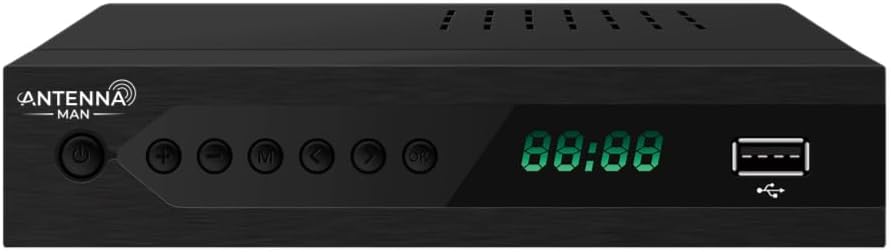
The Antenna Man Signal Meter is primarily focused on television reception. While it appears in search results for signal meters, it functions more as a digital converter box than a true cellular RF meter.
We may earn a commission when you buy through this link, at no additional cost to you.
It provides real-time signal strength feedback which helps users adjust TV antennas. The plug-and-play nature makes it accessible for non-technical users who want to improve over-the-air TV reception.
However, it is not designed for cellular frequencies like 4G or LTE. Its utility for antenna aiming in a cellular context is limited compared to dedicated RF meters.
This device is best suited for home TV setup rather than professional cellular antenna aiming. Users need to ensure their needs align with TV signals before purchasing.
Designed for TV antenna optimization rather than professional cellular RF measurements.
Simple interface allows quick checks of signal quality without complex calibration.
We may earn a commission when you buy through this link, at no additional cost to you.
The Berkeley Varitronics Octopus 4G LTE is a high-end device designed for professional deployment scenarios. It holds a strong 4.6 rating due to its robust feature set and reliability in industrial settings.
We may earn a commission when you buy through this link, at no additional cost to you.
It provides true RSRP, RSRQ, and RSSI measurements which are essential for analyzing LTE signal quality accurately. The device requires no SIM cards or phone connections, making it a standalone solution for technical assessments.
While it supports all major US carriers and is manufactured domestically, it carries a higher price point. This investment is justified for businesses needing precise data for EV charging stations or alarm installations.
Installers working on commercial IoT projects will appreciate its capability to measure critical parameters. It is a powerful tool for those who need detailed network insights without carrier dependencies.
Delivers accurate RSRP and RSRQ data for deep technical signal analysis.
Eliminates the need for phones or apps, streamlining professional workflows.
We may earn a commission when you buy through this link, at no additional cost to you.
The RF Explorer Pro is an all-in-one RF measurement platform that offers significant versatility for advanced users. It covers a wide frequency spectrum making it suitable for diverse wireless testing tasks.
We may earn a commission when you buy through this link, at no additional cost to you.
Its 8-inch high-definition touchscreen provides excellent visualization of signal data. Features like the GPS heatmap and tracking generator make it a powerful choice for interference analysis and antenna tuning.
While portable, it requires separate software licenses for some advanced features. This adds to the complexity and potential cost over time which users should factor into their budget.
Engineers and RF professionals will find this device valuable for laboratory and field use. It is a comprehensive solution for those who need more than just basic signal strength readings.
Large touchscreen allows clear viewing of complex RF signals and waterfalls.
Includes zero span and frequency coordination modes for detailed diagnostics.
We may earn a commission when you buy through this link, at no additional cost to you.
The NetAlly AirCheck G3 Pro Kit is a premium solution designed for Wi-Fi and Bluetooth network testing. It holds a perfect rating in user feedback due to its comprehensive capabilities and support features.
We may earn a commission when you buy through this link, at no additional cost to you.
It includes an external directional antenna and a tri-band spectrum analyzer. This combination allows technicians to quickly locate access points and clients across 2.4GHz, 5GHz, and 6GHz bands.
Remote collaboration features enable engineers to troubleshoot issues from a distance saving travel time. However, it is optimized for Wi-Fi networks rather than cellular signal aiming.
Network engineers managing enterprise Wi-Fi infrastructure will find this kit indispensable. It offers robust tools for validating performance and solving complex connectivity problems.
Enables engineers to collaborate with on-site technicians efficiently via Link-Live.
Locates access points quickly to speed up site surveys.
We may earn a commission when you buy through this link, at no additional cost to you.
The Extech 480836 is a high-frequency measurement tool focused on EMF detection. It has a 4.3 rating for its reliability in measuring non-directional field strength across mobile and microwave bands.
We may earn a commission when you buy through this link, at no additional cost to you.
It uses a three-channel isotropic probe to ensure accurate readings regardless of orientation. This is ideal for safety checks or general RF exposure assessments near base stations.
While it covers frequencies relevant to cell phones it does not offer carrier-specific tuning features. It is better suited for general EMF measurement than precise antenna alignment.
Technicians needing a general-purpose RF meter will appreciate its robust design. It provides reliable data for safety and compliance tasks effectively.
The triaxial probe ensures accurate readings from any angle.
Manual store recall allows saving up to 99 sets of readings.
We may earn a commission when you buy through this link, at no additional cost to you.
The MINI1300 Antenna Analyzer offers a compact and affordable option for radio enthusiasts. It has a strong 4.4 rating for its ease of use and decent feature set for HF to UHF bands.
We may earn a commission when you buy through this link, at no additional cost to you.
It features a 4.3-inch TFT LCD touchscreen which makes navigating menus intuitive. The device supports SWR measurement and frequency sweep functions essential for antenna tuning.
However, users note that the firmware cannot be updated. This limitation may restrict future compatibility or feature enhancements for advanced applications.
Hobbyists and amateur radio operators will find this device practical for general antenna work. It balances cost and functionality well for non-professional use.
The large touchscreen simplifies operation for users unfamiliar with complex analyzers.
SWR measurement helps ensure efficient power transfer to the antenna.
We may earn a commission when you buy through this link, at no additional cost to you.
The SA6 combines a spectrum analyzer and signal generator into one handheld unit. It offers a wide frequency range covering Wi-Fi and cellular technologies making it versatile for general RF testing.
We may earn a commission when you buy through this link, at no additional cost to you.
Its 35–6200MHz coverage allows analysis of multiple bands from 2G to 4G LTE. The tracking generator feature is useful for characterizing filters and amplifiers effectively.
Battery life can vary depending on the batch. Users may experience shorter runtimes which could interrupt long testing sessions.
Technicians needing a flexible tool for general RF work will appreciate its portability. It is a practical choice for troubleshooting and signal validation tasks.
Switch between analyzer and generator modes instantly for comprehensive testing.
USB Type-C allows easy data transfer and logging to PCs.
We may earn a commission when you buy through this link, at no additional cost to you.
The For Sa6 6GHz Handheld provides similar functionality to other spectrum analyzers at a lower price point. It covers 35 to 6200MHz making it suitable for hobbyists and light professional use.
We may earn a commission when you buy through this link, at no additional cost to you.
It includes a tracking generator and accessories like extension cables and a stylus. This makes it ready to use right out of the box for basic RF tasks.
The housing is compact and lightweight for easy transport. However, it may lack the ruggedness or support of higher-end professional models.
Users on a budget looking for a portable analyzer will find this appealing. It serves well for general signal assessments and DIY projects.
Comes with all necessary accessories to start analyzing immediately.
Lightweight housing makes it easy to carry in tight spaces.
We may earn a commission when you buy through this link, at no additional cost to you.
The Channel Master TV Antenna Signal Strength Meter is a budget-friendly tool designed for over-the-air TV antenna alignment. It has a 3.9 rating for its simplicity and ease of use.
We may earn a commission when you buy through this link, at no additional cost to you.
It displays RF signal level and signal-to-noise ratio for precise tuning. The rechargeable battery and included carrying case make it convenient for homeowners and installers.
While excellent for TV antennas it does not support cellular frequencies. Users seeking a cellular signal meter should avoid this device.
For TV installation tasks this meter offers solid value at a low price. It simplifies the process of finding the optimal antenna direction effectively.
Designed specifically for aligning over-the-air TV antennas efficiently.
Includes a protective case and stylus for easy storage and use.
We may earn a commission when you buy through this link, at no additional cost to you.
Choosing the right cellular signal meter requires understanding your specific goals whether you are installing boosters deploying IoT devices or troubleshooting interference.
Ensure the device supports the bands used by your target carriers such as 4G LTE 5G PCS AWS and Cellular. Narrow coverage may limit your ability to tune all relevant frequencies.
Check the frequency range specifications to confirm compatibility with your network requirements.
Professional applications demand high precision. Look for devices that measure RSRP RSRQ and RSSI rather than just generic signal bars.
High sensitivity ratings like -110dBm help detect weak signals critical for optimal antenna aiming.
Field work often requires long runtimes. Consider devices with rechargeable batteries that can last at least three hours.
Carrying spare batteries is a good backup if the device has limited runtime.
A clear display with real-time updates helps you adjust antennas quickly. Touchscreens or large LCDs improve usability in various lighting conditions.
A controllable backlight is essential for working in dark areas or at night.
Lightweight and compact devices are easier to carry during installation. Handheld form factors are generally preferred over bulky benchtop units.
Consider if the device includes a carrying case for protection during transport.
Some devices support all US regional carriers while others are tuned for specific networks. Ensure the meter works with your target provider.
Check if the device requires SIM cards or if it operates independently.
Spectrum analysis GPS heatmaps and tracking generators offer deeper insights for complex installations. Decide if these features are necessary for your workflow.
Advanced tools increase cost but improve troubleshooting efficiency for professionals.
Budget models may suffice for simple tasks while professional tools offer more precision. Determine your budget based on your specific installation needs.
Consider the total cost of ownership including any required accessories or software licenses.
Start by powering on the device and allowing it to stabilize before taking measurements. Ensure the antenna or sensor is connected securely to avoid false readings.
When aiming an antenna observe the signal strength in real-time. Rotate or tilt the antenna slowly and note the position where the signal peaks.
Store the device in its carrying case when not in use to protect it from dust and impact. Keep firmware and batteries charged to ensure readiness for future tasks.
A good cellular signal meter should cover at least 700MHz to 2700MHz to include common 4G LTE and 5G bands. Ensure it supports the specific bands used by your local carriers for accurate aiming.
TV antenna meters are designed for VHF/UHF and ATSC signals which do not overlap with cellular frequencies. Using them for cellular aiming will not provide accurate results or useful data.
Many professional cellular signal meters like the Berkeley Varitronics Octopus do not require SIM cards. They measure RF signals directly allowing for standalone operation without carrier subscriptions.
Handheld spectrum analyzers vary in accuracy but high-end models offer reliable measurements within ±2dB. They are useful for interference analysis but may lack the precision of lab-grade equipment.
Most handheld cellular signal meters offer between 2 to 5 hours of battery life. For longer field work consider models with rechargeable batteries or carry spare power sources.
A basic signal strength meter is often sufficient for simple aiming. A spectrum analyzer is better for diagnosing interference or complex issues where signal frequency details are needed.
Choosing the right cellular signal meter depends on whether you prioritize versatility precision or budget. The SureCall Five-Band and Berkeley Varitronics Octopus offer the best balance for professional booster and IoT installations.
If you work with Wi-Fi or TV signals consider specialized tools like the NetAlly AirCheck or Channel Master meters. Match your choice to your primary use case for best results.
Always verify current availability and pricing before purchasing. Technical requirements may vary so select a device that meets your specific frequency and measurement needs.